Innhold Show
Meta may delay its controversial new business terms yet again. That is a win for publishers and other businesses that pushed back, but nobody should mistake a later date for a solved problem.
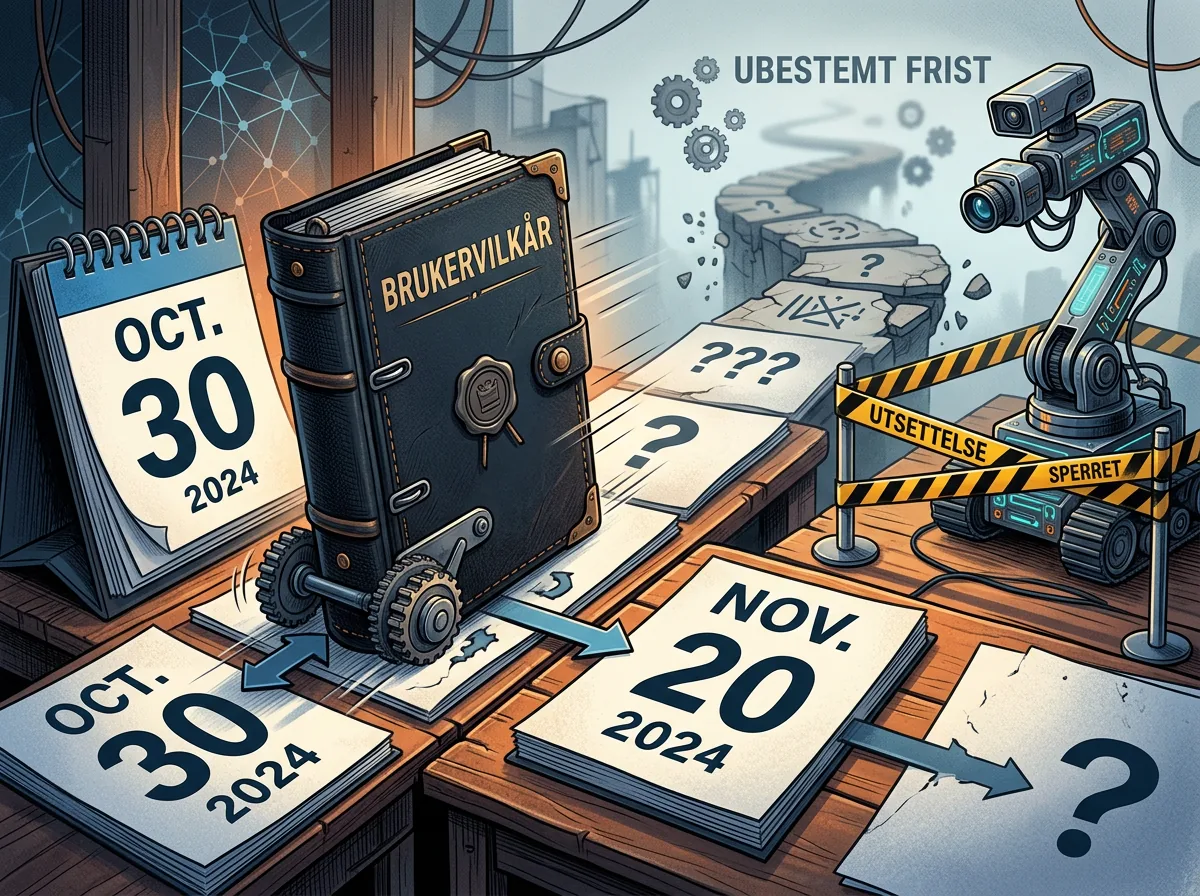
The terms were originally due to take effect on October 30, 2026. Meta moved that date to November 20 after fierce opposition. Now Meta communications head Andy Stone says the company’s consultation with industry groups could run beyond November 20, in which case implementation would be delayed again. The existing terms remain in place while the consultation continues.
Good. The pressure is working. But Meta has not said it will remove the disputed permission to send automated crawlers into websites associated with a business account. It has not announced a new date or produced final language that resolves the fight. The calendar is moving. The substance is still the problem.
What has Meta said about the new business terms?
Meta says implementation could move beyond November 20, 2026 if its consultation with industry groups takes longer. In Stone’s statement on October 28, he said Meta did not plan to make policy changes without a full consultation with industry groups and leaders. The current terms will remain in force until then.
The wording matters. Meta has not withdrawn the new terms, and it has not formally cancelled November 20 as the effective date. Stone said Meta would delay implementation if the consultation extends past that deadline. This is a clear signal that another delay is likely, not a completed announcement with a replacement date.
The Verge reported on October 28 that Meta was considering this second delay after continued opposition from publishers. The first delay gave the industry three extra weeks, moving the effective date from October 30 to November 20. The deadline may now move again because Meta finally has to hold the conversation it should have held before putting these terms on the table.
Why did the terms trigger such fierce opposition?
The dispute centers on a clause that authorizes Meta to use automated software to access, index, cache, analyze, collect, and crawl domains, websites, and URLs associated with a business’s products or services. The wording covers web crawlers, robots, and scraping tools. It also allows Meta to create test accounts to gain access.
That permission does not necessarily stop at material a business has uploaded to Facebook or Instagram. The phrase “associated with” its products or services could reach the company’s own website and archives. For a publisher, that may mean journalism stored on its own servers. For a photographer, online retailer, or other content producer, it may mean images, product data, and text that were never uploaded to Meta.
The first version explicitly said the collected material could be used to “train” Meta’s products. Meta later removed that word and limited the stated purpose to developing, improving, researching, and maintaining advertising and business products. That was better wording, but it was not an explicit ban on AI training. Meta’s business products use AI, and critics argue that the revised language remains too broad to give content owners the protection they are asking for.
It would therefore be inaccurate to claim that the latest text automatically gives Meta the right to train every AI model on every piece of content it finds. The scope of that permission is precisely what the parties are fighting over. It is equally inaccurate to pretend the issue disappeared when Meta deleted one word. When a contract gives a company sweeping powers, a reassuring statement outside the contract is not enough.
Robots.txt does not settle the contract dispute
Meta says website owners can still use robots.txt to signal how crawlers should behave. That is technically useful, but it does not answer what a business has authorized Meta to do through the contract. A robots.txt file is a message to automated systems. The business terms are the agreement between the parties. Those are two different layers.
In an October 24 letter to Mark Zuckerberg, US Senator Adam Schiff focused on that distinction. He argued that Meta’s public assurances about respecting robots.txt did not appear to provide an enforceable legal protection, and asked the company to put that commitment into the terms themselves.
That is a reasonable minimum. If Meta genuinely intends to respect a website owner’s decision, it should be able to say so clearly in the agreement. Asking everyone to trust an explanation that sits outside the contract does not exactly reduce the suspicion.
Businesses should still inspect their robots.txt files and check which Meta crawlers can gain access. That can reduce risk and provides a documented technical signal. Just do not treat a tidy robots.txt file as proof that the contract issue has been settled. The technology may guard a door. It does not decide who the contract claims has been given a key.
Who could be affected?
These terms matter to far more than large news organizations. Meta’s definition of commercial use includes activities such as advertising, selling, administering a page, and using business tools. A small company with a Facebook Page or a professional Instagram account could therefore be covered even if it has never thought of itself as part of a major fight over AI.
The imbalance of power is what makes this ugly. Many businesses depend on Facebook and Instagram to reach customers and readers. If the practical choice is to grant broad rights over material on their own websites or stop using Meta’s business products, that is not much of a voluntary negotiation. It is a giant putting a contract on the table and pointing at the door.
The News/Media Alliance said on October 16 that business accounts had no separate way to opt out of the clause. The organization, which represents more than 2,200 publishers in the United States and abroad, later demanded that Meta withdraw the disputed language. Norwegian media companies, European publishers, and advertisers have also pressed the company.
That combined resistance explains why Meta is now talking about a full consultation. The company did not suddenly discover a misplaced comma. Affected organizations read the terms, refused to accept them, and raised the cost of forcing them through.

Is another delay a victory?
Yes. I call it a victory because it shows that coordinated resistance can halt a planned change from one of the world’s largest platforms. The existing terms remain in place while the talks continue, and publishers get more time to demand precise wording, a genuine way to opt out, and clear limits on how their content can be used.
But it is a provisional victory. Meta could move the date and keep most of the substance. It could also present language that sounds nicer without giving content owners a clear contractual right. The first rewrite removed the word “train” while leaving much of the concern intact. That should make everyone allergic to victory speeches based on one new word or one new date.
The final text is what matters. Which websites may Meta crawl? What content may it collect? What may that material be used for? Must it respect robots.txt? Can a business opt out without abandoning Facebook and Instagram? Do the limits still apply when advertising and business products gain new AI features?
Until those questions have clear answers in the agreement itself, the dispute remains open. Meta has blinked. Good. Now the industry has to make sure the company actually moves.
What should businesses do while they wait?
Start by saving a dated copy of the terms and the notice shown on the account. The language has already changed, and the effective date has already moved once. A screenshot or PDF of the version the business actually received will be far more useful than somebody’s memory of a headline several weeks later.
Next, make a simple inventory of the Meta products the company uses, the websites that could be considered associated with the business, and any content behind a registration form or paywall. Inspect robots.txt and traffic logs, but make the distinction clear internally: these are technical precautions. They do not replace a review of the agreement.
Watch the final wording, not merely the next date. If the business manages valuable content or is uncertain about the consequences, take the question to its industry association or a lawyer who can assess the specific agreement. Not every small business needs to panic and run up a legal bill. But nobody should accept this update blindly because Meta says everything will be fine.
My most important advice is simple: do not build all customer access on a single platform that can rewrite the rules with a notice. Your own website, customer list, and direct contact channels are not old-fashioned. They are what gives a business the power to say no when a platform gets too greedy.
Frequently asked questions
When will Meta’s new business terms take effect?
The stated date remains November 20, 2026, but Meta says implementation will be delayed if its consultation with industry groups runs longer. The company has not announced a new fixed date. Its existing terms remain in force while the process continues.
Has Meta removed the right to crawl business websites?
No. Meta removed the word “train” from the disputed language and changed its description of how collected content may be used, but permission for automated crawling remains central to the dispute. Delaying implementation does not remove that clause.
Can robots.txt stop Meta from collecting content?
Robots.txt can signal which crawlers should stay away, and Meta says it will respect those preferences. Critics point out that this assurance is not clearly written into the terms. A technical block and an enforceable contractual right are not the same thing.
Do the terms affect only large publishers?
No. Meta defines commercial use broadly, potentially covering businesses that administer a Facebook Page, use Instagram professionally, advertise, or use its business tools. Each business should read and save the specific version of the terms shown on its account.