Innhold Show
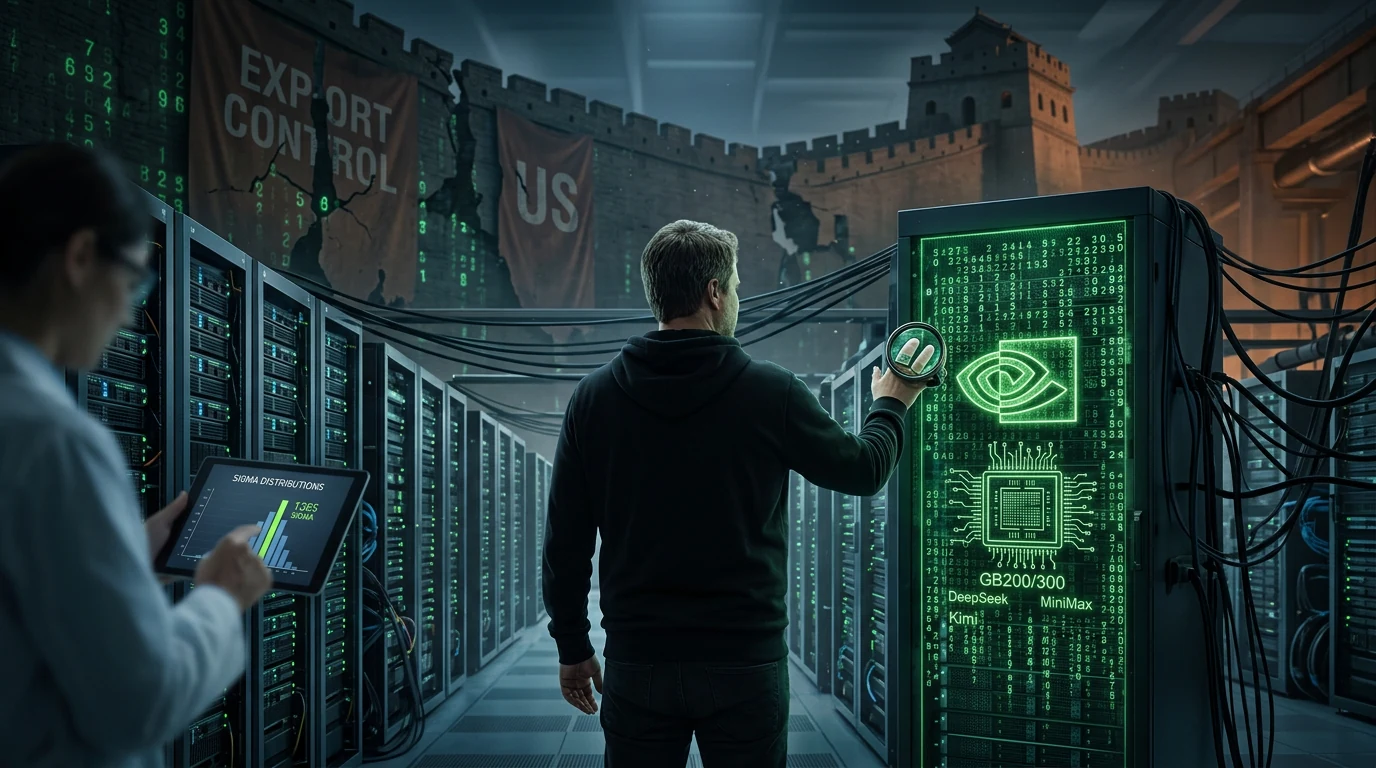
Six Chinese AI models carry measurable fingerprints of Nvidia Blackwell chips that require a US export license for China. The signatures appear in published model weights from DeepSeek, Moonshot AI, MiniMax, and Ant Group. This is technical evidence of access to advanced hardware, not merely another claim from an anonymous official.
The finding punctures the comfortable idea that export controls have kept the most powerful chips away from China’s leading AI labs. At best, the controls have been an expensive speed bump. When several competing labs produce models with the same Blackwell signature, this is no longer a story about one mysterious shipment that might have fallen off a truck.
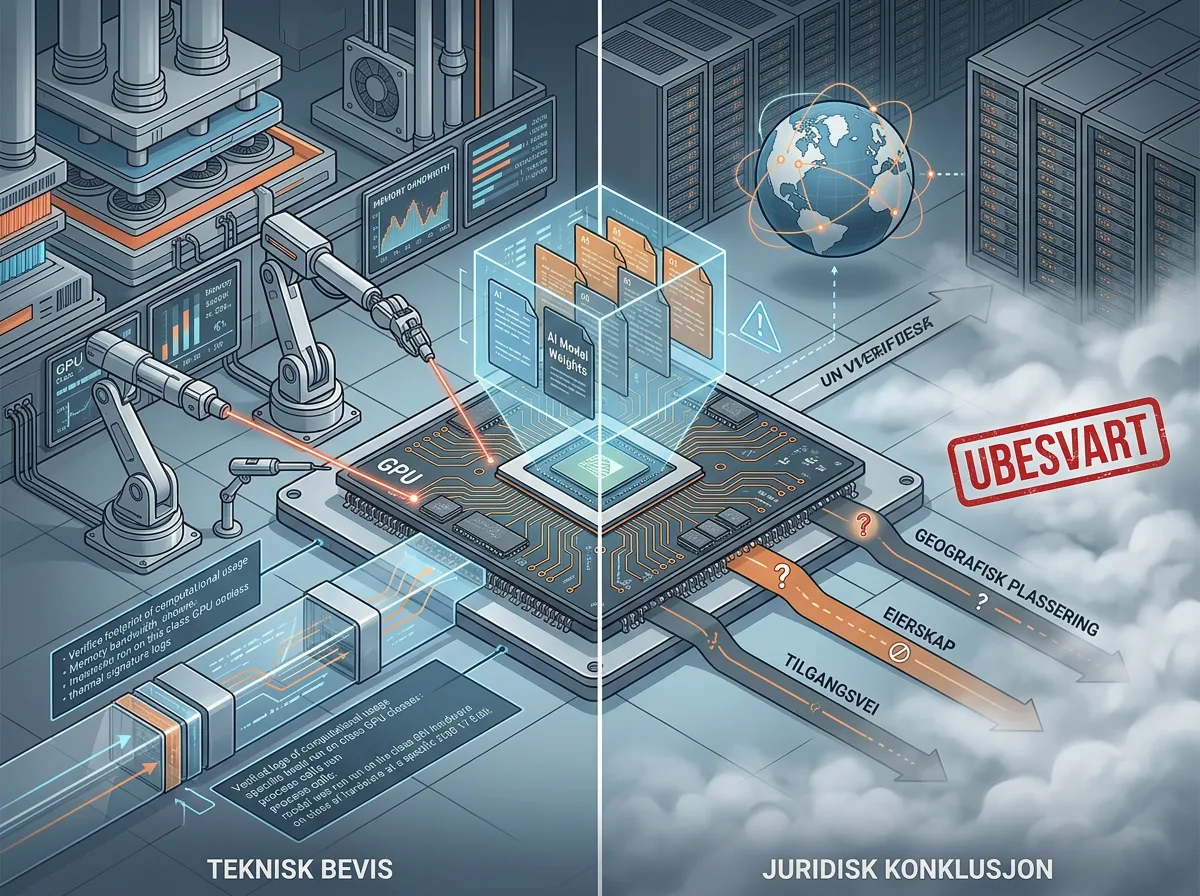
Precision still matters. The analysis does not prove where the chips were located, how access was obtained, or that anyone broke the law. The hardware could have been in a data center outside China. That does not rescue the policy as a technological barrier. The aim was to stop Chinese companies from using the most advanced American compute to train frontier models, and the model weights indicate that precisely this capacity was available.
What did researchers find in the Chinese AI models?
Will DePue’s analysis at Unemployment Labs found Blackwell signatures in six models released since April 2026. DeepSeek-V4-Flash and MiniMax-M3 match B200 or B300 hardware. DeepSeek-V4-Pro, Kimi K3, Kimi K3.1-Pro, and Ling-3.1-flash match GB200 or GB300 systems. The models come from four separate labs: DeepSeek, Moonshot AI, MiniMax, and Ant Group.
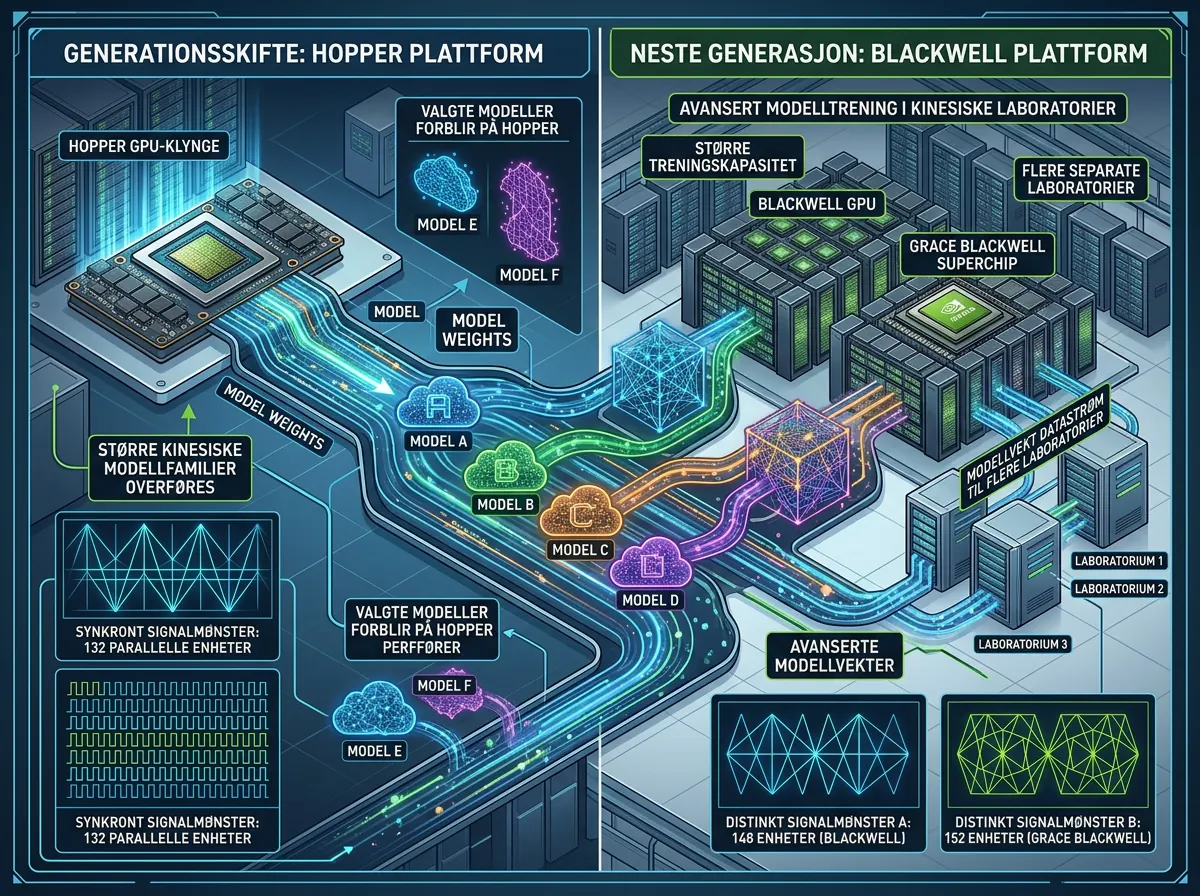
The generational shift is particularly revealing when the models are compared with their predecessors. DeepSeek-V3 from December 2024 carries a Hopper signature, while the V4 models from April 2026 point to Blackwell. Moonshot’s Kimi K2 and K2.5 point to Hopper, but K3 from July and K3.1-Pro from November point to Grace Blackwell. MiniMax moves from Hopper in M2.7 to Blackwell in M3, while Ant Group moves from Hopper in Ling-3.0-flash to Blackwell in Ling-3.1-flash.
This is not a method that simply labels every Chinese model as Blackwell. Recent models from Alibaba, Zhipu, Tencent, Xiaomi, and StepFun produced Hopper signatures in the same study. Meituan’s LongCat-2.0 produced no Nvidia signature, which is consistent with the company’s statement that it trained the model on its own ASIC clusters.
How can model weights reveal the GPU used for training?
Model weights are the billions or trillions of numbers adjusted during training. Before training begins, those numbers need initial values. The software examined by the researchers uses a pseudorandom number generator called Philox. It produces the same numbers from the same seed, but the way those numbers are distributed depends on how the workload is mapped across a GPU.
Different Nvidia generations have different numbers of streaming multiprocessors, or SMs. In this analysis, Hopper chips create a pattern associated with 132 SMs. The B200 and B300 create a pattern associated with 148, while the GB200 and GB300 produce 152. Some initial values survive training fully or partly, leaving an imprint of the hardware configuration in the finished model.
DePue searched roughly 6 trillion combinations of seeds and configurations. According to the report, the strongest random match should end at around 8 sigma. The six Blackwell results ranged from 49 to 1,385 sigma, while even the weakest reported individual sample reached 20 sigma. The method also agreed with all 24 cases in which developers had publicly disclosed the training hardware. The researchers correctly caution that related models make this a consistency check, not a complete measurement of accuracy.
For DeepSeek-V4-Flash and Kimi K3, the pattern was also reproduced on physical Blackwell chips. The code and preserved model rows are available on GitHub, allowing key parts of the finding to be checked independently. That makes this much more valuable than another official allegation whose supporting evidence remains hidden.
Do the findings prove that export rules were broken?
No. The Blackwell signature identifies the hardware class that created the initial values and strongly supports the conclusion that the same class was used during training. It does not reveal a machine’s serial number, physical location, owner, or route into a data center. Model weights alone therefore cannot prove smuggling or identify a particular legal violation.
The report also describes a technical alternative. Specially configured AMD hardware could theoretically produce similar patterns. The researchers ruled out that explanation for DeepSeek-V4-Flash and considered it highly unlikely for the other five models. The relevant AMD hardware is also covered by export controls.
There is another important possibility: A Chinese company could have rented capacity in a data center outside China. The chip does not have to sit in Shanghai for a Chinese lab to use it. US export rules require licenses for the relevant Blackwell classes when destined for China, but a hardware imprint cannot decide how a particular shipment or remote-compute arrangement should be treated under the law.
That limitation does not save export control as a technological barrier. If the goal were merely to keep chips from physically crossing one border, geography might settle the question. The stated strategic purpose has been to slow Chinese development of advanced AI models. In that case, access to the compute is what matters, not the mailing address of the server hall.
How large could the training clusters have been?
The researchers estimate that Kimi K3 may have used around 4,500 Blackwell GPUs for roughly 70 days. DeepSeek-V4-Pro is estimated at about 3,000 GPUs over a similar period. The best estimate for DeepSeek-V4-Flash, MiniMax-M3, and Ling-3.1-flash is around 1,500 GPUs each. Together, that is roughly 12,000 Blackwell chips across five training runs.
The uncertainty is substantial. The combined range is 7,000 to 22,000 chips, and the number depends on training efficiency, token volume, and how long each run lasted. Halving the assumed training time would double the required GPU count. The researchers say plainly that they are not confident in these quantity estimates, so they should be read as an order of magnitude, not an inventory.
Even so, the scale matters. These are not a few developer cards hidden under a desk. The two largest estimated runs correspond to roughly 7,500 and 11,500 H100 chips. The report values the largest clusters at around $200 million to $300 million. That estimate rests on several assumptions, but it makes the central point rather well: Serious capital, infrastructure, and planning would have been required.
If the estimates are even approximately right, a handful of opportunistically smuggled chips is not a credible explanation for the whole picture. Either advanced hardware arrived at meaningful scale, or the labs obtained access to large clusters elsewhere. Both possibilities leave the control system with a hole large enough to fit a data center.
Why export bans become a speed bump, not a wall
Advanced AI chips are extremely valuable, compact relative to that value, and available through a global chain of distributors, data centers, and cloud providers. When demand is high enough, new routes appear. A ban does not remove the demand. It raises the price, increases complexity, and makes access less transparent.
It also creates the familiar advantage for the largest players. Big AI labs can afford long supplier chains, expensive data centers, and complicated contracts. Large American suppliers have lawyers and compliance departments to navigate the rules. Smaller companies are left holding the queue ticket. When the state builds a higher gate, the giants are rarely the ones who struggle most to get through it.
At the same time, China gets an even stronger incentive to build its own chip industry. That does not mean Chinese alternatives suddenly match Blackwell or that Nvidia can be replaced overnight. It means an export ban also funds the motivation to reduce dependence on the supplier being controlled. That is a remarkably predictable side effect.
I am skeptical of Chinese models, but skepticism has to rest on what the model and its provider actually do. It is not serious to dismiss DeepSeek, Kimi, or MiniMax on the assumption that they must have been trained on second-rate hardware. For several of the newest models, this analysis points in the opposite direction.
What does the finding mean for developers and businesses?
For developers, the immediate lesson is that the hardware gap cannot be taken for granted. A Chinese open-weight model may have been trained on the same GPU generation used for Western frontier models. That does not automatically make it good, safe, or suitable. Judge it on actual quality, licensing, data handling, security, and cost, not on the comforting story that export controls must have kept its technical capacity down.
For businesses tracking geopolitical risk, the distinction between a technical finding and a legal conclusion is essential. A Blackwell signature is strong evidence of access. It is not proof of a particular smuggling chain. Anyone claiming to know exactly where the hardware was located needs evidence beyond these model weights.
For Nvidia and the US authorities, six models from four labs look like a system-level problem rather than an isolated exception. The finding also lands during Nvidia’s leadership transition from Jensen Huang to interim CEO Colette Kress. More forms, licenses, and remote-access controls may follow. Yet the more complicated the rules become, the more they favor the companies large enough to absorb the compliance burden, while the underlying demand remains.
The honest conclusion is simple. Export controls have increased cost and friction, but they do not appear to have kept Blackwell capacity away from several of China’s leading AI labs. The model weights cannot tell us who broke which rule. They tell us something narrower and perhaps more damaging to the policy: The compute reached the job.
Frequently asked questions
Which Chinese AI models show Nvidia Blackwell traces?
DeepSeek-V4-Flash, DeepSeek-V4-Pro, Kimi K3, Kimi K3.1-Pro, MiniMax-M3, and Ling-3.1-flash show Blackwell signatures in the analysis. The models come from DeepSeek, Moonshot AI, MiniMax, and Ant Group and were released between April and November 2026.
Can model weights prove that Nvidia chips were smuggled into China?
No. Model weights can reveal a hardware pattern, but not where the GPUs were located, who owned them, or how a lab obtained access. The finding supports the use of Blackwell-class hardware but does not prove smuggling or a specific legal violation.
How strong is the evidence for the Blackwell finding?
The six main results range from 49 to 1,385 sigma, far beyond the random matches the researchers expected. The method also agreed with 24 public hardware disclosures. The evidence is strong, but it cannot independently establish location, ownership, or legal responsibility.
Does Blackwell training make Chinese models as good as Western models?
No. Hardware is only one part of the result. Data, architecture, training, post-training, and evaluation all matter. The finding means that a large hardware disadvantage should not be assumed. Each model still needs to be judged on quality, safety, licensing, and real-world use.