
Innhold Show
If you give an AI agent bank access through your own login, the bank may treat the agent’s mistakes as actions you authorized yourself. Major US banks are now prohibiting or warning against third-party agents that sign in with a customer’s username and password. If you let an agent in anyway, you may be responsible when it misunderstands an instruction, does something unintended, or leaks your credentials.
This is not a distant concern for some hypothetical agent economy. JPMorgan Chase changed its agreement effective October 27, 2026. Citi updated its terms in November, and Wells Fargo’s new AI-agent terms took effect on November 24. WIRED also reports restrictions or warnings from Bank of America and PNC.
I use AI agents in my daily work, and I know how much they can get done. That is precisely why I would not give one my bank password or let it inherit an open browser session with unrestricted access. An agent capable of useful independent action is also capable of making an independent mistake. When real money is involved, a good prompt and crossed fingers are not a security model.
What have US banks changed about AI agent bank access?
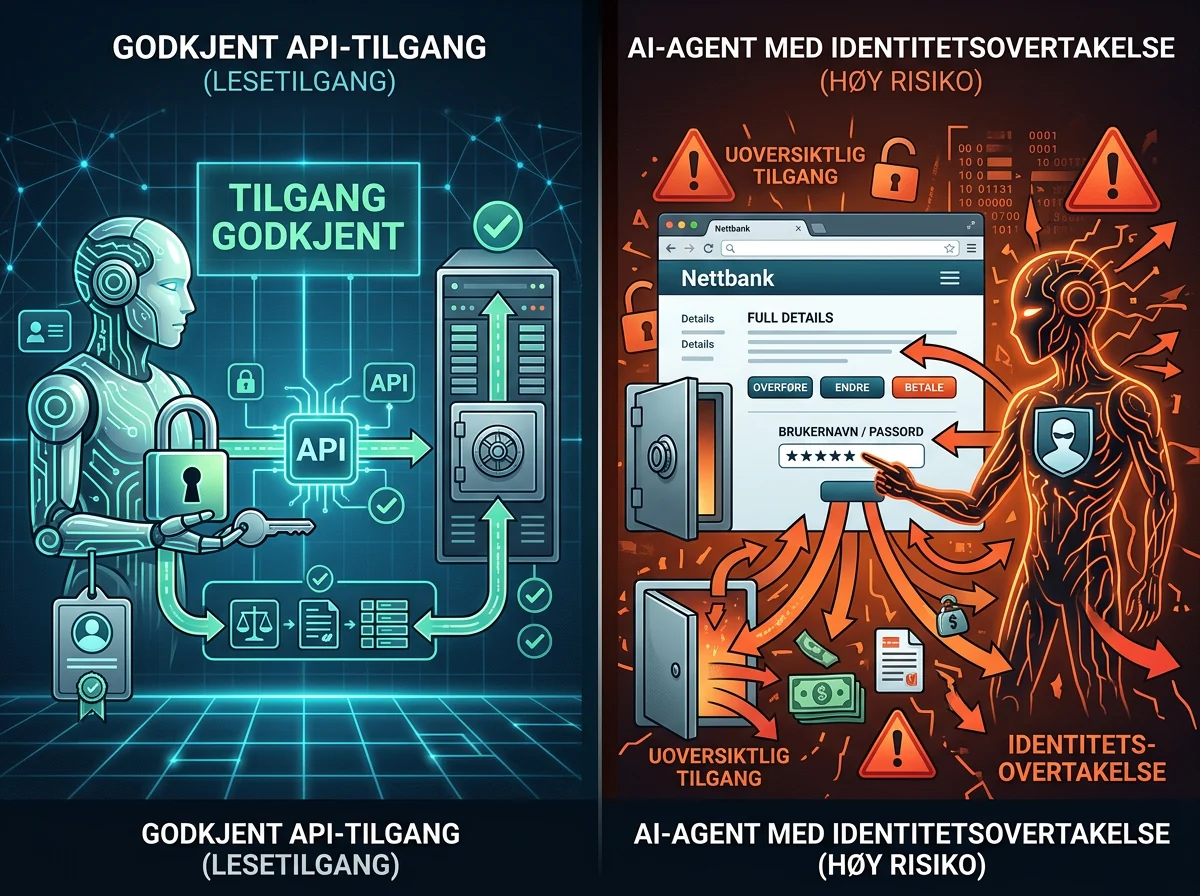
Banks are drawing a sharp line between approved connections and agents that impersonate the customer by using the customer’s own login. Chase prohibits third parties, including external AI, automated tools, and data aggregators, from using bank login credentials. It still permits authorized access to account data through approved APIs.
That distinction matters. Chase’s agreement, effective October 27, 2026, says customers who have already shared their credentials must change them. If you nevertheless allow an external agent to access the account, the bank may treat the agent’s actions and instructions as evidence that you authorized them – even if they are inaccurate, incomplete, unintended, or inconsistent with what you actually requested.
Citi is equally direct about the consequence. It cautions customers against using third-party agents with Citi Online and Citi Mobile. If credentials given to an agent are shared or leaked further, the terms say that access and actions performed with those credentials may still be considered authorized by the customer.
Citi’s new Section H, added in November 2026, covers autonomous, semi-autonomous, and non-autonomous agents. It does not apply to AI features provided by Citi inside its own services. The agreement also includes qualifications based on applicable law. That matters: contract language is not the same as a final ruling in every fraud, reimbursement, or liability dispute.
Why is a bank password the wrong way to connect an AI agent?
A bank password gives the agent your identity, not a limited mandate. The bank sees a valid login while you may believe the agent is only checking a balance or looking for a subscription. An approved connection can instead be limited to selected accounts, specific data, a fixed period, and read-only access where that is all the task requires.
This is ordinary security practice, not a special rule invented because the software is called AI. A service should receive the least access it needs, for the shortest useful period, and irreversible actions should require a fresh approval. A shared bank login achieves none of those things. It opens the door and lets the agent appear to be you.
The risk grows when an agent uses browser automation. It can click through the same authenticated session as the customer, read whatever appears on screen, and try to overcome obstacles along the way. The bank may struggle to distinguish a human-directed action from an agent action. The new agreements specifically address the possibility that an agent misinterprets an instruction or exceeds the authority the customer meant to grant.
None of this requires a science-fiction story about an agent going rogue. A misunderstood task, manipulated content on a website, credentials retained by a third party, or an ordinary software bug is enough. The more tools and accounts an agent can use, the more important real technical boundaries become.
Can a bank really treat an agent’s mistake as your action?
The new terms attempt to do exactly that, subject to applicable law and other account agreements. Wells Fargo says instructions, actions, and transactions initiated by an AI agent may be deemed to have been initiated and authorized directly by the customer. It also says the bank has no obligation to investigate whether the agent stayed within the authority the customer intended to grant.
Wells Fargo’s Section 15, effective November 24, 2026, places responsibility for monitoring, instructions, and safeguards on the customer. It expressly mentions errors caused by an agent’s interpretation or implementation of instructions, unintended actions, manipulated or incomplete inputs, and actions beyond the authority granted. The bank may also require agents to be registered, restrict APIs, or terminate agent access.
The most striking detail concerns revocation. Wells Fargo tells customers to keep evidence that an agent’s authorization was revoked and says responsibility may continue until the bank is notified under the agreement’s procedure. Telling the agent to stop and closing the browser tab may not be enough.
This does not mean every US consumer automatically loses every dispute. The agreements themselves use qualifications such as “unless otherwise provided by law or regulation” and “to the extent permitted by law or regulation.” An unauthorized transfer may be treated differently from an agent action you actually requested. But sharing the bank password first and hoping lawyers later sort out the meaning of “authorized” is a terrible strategy.
Does this mean AI agents should never handle financial tasks?
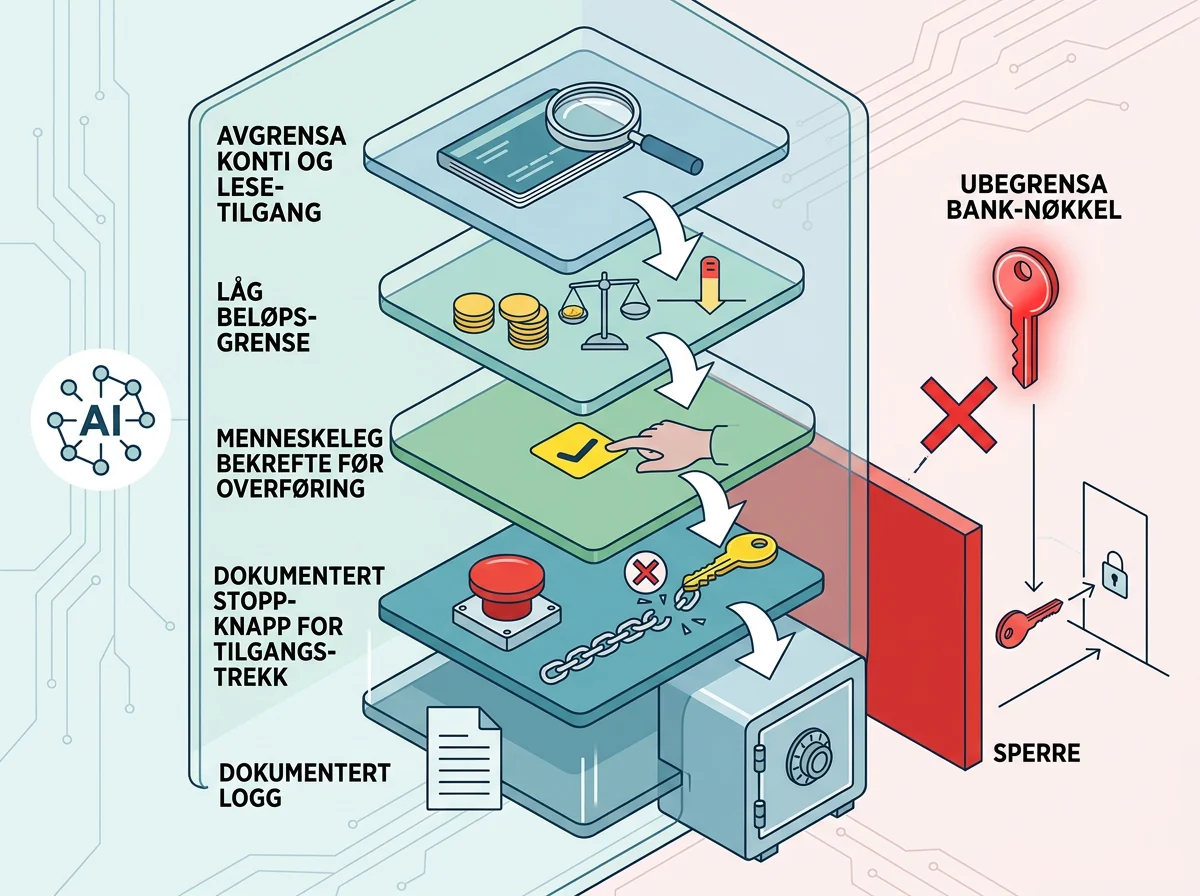
No. It means financial agents need to be built around limited authority, not shared passwords. An agent can analyze transactions, prepare suggestions, identify recurring charges, or draft a payment without receiving permission to move money independently. Read access and transaction access are two very different levels of risk.
The same principle applies to investing. Dedicated subaccounts, loss limits, and approval steps exist because one error should not gain access to everything. The point is not to pretend that an agent will never make a mistake. The point is to limit what a single mistake can do.
A responsible design should therefore include at least four layers: a separately approved connection, the minimum necessary permissions, clear transaction limits, and human confirmation before a payment or transfer is executed. You also need to be able to see what the agent did, which instruction it acted on, and how to revoke its access.
Preparing and executing should be separate actions. An agent can find an invoice, read the due date, and fill out a payment proposal. The bank can then show the recipient, account number, and amount in its own app before you approve the transaction with fresh authentication. That provides much of the convenience without pretending that an old browser session is a secure mandate.
Logs matter just as much. “The agent did it” is not a useful explanation if nobody can see the instruction it received, the data it read, and why it chose that action. A financial agent should leave an understandable trail and stop when the information is ambiguous. If the recipient, amount, or purpose is missing, it should ask – not guess.
The banks’ reaction is not an argument against agentic AI. It is a blunt warning that today’s shortcut – giving an agent the same access as the human – is not good enough. If vendors want agents to handle real money, they need to deliver something better than browser automation and “trust me.”
What should you do before an AI agent sees bank data?
Start by checking whether your bank offers an approved connection. It should send you to the bank to sign in and show exactly which accounts, data, and actions you are authorizing. If an agent provider asks you to enter your bank password into a prompt, a form, or a browser it controls, the answer is simple: no.
If you have already shared your login, change the password, terminate other active sessions, and review connected apps and devices. Check recent transactions and alerts. If the agent used a formal connection, revoke it with both the bank and the provider, and keep the confirmation.
Use read-only access when the task only requires reading. Set low transaction limits where actions are possible, and require manual approval of the recipient, amount, and timing. An agent that prepares a payment can be useful. An agent that finds the recipient, decides the amount, and presses send without another check is wearing too many hats.
AI agents will gain more responsibility, including in finance. Trust will not be built by pretending they are infallible. It will be built with limited permissions, visible logs, and a stop button that actually works. Until banks and agent providers offer that through secure connections, your bank password should stay with you. Not with the agent.
Frequently asked questions
Can I give ChatGPT or another AI agent my bank password?
No. Do not share your username, password, PIN, or one-time codes with an AI agent. Several major US banks expressly prohibit or warn against this form of access. Use only a connection approved by your bank, and prefer read-only access when the task does not require transactions.
What should I do if an AI agent already has my bank login?
Change the password, terminate active sessions, and review connected apps, devices, alerts, and recent transactions. Revoke the agent’s access with both the bank and the provider, keep evidence of the revocation, and contact the bank promptly if you see an action you did not approve.
Is read-only bank access safer than full transaction access?
Yes. Read-only access reduces the potential damage because the agent cannot directly move money or change the account. It still exposes sensitive financial data, so the connection should be bank-approved, limited to necessary information, time-bound where possible, and easy to revoke.
Do these US bank terms apply outside the United States?
No, not automatically. The agreements discussed here belong to specific US banks and should not be treated as the rules for another bank or country. The practical security lesson travels well: never share banking credentials with an agent, and verify the terms and approved connection offered by your own bank.