Innhold Show
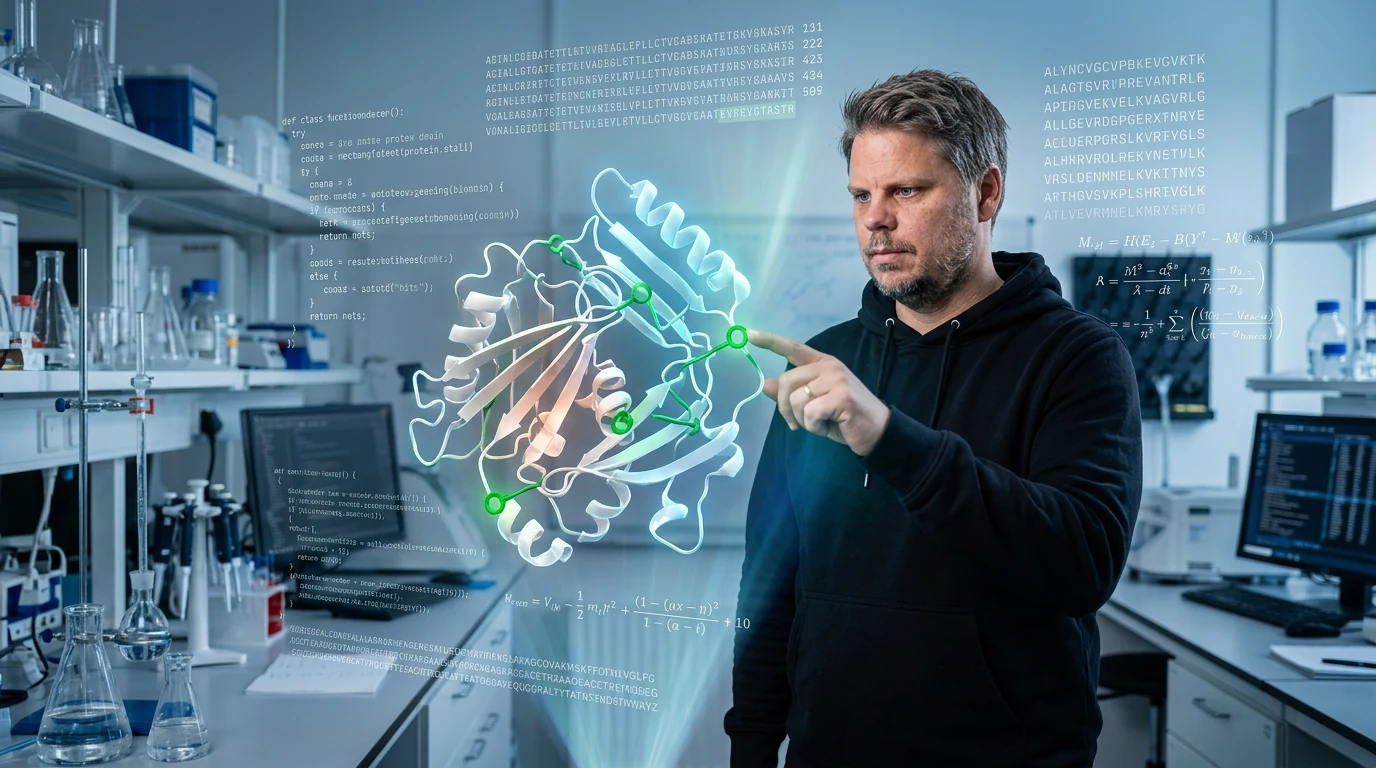
GPT-6 can design protein shapes and amino acid sequences with reasoning and general-purpose code – and several of those designs produced measurable binding in the lab. In the largest wet-lab experiment, 35 of 322 small proteins bound to the targets they had been designed for. The researchers found at least one hit for every one of the five targets.
That makes this much more than a language model that has learned to talk convincingly about biology. GPT-6.2 created three-dimensional protein shapes, proposed new sequences and redesigned parts of antibodies. Researchers could guide the work in plain language by specifying where a protein should attach, what shape it should take and which parts should change.
This is a concrete step toward AI models that can work across scientific fields without requiring a new specialized tool for every task. But it is not a finished digital drug factory. Specialized protein models still proposed sequences, filtered candidates and checked how they were likely to fold. That distinction is essential to understanding how significant the result really is.
What did GPT-6 actually do with proteins?
The GPT-6 family designed new protein structures and amino acid sequences by combining knowledge of biology, mathematics, physics and chemistry with code. According to OpenAI’s presentation of the protein study, the models generated these designs without calling specialized biology models during the design process itself.
Proteins are chains of amino acids that fold into three-dimensional shapes. Their shape largely determines what they can do, whether the job is driving a chemical reaction, carrying oxygen or attaching to another molecule. Protein design can therefore work in both directions: researchers may begin with a desired shape and look for a sequence that will fold correctly, or begin with a function and search for both a shape and a sequence.
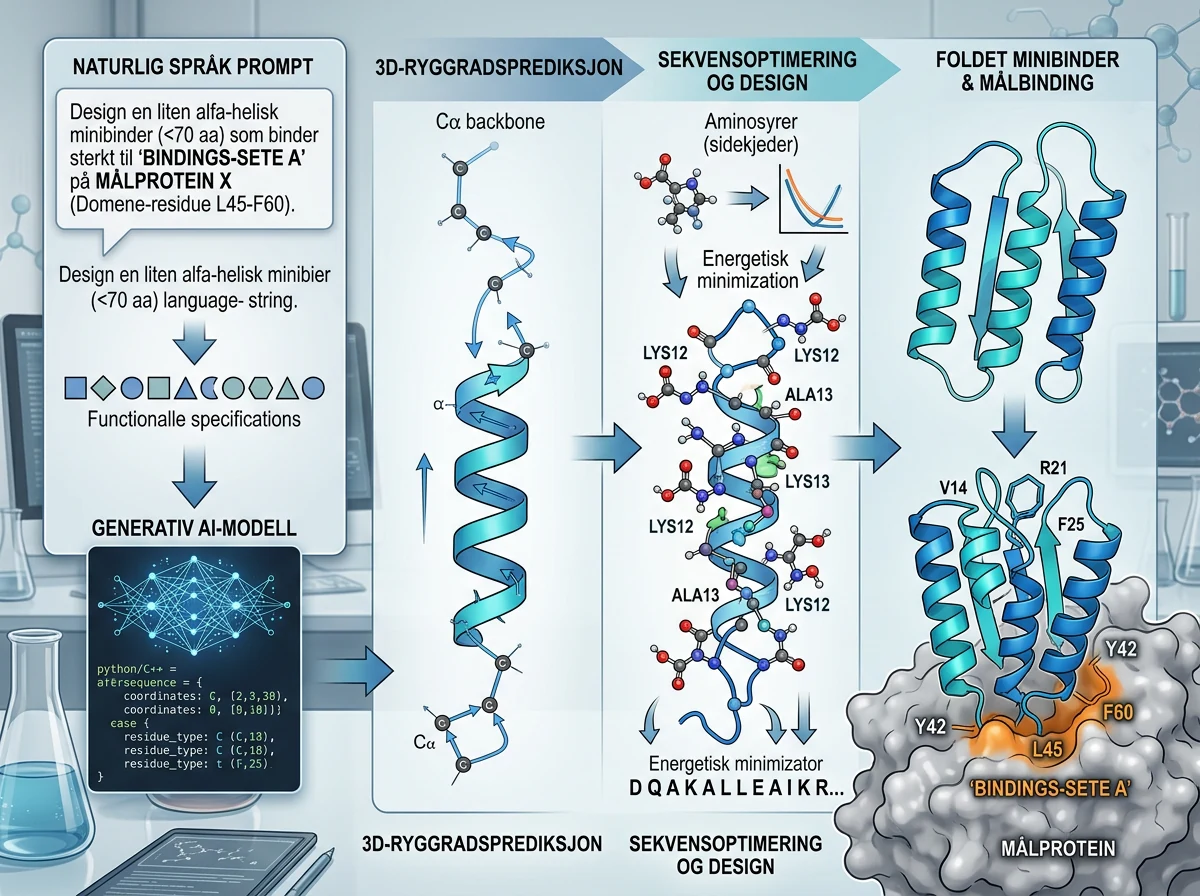
The new part is the breadth and the degree of control. A conventional workflow often connects several specialized models, each with fixed inputs and constraints. The GPT model could instead receive new requirements in a prompt and write code to solve the task. Researchers could specify a contact site on a target protein, the number of helices or strands in a minibinder and even particular chemical interactions – without retraining the model.
Did the GPT-6 protein designs work in the lab?
Yes. Several designs showed measurable binding in laboratory tests. Working with Onava, the researchers tested 322 minibinders against five target proteins. Of those, 35, or 10.9%, bound to their intended target: 5 against PD-L1, 3 against IL-7Rα, 1 against TrkA, 8 against VEGF-A and 18 against IL-17A.
In this experiment, GPT-6.2 created the three-dimensional backbones for the small proteins. A specialized model called SolubleMPNN proposed amino acid sequences that could fold into those shapes, while other protein models helped select which candidates should be produced and tested. The result shows that GPT-designed shapes could become real proteins that attached to their targets. It does not show that GPT-6.2 completed the entire process alone, from prompt to finished protein.
The hit rate was lower than the one reported in the original RFdiffusion study used for comparison. Such rates are heavily affected by how strictly candidates are filtered before lab testing and by what researchers count as binding. So 10.9% is not a simple scoreboard for declaring one model “best.” The important result is more grounded: GPT-generated structures produced hits against all five targets, rather than merely creating attractive shapes on a screen.
Could the model design the sequences too?
GPT-6.2 also proposed amino acid sequences for existing protein shapes, and many retained their ability to bind. For three known minibinders, the initial lab screens found binding in 75 of 88 designs against MDM2, 26 of 42 against VEGF-A and 8 of 59 against PD-1. The median differences from the original sequences were 43%, 50% and 15%, respectively.
An even stronger test used three unpublished protein shapes that GPT-6.2 had previously created. Of 107 proteins made with new GPT-designed sequences, 14, or 13.1%, showed binding. Because the structures were not public and several sequences differed substantially from the originals, simple memorization is a poor explanation for the result.
In one case, the model created two working sequences for the same PD-L1 minibinder. They differed from the original at 52 and 58 of 90 positions, and differed from each other at 44 positions. That is a fairly powerful signal that the model was not merely trying to reproduce one known answer. It found multiple possible routes to a similar function.
What happened when GPT-6 redesigned antibodies?
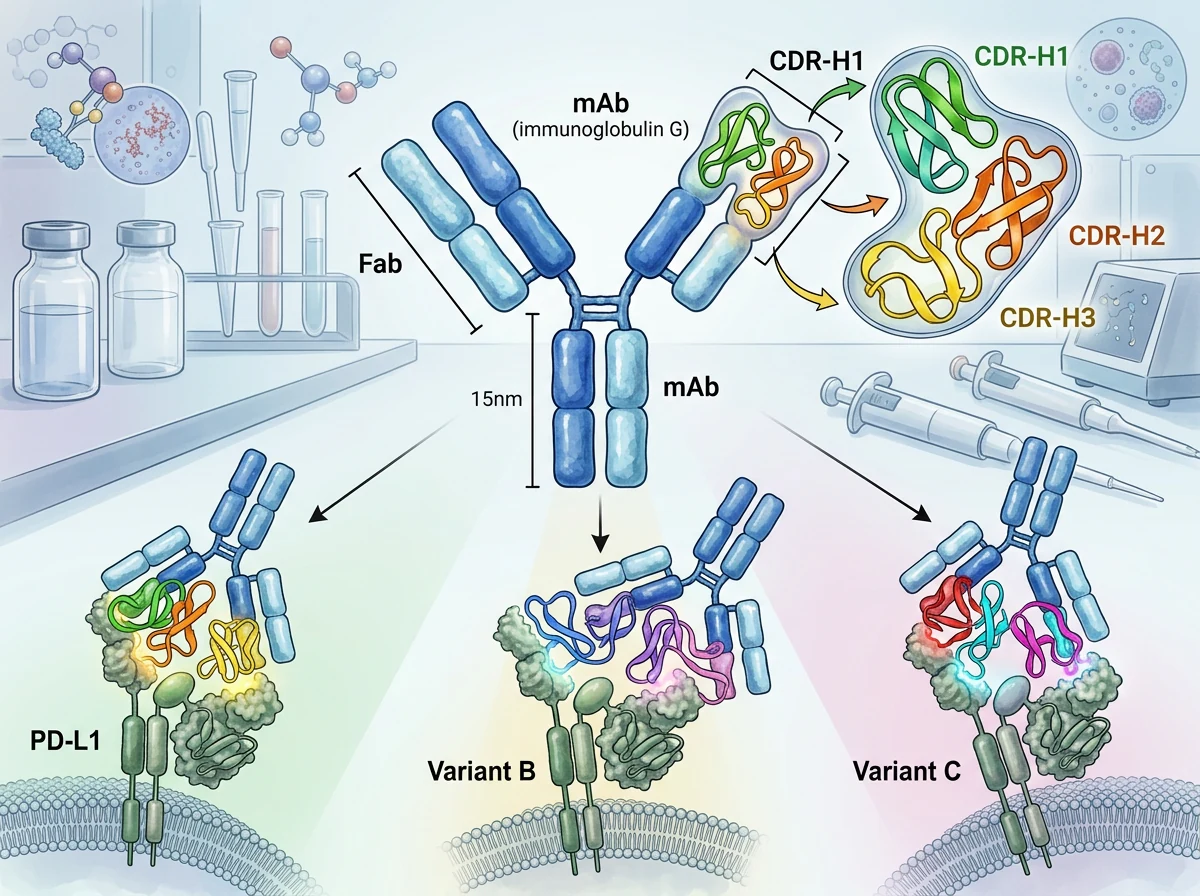
The researchers asked GPT-6.2 to fill in the three loops that allow an antibody to grip its target. The model received the rest of the structure and sequence, but not the loop sequences. Of 182 designs across six small antibodies, 128, or 70%, showed signs of binding to IL-4Rα.
In another experiment, the model received the sequences of five therapeutic antibodies and was instructed to replace roughly half the amino acids in three binding loops. The researchers tested 272 antibody fragments, and 179 of them – 66% – retained binding to PD-1 or PD-L1.
Binding alone does not mean that a redesigned antibody is safe, stable or more effective as a medicine. Still, this was not just a theoretical puzzle. The model made large, controlled changes to the parts that actually meet the target, while many variants retained the basic function in the lab.
Why does plain-language control matter?
Researchers can describe requirements that a specialized tool may not have a dedicated control for. The GPT model could be told exactly where a minibinder should contact a target protein, whether it should consist of helices, strands or a mixture, and how many of each structure it should contain. An internal research model followed such shape requirements with near-perfect fidelity in its three-dimensional designs.
The same flexibility appeared in other tasks. The model could build the rest of a protein around a fixed three-dimensional motif, predict how small molecules sit against a protein and rank how mutations affect stability or binding. In a test covering 30 motif-scaffolding tasks, 43.7% of designs from the latest internal model passed the computational checks, compared with 27.8% for RFdiffusion. Those proteins were not tested in the lab, so this is computational evidence – not biological proof.
This points to a different role for general models than merely acting as the conductor for a collection of tools. They can still coordinate specialized models, but they are beginning to solve parts of the scientific task directly. More capability is moving into the general model, while specialist tools remain the checkers and amplifiers where they are still strongest.
Where is GPT-6 still weak?
The clearest weakness is predicting a complete three-dimensional protein structure from an amino acid sequence. The average TM-score rose from 0.16 for GPT-5.6 to 0.26 for GPT-6.2 and 0.38 for the latest internal model. The specialized ESMFold2 model reached 0.93. On this specific task, the gap remains enormous.
That is also why specialized models remained part of the practical pipeline. Boltz-2, OpenDDE and ESMFold2 filtered candidates. SolubleMPNN and ProteinMPNN proposed sequences in parts of the work. The technical preprint on GPT-6 and protein biology is explicit about this limitation: the results do not establish that the model can generate new minibinders end to end in a zero-shot setting without help from specialized models.
The lab work also measured binding as its primary result. A protein can bind and still be useless because it is unstable, attaches in the wrong places, is difficult to manufacture or fails to produce the desired biological effect. Drug development adds safety and efficacy requirements on top of all that. There are many steps between “it attached” and “it helps a patient.”
What does this mean for AI in science?
What excites me most is not one hit rate or a victory on a leaderboard. It is that a general-purpose model could move from plain-language instructions to chemically and geometrically precise proposals, write its own code along the way and deliver designs that survived contact with the laboratory.
If this continues to scale, researchers may be able to change their requirements without rebuilding the entire toolchain. They could request a different contact site, a particular shape or greater distance from a known sequence and receive new candidates in the same workflow. The goal is not to remove the laboratory. It is to reduce the number of design-and-test cycles needed to find something that works.
I think the right way to read this result is big, early and unfinished. GPT-6 has demonstrated a real protein-design capability that extends beyond text and code. The wet-lab data makes the claim far more compelling than a purely computational benchmark. At the same time, specialist models and laboratory testing remain indispensable. The breakthrough is that a general AI model has earned a place in the middle of the scientific workflow – not that the rest of science can be packed away.
Frequently asked questions
Can GPT-6 create a finished drug on its own?
No. GPT-6.2 created protein shapes and sequences, but specialized models helped with sequences, filtering and structure checks. The laboratory showed binding, not complete evidence of stability, specificity, biological effect, safety or medical benefit.
How many GPT-6-designed proteins showed binding in the lab?
In the new-minibinder experiment, 35 of 322 proteins showed binding to their intended targets, a hit rate of 10.9%. The researchers found at least one hit for each of five target proteins. Separate sequence and antibody experiments produced their own, higher hit rates.
Did GPT-6 use specialized protein models?
Not to generate the GPT designs described in the study. The model used reasoning and general-purpose coding tools. Specialized models were still used afterward to propose some sequences, rank candidates and check expected folding before laboratory tests.
What is a minibinder?
A minibinder is a small designed protein intended to attach to a specific area on a target protein. These molecules can serve as research tools and may eventually contribute to diagnostics or treatments, but binding is only the first step.