Innhold Show
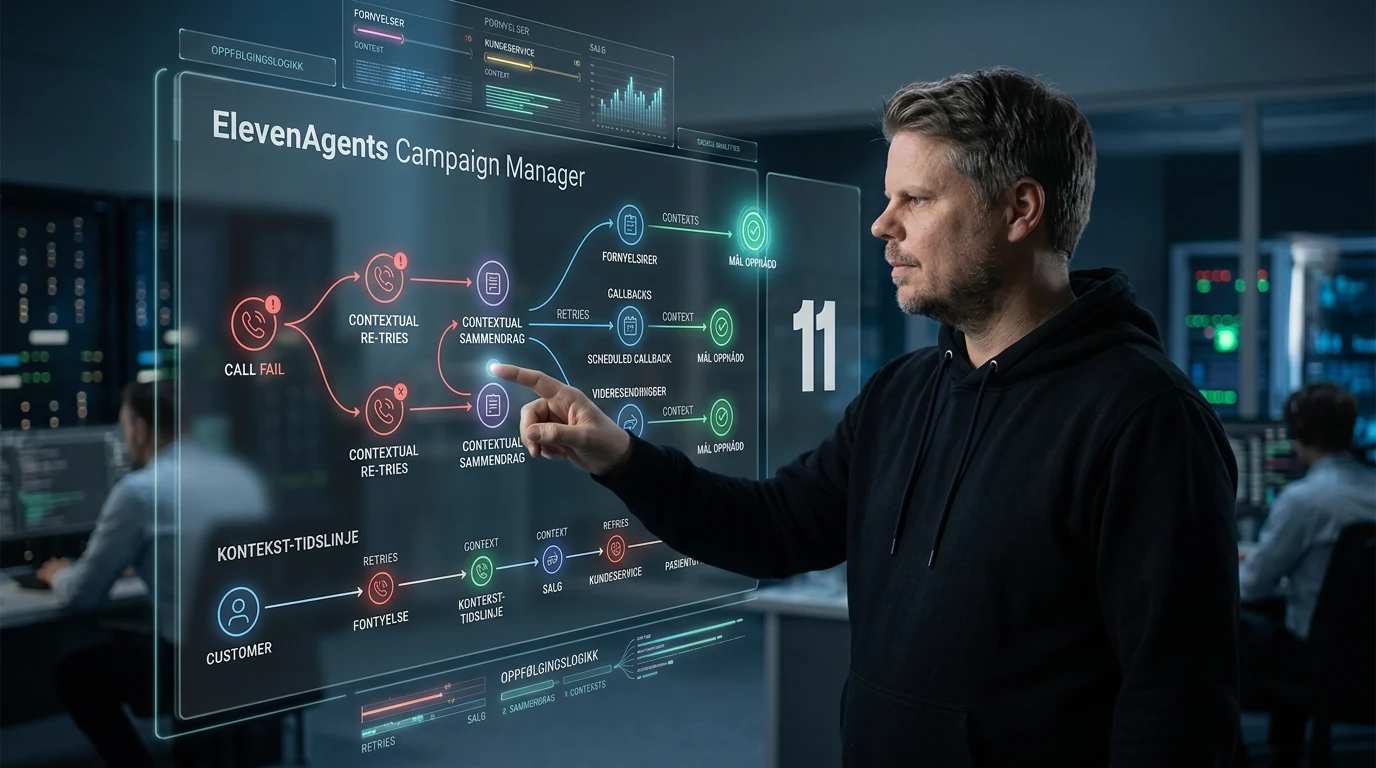
ElevenAgents Campaign Manager lets an AI agent follow a contact across multiple conversations until it reaches the goal, the person asks not to be contacted again, or the campaign reaches its attempt limit. One unanswered call no longer has to be the end of the workflow.
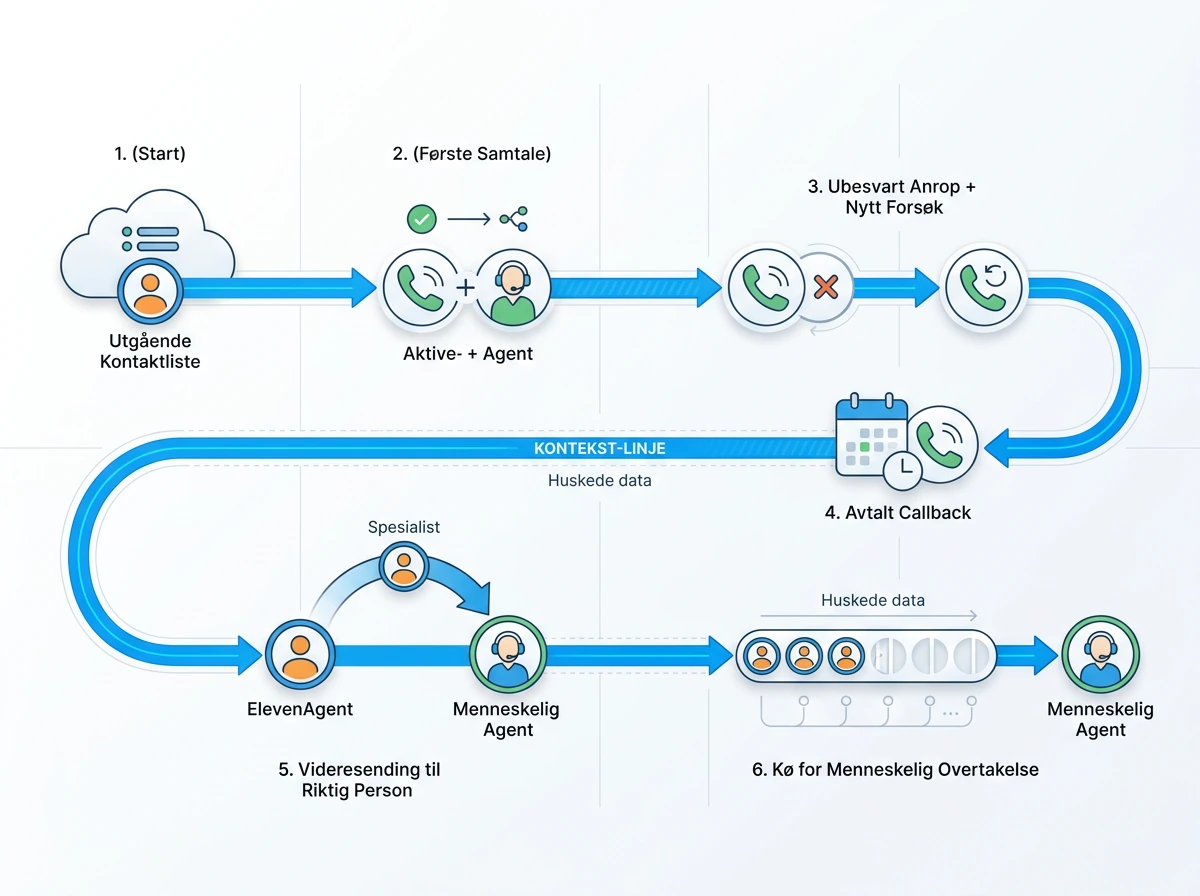
The agent can try again during defined calling hours, call back when the recipient requests it, move to another person on the same account and carry context forward from the previous conversation. The company also gets a timeline showing what the agent did, why it did it and which cases need a human to take over.
This is a sensible upgrade for companies already using ElevenAgents. I use agents in my daily work, and the difference between a polished demo and useful automation often comes down to follow-up: Can the system manage state, exceptions and the next step without making a human start from scratch every time?
What is ElevenAgents Campaign Manager?
ElevenAgents Campaign Manager is a system for outbound campaigns with retries, callbacks, transfers and defined calling hours. ElevenLabs launched it on November 9, 2026, for use cases including sales, renewals, patient follow-up, collections, customer service and recruitment.
You give a campaign a contact list and a defined goal, such as a qualified lead or a confirmed appointment. The agent then continues working within the rules you set. If the recipient does not answer, it can try again. If the recipient asks for a call at 4 p.m., it can schedule a callback. If someone else handles the matter, it can move to the next number.
The important change is not that an AI voice can call many people. ElevenLabs already offered Batch Calling for parallel calls. Campaign Manager treats each contact as a stateful journey with an end goal, not as one row on a dialing list. Batch Calling is being deprecated in favor of Campaigns, which adds the follow-up logic the older system lacked.
What does the agent do between conversations?
Campaign Manager reads the analysis from the previous conversation and uses it to choose the next action. It can distinguish between a first contact, a retry, a callback and a transfer. Variables can provide the next conversation with a summary, the previous conversation ID or the full transcript, so the agent does not have to repeat the same opening from the beginning.
That continuity is the product. A customer who says that her daughter manages the family subscription should not have to explain the entire story again when the agent calls the daughter. A sales contact who requests another call later in the day should receive a follow-up that knows why the call is happening and what has already been settled.
This depends on the agent collecting the signals the system needs. ElevenLabs highlights three important data points: the requested callback time, the phone number for a transfer and an instruction to stop further contact. If the prompt and conversation analysis fail to capture those correctly, no magical campaign layer will clean up the mess afterward.
How much control does a company get?
Companies can set a time zone, calling windows and limits for retries, callbacks and transfers. The documentation lists six total calls per recipient as the default and 30 as the absolute maximum. That is a technical ceiling, not advice to call someone 30 times.
A campaign policy is locked when the campaign is created. If you later change the workspace defaults, the new settings apply only to new campaigns. An active campaign that needs different limits or calling hours must be stopped and recreated. That detail could become expensive or embarrassing if someone assumes a general settings change takes effect immediately.
Each contact gets a decision timeline, while the campaign provides a funnel from enrollment to outcome. Cases the agent should not guess about go into a queue for human follow-up. Every attempt, callback and transfer is logged, and the data can be exported as CSV.
ElevenLabs also says Campaign Manager uses its existing guardrails, detects when a call reaches another automated system and can redact sensitive information from transcripts and recordings. Those are useful controls. They do not replace a proper review of consent, data retention, disclosure to recipients and the rules that apply where each contact is located.
Phone and WhatsApp are ready – email and SMS come later
At launch, Campaign Manager supports ordinary phone calls, WhatsApp Voice and WhatsApp messages. The phone channel has full support for retries, callbacks and transfers. WhatsApp Voice first sends one permission request per recipient, while the text channel uses an approved message template and does not have the same retry logic.
Email and SMS have been announced, but the documentation still marked both as upcoming channels on November 24, 2026. It would therefore be wrong to describe Campaign Manager as a finished omnichannel engine for every common outbound channel. For now, phone and WhatsApp are the actual product.
Contacts can be uploaded as a CSV file or submitted through the API. One recipient can have up to five phone numbers. Campaign configuration, creation, management and analytics are also available through the API, allowing companies to connect campaigns to CRM systems and other workflows instead of managing everything manually in the ElevenLabs interface.
That matters. The value is not merely that the agent can speak. The value appears when the result flows back into the system that owns the customer, task or appointment. ElevenLabs has also opened a separate API for real-time translation, but the sources for this article do not document how Campaign Manager handles Norwegian speech, dialects or interruptions in practice. This is not a Norwegian-language quality test.
How much does Campaign Manager cost?
ElevenLabs does not list a separate campaign fee in the launch material. The public ElevenAgents pricing page starts with 15 included minutes on the free tier. The Starter plan costs $6 per month, while Creator costs $22 per month.
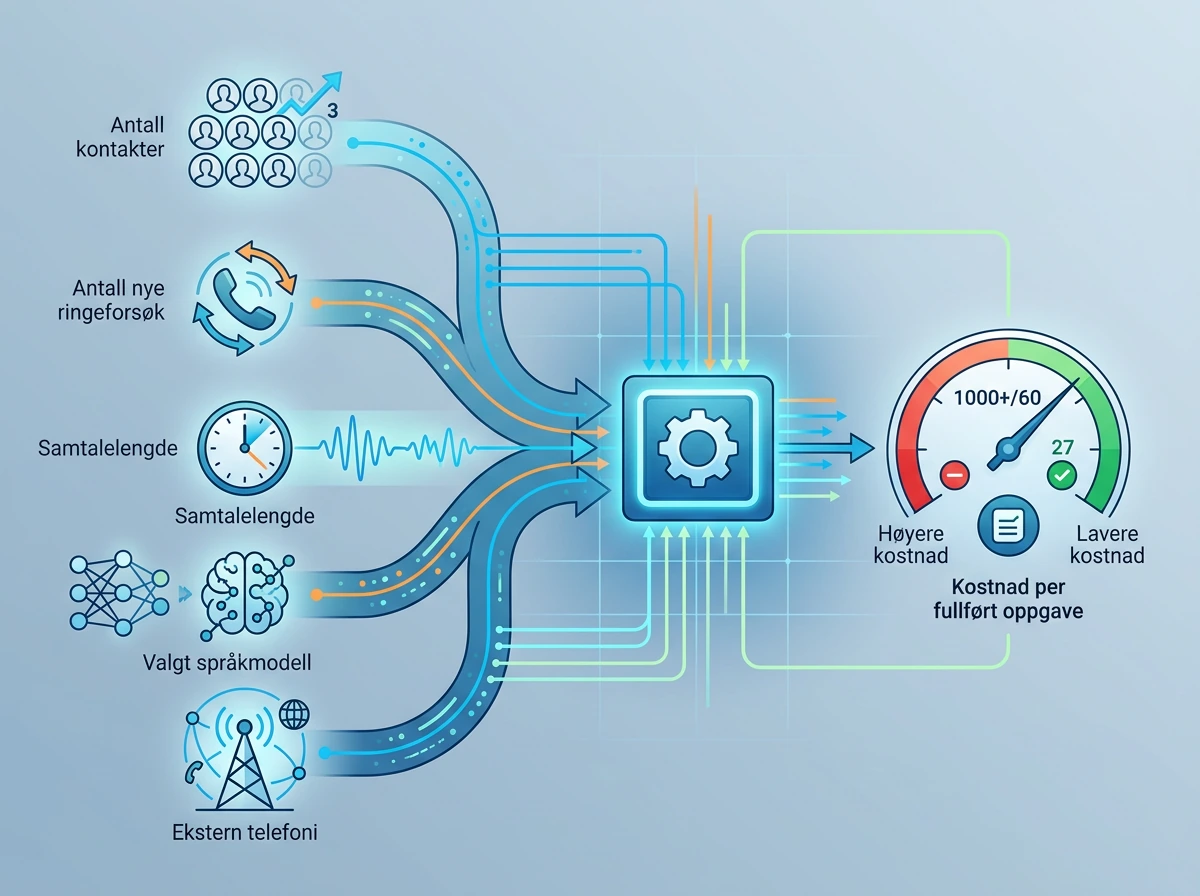
Additional conversation time is listed at $0.08 per minute. Calls that exceed a plan’s normal concurrency limit can use burst capacity at $0.16 per minute. Language model usage is billed separately according to the selected model, and external telephony through a provider such as Twilio or SIP can add charges from that provider.
The real campaign cost therefore depends on the number of contacts, the number of attempts, conversation length, the chosen model and telephony. A campaign that allows many retries can cost more than the spreadsheet suggests, even when the per-minute price looks low. That is another reason to start narrowly and measure the cost per completed outcome, not merely the cost per call.
Where are the most important limitations?
Campaign Manager cannot be used in workspaces or with agents that have Zero Retention Mode enabled. Follow-up decisions depend on persistent conversation state and analysis. That makes technical sense, but it creates a real trade-off for organizations that selected zero retention precisely because their conversations are sensitive.
Do-not-call status also belongs to an individual campaign. A recipient can appear in several campaigns, and the system does not automatically stop a new campaign because that person asked a different campaign to stop calling. ElevenLabs therefore recommends removing duplicates across campaigns when the same person must not be contacted in multiple places.
A calling window uses one time zone per campaign. If recipients span several time zones, they should be separated into different campaigns. A callback scheduled for a time the recipient specifically requested is an exception and can take place outside the normal calling window. That is practical, but it makes accurate capture and storage of the requested time even more important.
Finally, the results in the announcement are the vendor’s own examples. ElevenLabs cites one customer that previously reached 50 to 60 percent of its daily list and now reaches 100 percent. That says something about coverage in that particular operation. It is not independent evidence of higher sales, happier recipients or correctly resolved cases.
How I would evaluate a pilot
Start with one narrowly defined task where the outcome can be checked: a confirmed appointment, a completed renewal or a correctly qualified lead. Use a short contact list, a low call limit and calling hours comfortably within what is both lawful and reasonable. The documentation itself recommends a small number of well-timed attempts rather than maximum persistence.
Measure more than how many people the agent managed to call. Check how many cases received the correct final status, how often a human had to intervene, how many recipients asked not to be contacted again and what each completed task cost. If the agent reaches 100 percent of the list but humans have to clean up half the cases, you have only automated the beginning of the problem.
Test the entire chain around the conversation as well. The callback time, transferred number and stop instruction must be captured correctly. Context must carry forward without the agent mixing up people or repeating itself. The CRM must receive the right result, and a human must be able to see why the agent selected the next step.
Campaign Manager addresses a genuine weakness in many voice-agent demos: They show one successful conversation and elegantly skip everything that happens when nobody answers, someone wants to talk later or a human needs to take over. ElevenLabs has now built that missing layer into the product. It makes the system more useful, but also more demanding to configure responsibly. A persistent agent is an advantage only when the goal, limits and stop button actually work.
Frequently asked questions
Can ElevenAgents Campaign Manager call the same person more than once?
Yes. A campaign can retry unanswered or failed calls and complete callbacks requested by the recipient. You set the limits. The default is six total calls per recipient, while the documented absolute maximum is 30.
Can Campaign Manager run with Zero Retention Mode?
No. Campaign Manager needs persistent conversation state and analysis to choose the next action and carry context into a follow-up. ElevenLabs therefore rejects campaigns in workspaces and for agents that use Zero Retention Mode.
Does Campaign Manager support SMS and email?
Not yet. Phone, WhatsApp Voice and WhatsApp messages are available. ElevenLabs says SMS and email are coming later, but its documentation did not provide a specific launch date for either channel as of November 24, 2026.
Has Norwegian speech been tested in ElevenAgents Campaign Manager?
Not in the sources for this article. They document campaign features, channels and controls, but not a dedicated test of Norwegian speech, dialects, interruptions or understanding in Campaign Manager. There is no basis for a Norwegian quality verdict here.