
Innhold Show
If your company handles conversations in several languages, the Eleven Realtime Translation API can move live speech translation directly into your phone system or service. It receives speech, detects the source language and returns translated audio while the conversation is still happening. That makes it relevant to customer support, telecommunications and live events where waiting for a separate interpreter is not always practical.
This is not a new translation app that anyone can download and try over lunch. ElevenLabs launched the service on October 21, 2026 as an alpha for enterprise customers using ElevenAPI. Access goes through the sales team, and the company has not published a price.
I like the fact that ElevenLabs combines incoming audio, translation, captions and outgoing audio in one stream. That can save developers from stitching several services together. But support for more than 90 output languages is a statement about capacity, not evidence that Norwegian dialects, specialist terminology and difficult phone calls work well. We do not know that yet.
What is Eleven Realtime Translation?
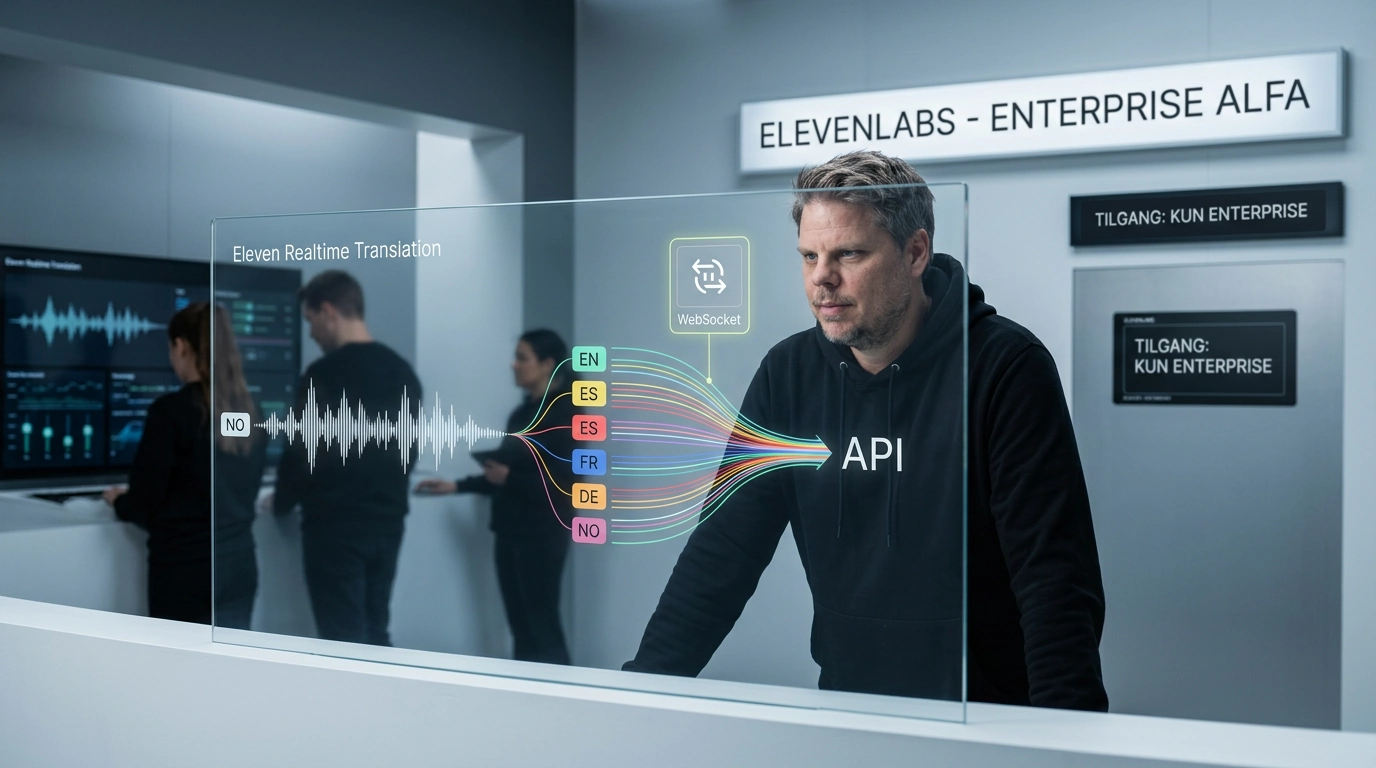
Eleven Realtime Translation is a WebSocket API that translates speech into speech while the speaker is still talking. ElevenLabs describes the launch as an enterprise alpha for telecommunications companies, contact centers and live events. Deutsche Telekom is already integrating it into the Magenta AI Call Assistant.
Each participant can speak their own language and hear the other person in theirs. The service can detect the source language automatically, while the developer chooses the target language and the voice used for the outgoing audio. Eleven v4 Turbo is the default speech model, although the API can also use Eleven v3 or Eleven Flash v2.5.
It is important to understand what a consistent voice means here. The service does not automatically reproduce the original speaker’s voice in every new language. The developer selects a voice from the library or supplies an Instant Voice Clone or Professional Voice Clone. ElevenLabs says its library contains more than 17,500 voices, and the selected voice can remain consistent throughout the session.
How does the API work?
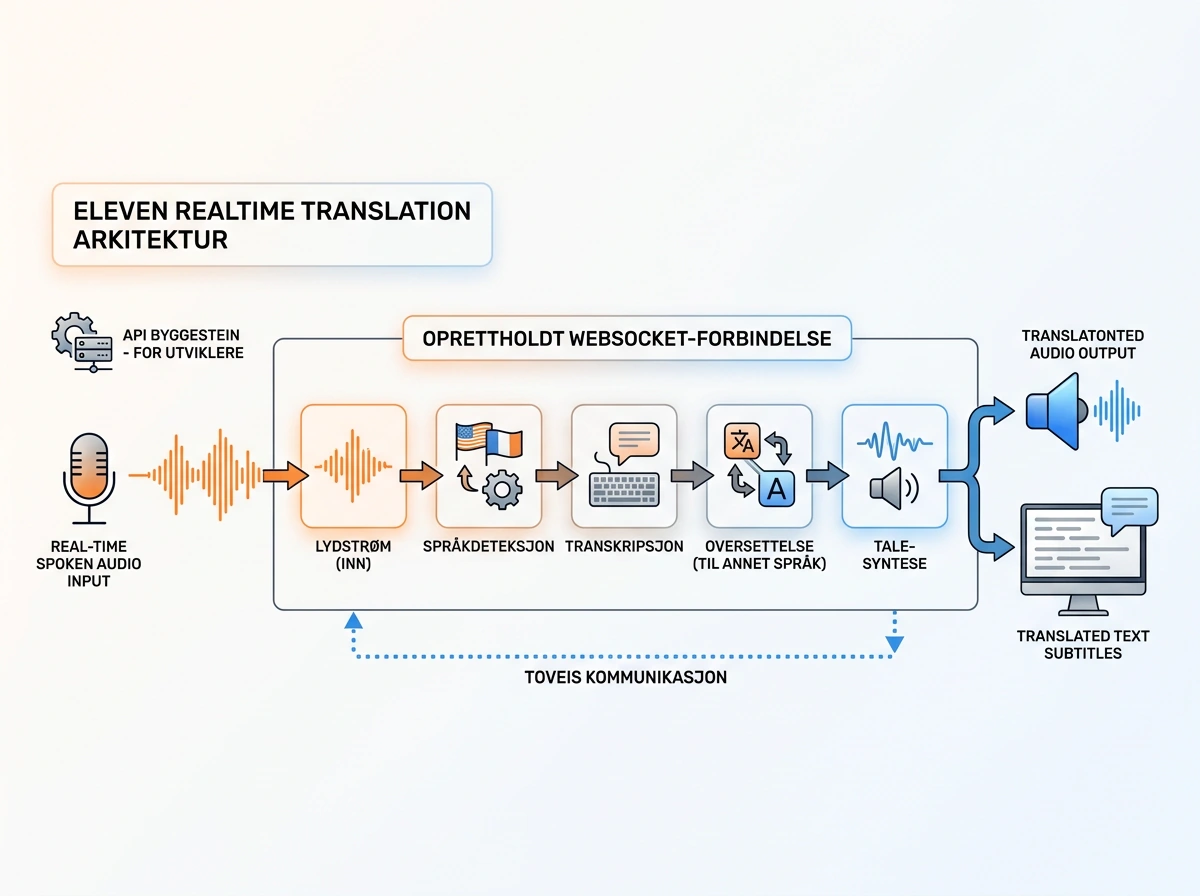
The integration uses one persistent WebSocket connection at wss://api.elevenlabs.io/v1/translation/realtime. According to the Realtime Translation API documentation, the client must provide at least target_language and voice_id. The source language can be specified or left for the service to detect automatically.
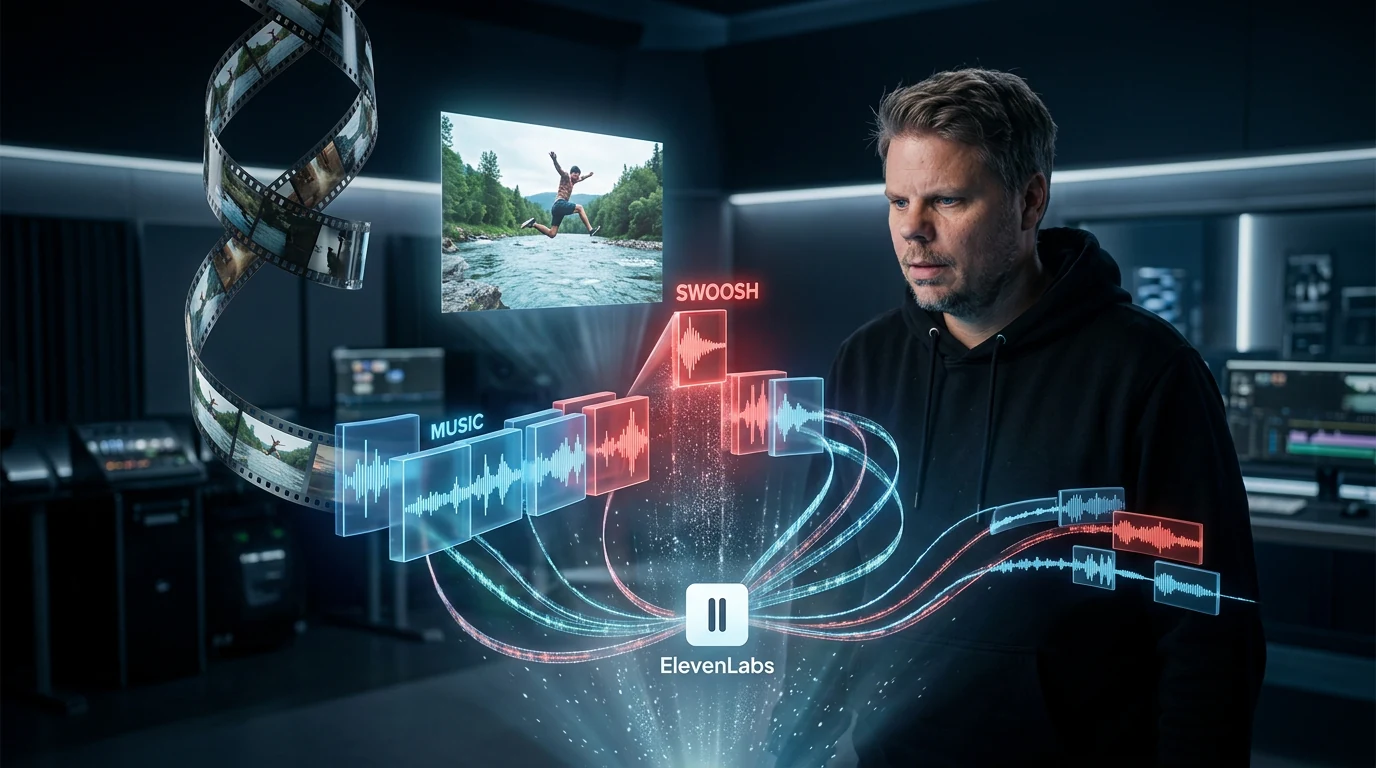
The client then streams chunks of audio as Base64 data. The service can return preliminary transcripts, final transcripts, translated text and finished audio. That gives a developer more than the sound alone: the same session can also drive live captions, a conversation display or logging where the use case and privacy requirements allow it.
A two-way conversation between two people still has to be integrated into the product or telephony layer. ElevenLabs explains that each participant can, for example, be connected to a separate instance of the endpoint. The API is a building block, not a complete contact-center product that handles routing, queues and the user interface on its own.
You can choose speed or more translation context
Real-time speech translation comes with a fairly brutal tradeoff: the system must wait long enough to understand the sentence, but not so long that the call feels like a bad satellite connection. ElevenLabs exposes that choice through an eagerness parameter with low, medium and high settings.
High starts translating earliest and prioritizes low latency. Low waits for more of the sentence and is intended to improve translation quality at the expense of speed. Medium is the default. Fast replies may matter most when someone is booking an appointment, while an insurance dispute or detailed billing complaint can become expensive if the system guesses before the speaker finishes the sentence.
The sensible part is not a claim that ElevenLabs has eliminated the tradeoff. It has not. What matters is that the tradeoff is visible in the API and can be configured for each session. A developer can use one profile for quick service exchanges and another for conversations where every qualification must be translated correctly.
What can companies actually use it for?
Contact centers are the most obvious use case. In theory, one employee can speak with customers in several languages without transferring every call to a language specialist. Telecommunications companies can place translation in the call layer itself, while event organizers can send translated audio and captions to attendees’ phones or headsets.
For smaller businesses, the most interesting possibility is probably not building a global telephone system from scratch. It is connecting speech translation to an existing switchboard, support platform or industry product through a supplier that handles the rest. An API should make that market more flexible: the feature can appear where customers already work instead of forcing everyone into one closed app.
That freedom also brings responsibility. ElevenLabs supplies a component that someone else has to turn into a complete product. The company using it must still handle security, consent, error recovery and the conversation experience. A clean API does not make those jobs disappear.
What do we know about Norwegian quality?
ElevenLabs says the service can produce audio in more than 90 languages with automatic source-language detection, and it uses Eleven v4 Turbo as the default voice model. The public launch material does not include a specific, complete evaluation of Norwegian speech translation, Norwegian dialects, noisy phone audio or interruptions.
That means I cannot give an honest verdict on Norwegian quality from the launch material alone. Listing a language would not be enough anyway. What matters in a Norwegian contact center is whether the system understands a customer through poor audio, a strong Haugesund dialect, people talking over one another, names, account numbers and specialist vocabulary.
This article is a source-based review of the launch, not my own test. Any company considering the service for Norwegian calls should demand evidence that covers Norwegian and the actual audio environment. If the supplier cannot provide it, a limited pilot using representative calls must be part of the purchasing decision – not a footnote after the contract has been signed.
Access, pricing and privacy still come with catches
Eleven Realtime Translation is currently available only to enterprise customers through ElevenAPI. There is no public self-service price, and the launch announcement does not say what a minute of conversation will cost. That is a fairly important omission for a feature that may run throughout long phone calls.
The documentation describes a Zero Retention Mode enabled with enable_zrm=true. In that mode, transcripts, translations and text sent to the speech model are not supposed to be stored in application logs or session history. The option is for enterprise customers, and it does not complete the privacy work by itself. A company must still know what data enters the system, where its own logs go, who can access them and what happens when an incident has to be investigated.
The API defines errors for authentication, excessive sending rates, insufficient credits, payment problems and failures in transcription, translation or audio generation. Some segment-level errors allow the session to continue, while others close it. A production system therefore needs a plan for what the customer hears when translation fails. Silence and hope are rarely a good fallback in customer service.
Is this better than building a separate pipeline?
The traditional approach joins speech recognition, text translation and speech synthesis as three separate components. That gives a developer the freedom to choose the best provider for each step, store intermediate results and replace one component without tearing down the rest. The downside is that every step adds latency, integration work and another place for the conversation to break.
ElevenLabs puts the stream behind one endpoint, but the events show that the underlying stages still exist: the developer receives the source transcript, translated text and audio as separate responses. The main benefit is simpler orchestration, with ElevenLabs taking more responsibility for the interaction among the parts. The downside is deeper dependence on one provider and less visibility into the performance of each stage.
ElevenLabs has kept this product focused on translation between people and systems. That is good. A clear component is often more useful than yet another AI box promising to do absolutely everything.
My verdict on the ElevenLabs launch
Eleven Realtime Translation looks like a relevant building block for companies that already have a concrete problem with multilingual conversations. The WebSocket interface is understandable, automatic language detection removes friction, and the option to adjust speed against context shows that the product takes a real weakness in live interpretation seriously.
But this is an alpha without public pricing or published figures for actual end-to-end latency. Support for more than 90 languages also tells us nothing about how well Norwegian works when reality arrives with a Haugesund dialect, background noise and a customer number spoken far too quickly. Marketing must not be allowed to do the job that documentation and measurements should do.
My verdict is simple: this is a promising API launch, not proof that the language barrier in customer service has disappeared. If you have a genuine enterprise need, it is worth investigating. Demand pricing, data terms and documented results for your languages before embedding the service in a critical conversation. The API could become extremely useful. The alpha label is still there for a reason.
Frequently asked questions
Can regular ElevenLabs customers use live translation now?
No, not as an open self-service feature. Eleven Realtime Translation launched as an alpha for enterprise customers using ElevenAPI. Interested companies must contact ElevenLabs, and the company has not published a general price or a date for wider availability.
Does ElevenLabs preserve the speaker’s original voice?
Not automatically. The developer selects a voice from the ElevenLabs library or supplies an Instant Voice Clone or Professional Voice Clone. That chosen voice can remain consistent during the session, but the service does not reproduce the original speaker’s voice in every language by itself.
Can the API provide captions as well as translated audio?
Yes. A session can return preliminary and final source transcripts, translated text and translated audio. That makes it possible to build live captions and a conversation display around the same stream, provided that the product also handles consent, storage and access appropriately.
Has the quality of Norwegian speech translation been proven?
Not by the launch material. ElevenLabs says the service supports output in more than 90 languages, but that is not a Norwegian evaluation of dialects, noise, interruptions or specialist terminology. Claims about those properties require evidence from the correct model and use case.