Innhold Show
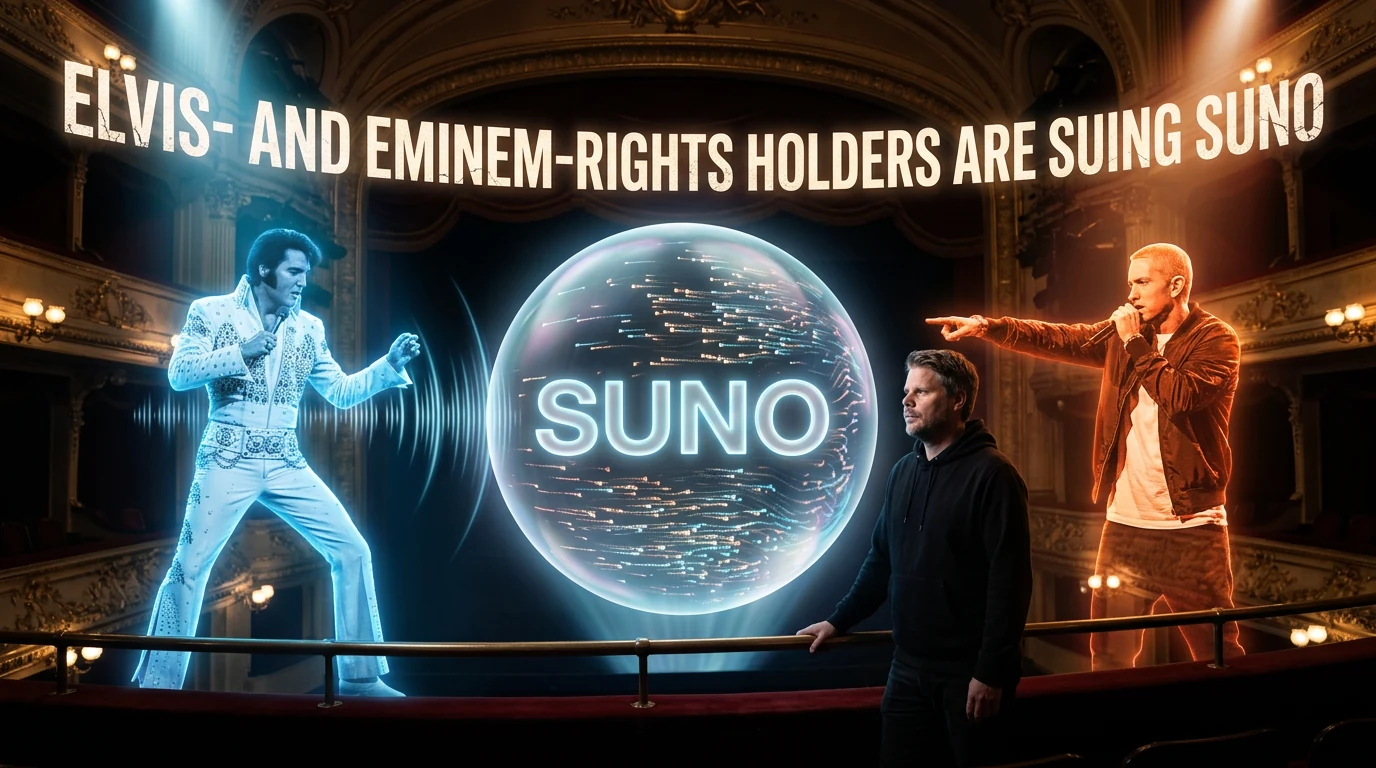
If you use Suno, the line between inspiration and imitation just became even more important. Rights holders representing Elvis Presley and Eminem filed two separate lawsuits against Suno on November 6, 2026, alleging that the AI music service used protected music without permission and can generate output that comes too close to well-known artists and works.
The lawsuits were filed in the same federal court in California, but they are not copies of each other. The Eminem case covers 269 compositions. The Elvis case covers 859 compositions and adds a separate claim involving name, voice, and likeness under Tennessee’s ELVIS Act.
That makes this more than another argument about training data. The court may have to distinguish between learning musical patterns, reproducing protected parts of specific songs, and offering a service that can allegedly generate an identifiable artist’s voice. For now, these are the plaintiffs’ allegations. Suno disputes the idea that its service is designed to trade on artists’ names or identities.
What are the two Suno lawsuits about?
The rights holders accuse Suno of unlawful copying during training and of producing infringing output. Together, the complaints list 1,128 compositions, while the Elvis case adds a separate track involving synthetic voice and identity. No court has yet decided whether the allegations are true or whether Suno’s use was unlawful.
The 36-page complaint from Eight Mile Style and Martin Affiliated says the publishers own or administer 269 Eminem compositions, including “Lose Yourself,” “Without Me,” “Till I Collapse,” “The Real Slim Shady,” and “Stan.” They allege that Suno copied the works to train its system without a license and that the service can reproduce lyrics and musical elements from the songs.
The Elvis case is broader. The 51-page complaint comes from Elvis Presley Enterprises, ABG EPE IP, Raleigh Music Publishing, and several other rights holders. It identifies 859 compositions and alleges that Suno copied the music while also generating synthetic output that used Elvis Presley’s voice and likeness without permission.
Both complaints also allege that Suno bypassed technical access controls and removed or altered copyright information. The plaintiffs seek damages, disclosure of training data, and an injunction. They also want unauthorized copies removed from datasets, internal storage, and other infrastructure. Those are sweeping demands, but a complaint is still one side’s account of a dispute.
Why is the Elvis lawsuit different?
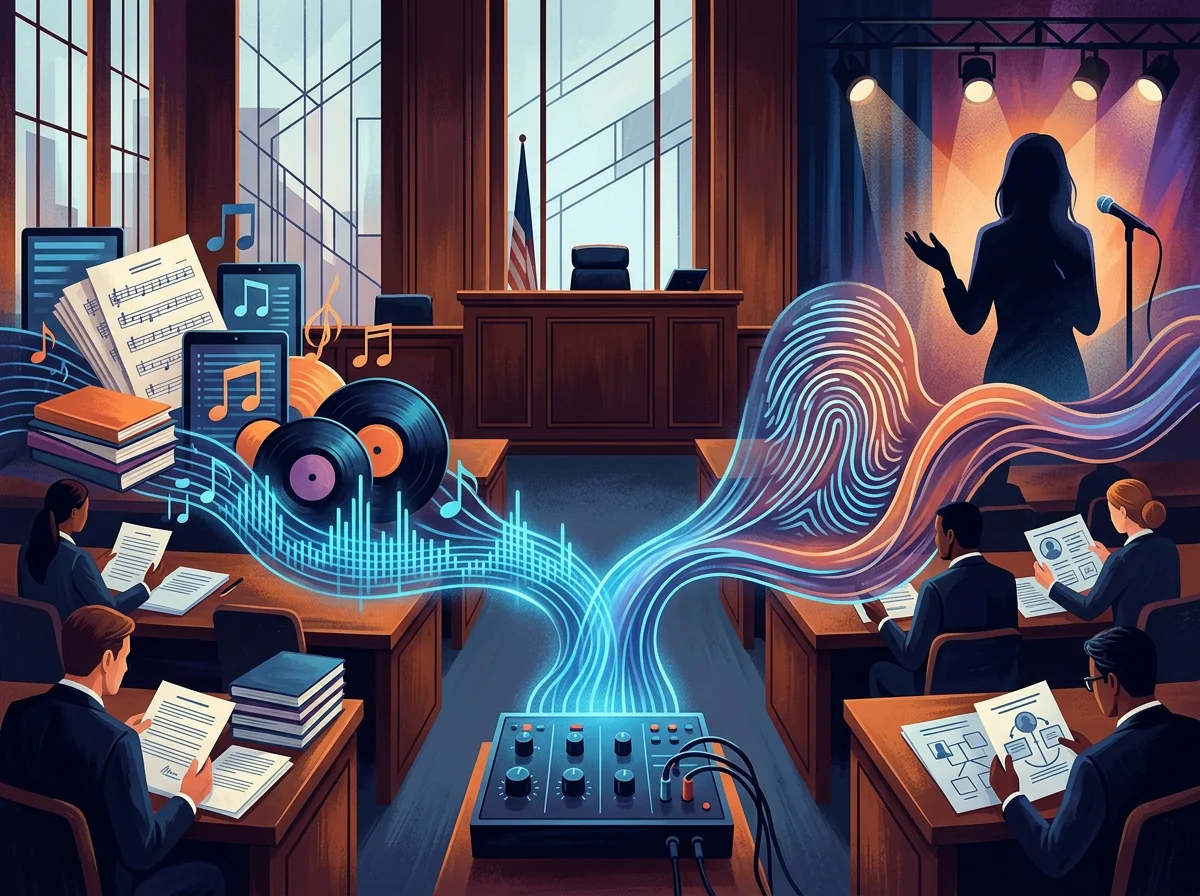
The Elvis lawsuit is not limited to ownership of music and lyrics. Elvis Presley Enterprises also claims control over commercial uses of Elvis Presley’s name, image, voice, and likeness. That is why the plaintiffs are using Tennessee’s ELVIS Act as a separate legal route against Suno.
The law took effect on July 1, 2024. The Elvis complaint argues that voice is a protected personal right. The plaintiffs say that protection also covers a simulated voice that is readily identifiable as a particular person and can apply to technology whose primary purpose is producing that person’s voice or likeness without authorization. That is their legal argument, not a ruling in this case.
The plaintiffs allege that Suno generated output using a synthetic Elvis voice and point to several recordings as evidence. They also say that a playlist on Suno collected such generations. The court may have to consider how identifiable the voice is, how the output was produced, and whether the service’s purpose and safeguards matter under the law.
The distinction matters. Copyright protects specific works and expression, while name, voice, and likeness rights protect a person’s commercial identity. A generated song could therefore raise a legal problem even if it is not a direct copy of one particular Elvis song. Whether Suno’s output crosses that line is now for the court to decide.
What does Eminem’s music publisher allege?
Eight Mile Style alleges that Suno used 269 registered Eminem compositions without asking for or receiving a license. The complaint targets both the training process and specific output. One example allegedly reproduced lyrics from “Lose Yourself” verbatim, while others allegedly used lyrics or musical elements from songs including “Till I Collapse,” “The Real Slim Shady,” and “Houdini.”
The publishers further allege that source material was taken from licensed streaming services and websites protected by technical controls. They claim that automated tools bypassed logins, paywalls, bot protection, and YouTube controls. The complaint also cites public reporting about leaked Suno code that allegedly contained lyrics and metadata connected to several of the works.
That is a different allegation from saying a model merely listened to music in the way a person does. If the court finds that Suno made technical copies, bypassed access controls, and later reproduced protected lyrics, those questions will have to be considered under different legal rules. This remains the publishers’ account. Suno’s public statement to The Verge describes safeguards against misuse but does not answer every technical allegation point by point.
The publishers want the court to find the alleged infringement willful. They also seek an accounting of relevant training data and scraping activity, along with the impoundment or destruction of unauthorized copies. That shows what is at stake. The case is not limited to a few songs appearing in search results. It reaches into the foundation on which the model was built.
How has Suno responded?
Suno told The Verge that its service is intended to help people create new and original music, not profit from someone else’s name or identity. The company says it prohibits unauthorized use of artists’ works, blocks prompts containing specific artist and song names, and uses third-party providers to check uploaded audio and lyrics.
That response matters, but it does not automatically resolve the allegations. The rights holders argue that safeguards can be bypassed with descriptions, lyrics, or other identifying features, and that the disputed conduct concerns both training material and output. A working name filter does not, by itself, tell us what the model was trained on.
At the same time, the plaintiffs’ examples must not be treated as a finished verdict. They will have to establish that the output came from Suno’s system, that it is representative, and that the similarity falls within the relevant law. Suno must be allowed to present its technical explanation and legal defenses. Only then will the court have something firmer than headlines, demonstrations, and each side’s sharpest language.
It is tempting to reduce all of this to a choice between “AI steals” and “AI learns.” Reality is more precise than that. A model can learn general patterns without reproducing a work, but it can also produce lyrics, melody, or an identifiable voice close enough to the source to trigger other rights. These lawsuits force that distinction into the open.
What do the Suno lawsuits mean for users?
The lawsuits do not mean that ordinary Suno users have suddenly been found liable for anything. They also do not make every song created with the service unlawful. They are, however, a useful reminder that a finished audio file is not automatically risk-free simply because a service allowed you to generate it.
The simplest advice remains the same: Keep artist names out of both the prompt and the style field. Suno rejects well-known names, including readily identifiable nicknames such as “the king.” Describe musical qualities instead: tempo, instruments, era, vocal character, production, and mood. That gives you a more useful prompt and reduces the risk of producing a poor imitation of a specific artist.
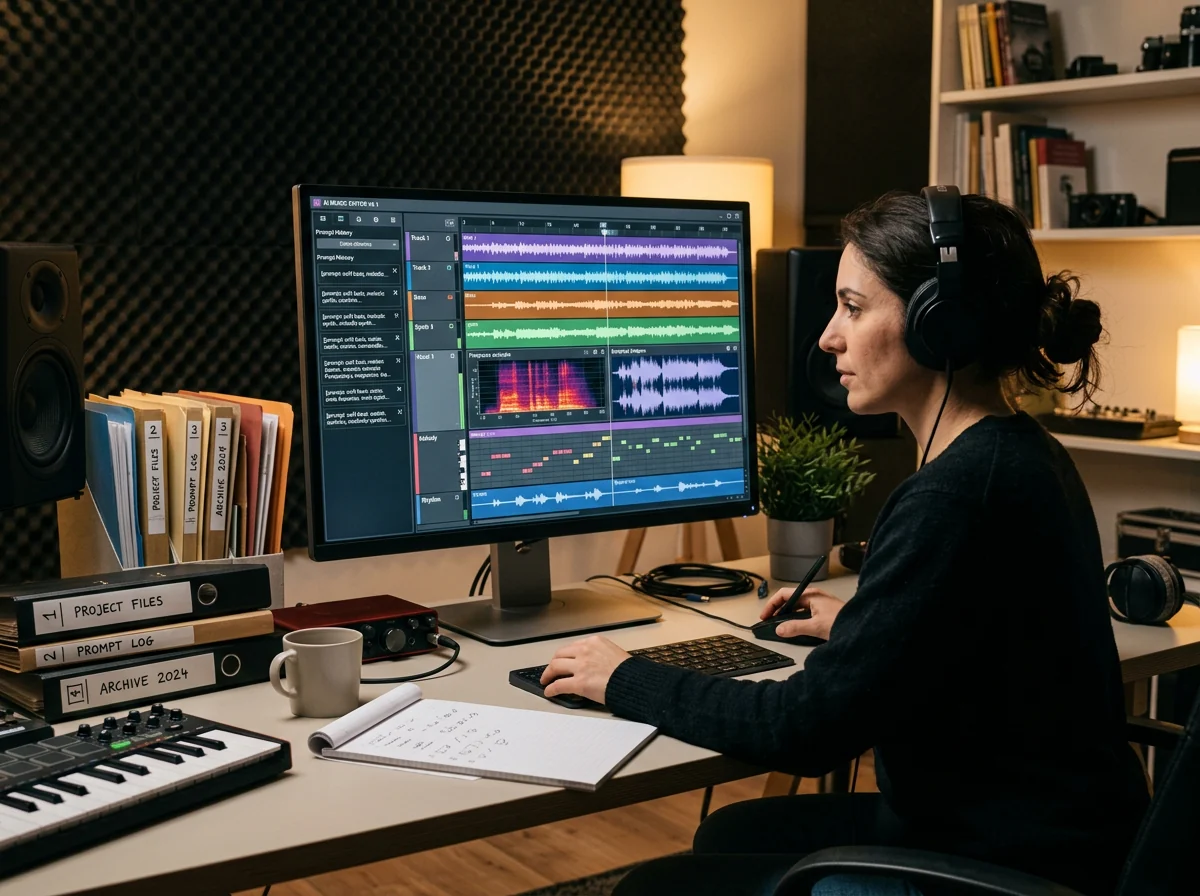
If you plan a commercial release, check the result before publishing it. Listen for clearly recognizable melodies, lyrics, and voices, and keep your original lyrics, prompts, project files, and generation dates. Suno’s terms and your subscription determine which rights the service grants you, but they cannot guarantee that an output will never conflict with someone else’s rights.
The two lawsuits do not rewrite Suno’s terms overnight. They do show why the distinction between the rights Suno grants in your output and possible claims from third parties must be taken seriously. A download button is not a legal force field.
This is a new chapter in the Suno dispute
Suno has already faced several legal fights over training data and music rights. The company is also trying to move toward licensed AI music while operating in a market that has grown well beyond a small experiment. These two cases show that earlier disputes do not disappear merely because the product and its licensing deals evolve.
The Elvis case may prove especially important because it connects copyright claims with protection for synthetic voice and identity. The Eminem case goes hard at alleged copying, circumvention of technical barriers, and reproduction of lyrics. Together, they give the court several possible ways to assess Suno’s technology, and those paths do not all depend on the same answer to whether AI training is lawful.
My view is straightforward: Do not read this as a verdict against all AI music, but do not dismiss it as empty lawyer noise either. When rights holders point to specific works, specific output, and specific technical methods, the allegations deserve proper scrutiny. Until the court has examined the evidence, the honest approach is to keep established facts separate from claims that remain disputed.
Frequently asked questions
Has Suno been found liable for copying Elvis or Eminem?
No. The two lawsuits were filed on November 6, 2026, and the claims have not been decided. The rights holders must prove their allegations, while Suno will have the opportunity to present its evidence and legal arguments.
Can I put Elvis or Eminem in a Suno prompt?
You should not use artist names or recognizable nicknames in a Suno prompt. Suno says it blocks those names. Describe the tempo, instruments, vocal character, era, genre, production, and mood instead of asking for a copy of a specific artist.
What does Tennessee’s ELVIS Act protect?
The ELVIS Act protects a person’s name, image, voice, and likeness, including a simulated voice that can be identified as a particular person. The law took effect on July 1, 2024, and includes exceptions that a court must consider in context.
Is music made with Suno illegal to release?
No, not automatically. The risk depends on the output, how it is used, the rights you hold, and whether the song reproduces protected material or an identifiable artist. Check both audio and lyrics before a commercial release, and keep your project records.