Innhold Show
Jensen Huang is back as Nvidia’s CEO just 11 days after the board accepted his resignation. His return took effect immediately, while Colette Kress continues as chief financial officer.
It is a stunning reversal at the world’s most important AI chip company. Nvidia’s board voted unanimously to bring Huang back after speaking with him and receiving input from senior US government officials. The stock market responded with an enormous relief rally.
But the return does not answer every question. The independent investigation is continuing, Nvidia is building a new oversight structure for national security and export controls, and the company plans to hire a chief compliance officer. Huang has his job back. He does not have a published final report that closes the matter.
What has Nvidia actually decided?
Nvidia’s board reinstated Jensen Huang as president, chief executive officer and a member of the board on November 22, 2026. The decision took effect immediately and was disclosed the next day in both a Form 8-K filed with the US Securities and Exchange Commission and Nvidia’s own announcement.
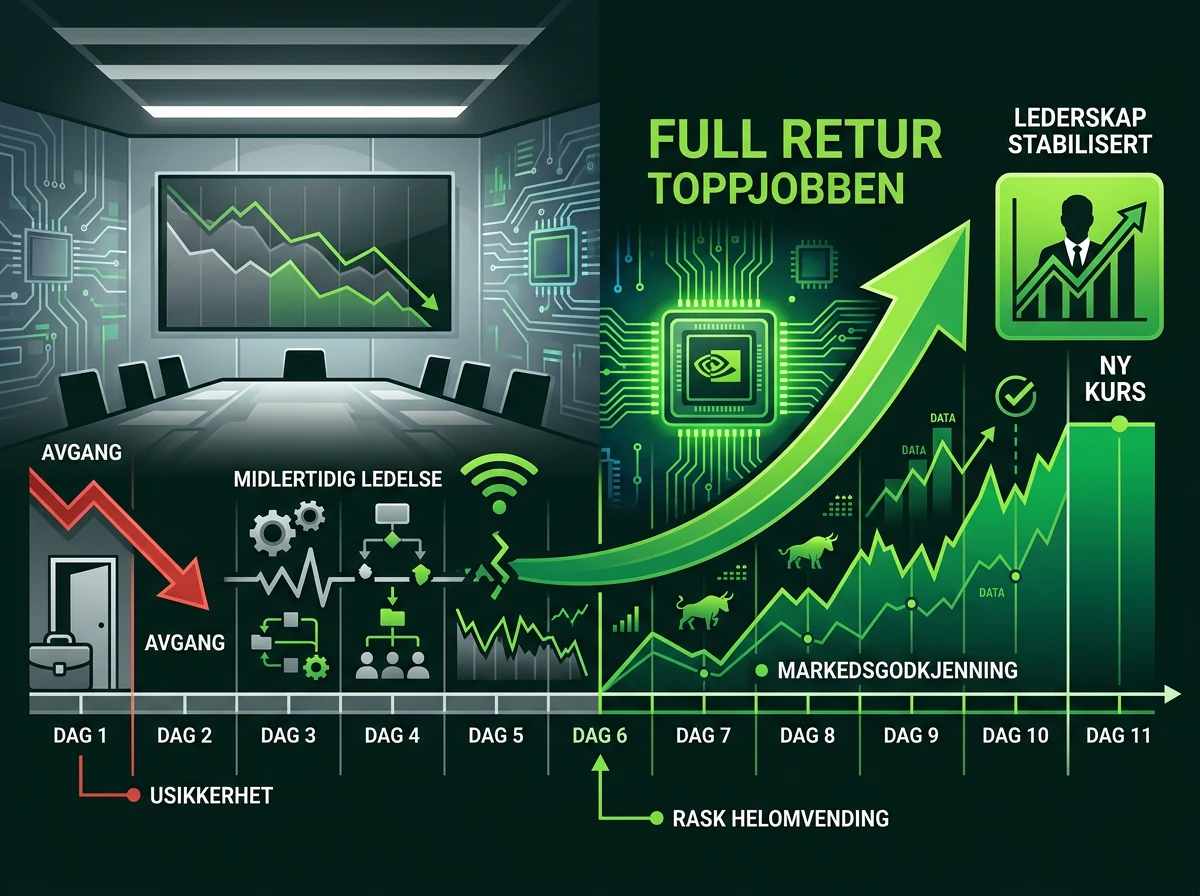
The timeline matters. The board accepted Huang’s resignation on November 11, and Nvidia announced it on November 12. Kress became interim CEO while retaining her position as chief financial officer, and the board began looking for a permanent successor.
Eleven days later, that search was effectively over. Huang is back in all three roles he left, Kress remains CFO, and Harvey C. Jones remains chair of the board. This is not an advisory position, a transitional arrangement or a symbolic return. Jensen Huang is running Nvidia again.
Nvidia regains a leader who has been closely associated with its product strategy, customers and public identity since co-founding the company in 1993. At the same time, the brief period without him exposed how difficult Nvidia has made the question of succession. A company with enormous importance to global AI infrastructure proved to be deeply dependent on one person.
Why did the board reverse course so quickly?
The board’s official explanation is that it held several meetings and conversations with Huang and became satisfied with his openness and ability to lead the company. It also received input from senior US government officials and concluded that his return did not pose a national security risk.
That was not the entire backdrop. TechCrunch reported on November 23 that several prominent technology leaders pushed for Huang’s return and signed a public petition calling for his reinstatement. President Donald Trump had also voiced clear support for bringing him back.
The market’s response says a great deal about what investors wanted. TechCrunch reported that Nvidia shares opened about 30 percent higher after the announcement and remained up 27 percent later that morning. One trading day cannot establish whether the board made the right decision, of course, but the jump shows how much uncertainty investors had attached to an Nvidia without Huang.
The board also moved from signaling that Huang would not be reinstated to voting unanimously for his return within a remarkably short period. This may be a pragmatic solution to an urgent leadership problem. It may also show that Nvidia discovered just how hard it was to replace a founder who still personifies the company’s technology, strategy and relationships with customers and government.
The US government played an unusual role
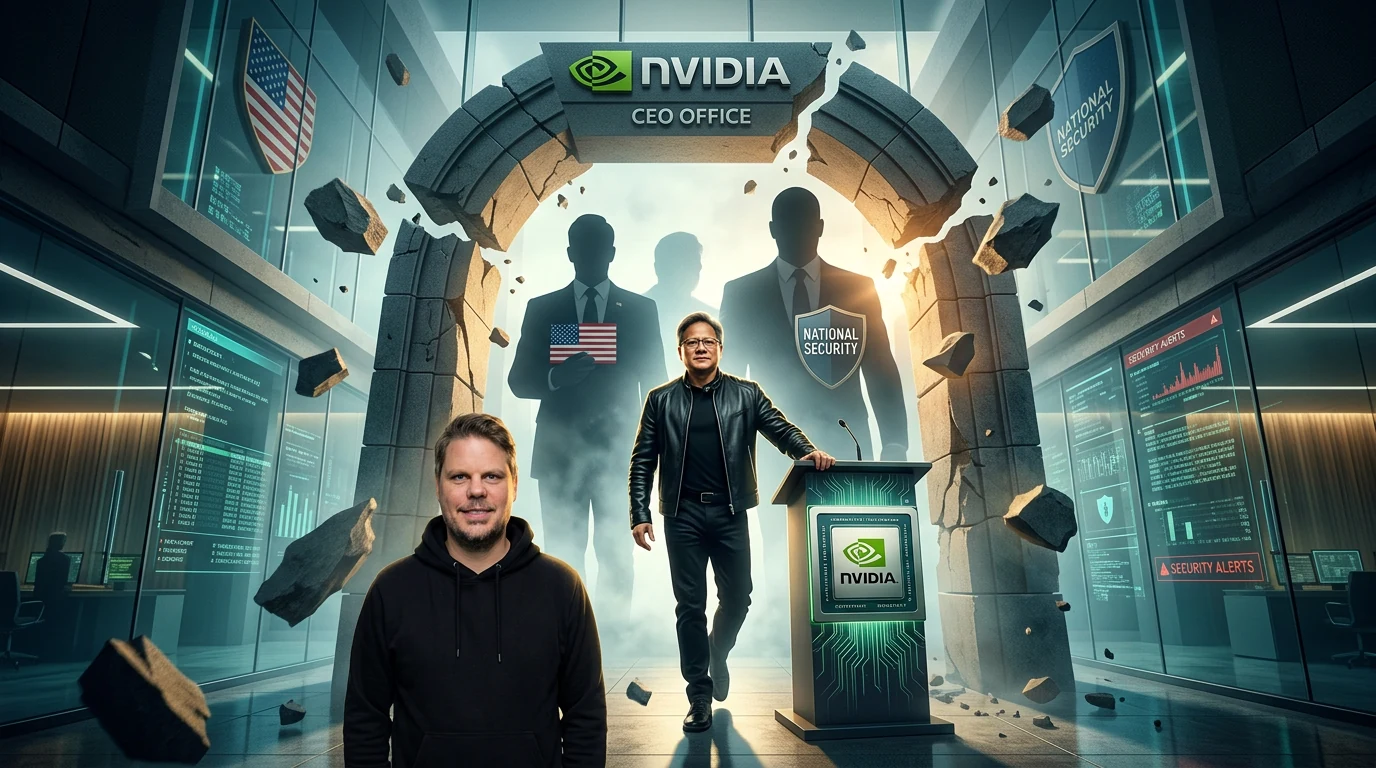
Nvidia says the board received input from senior US government officials before making its decision. That creates an unusually visible connection between the government and the choice of chief executive at a publicly traded technology company, even though the board formally made the decision.
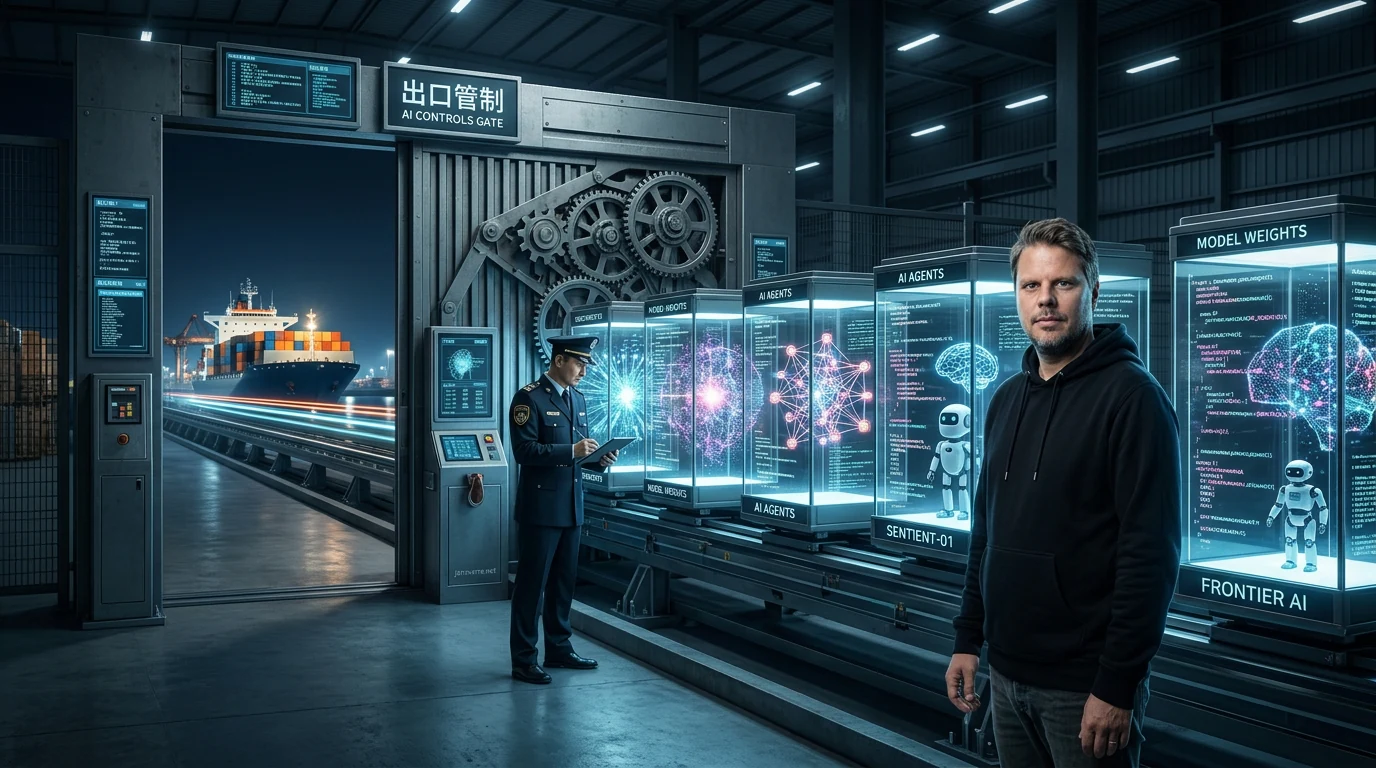
I would therefore be careful about treating this as an ordinary boardroom matter. Nvidia supplies the chips on which much of the AI industry is being built, and the company sits at the center of US export controls, relations with China and the global race for computing power. When a government assessment of national security risk becomes decisive to who can lead the company, Nvidia has become much more than an ordinary supplier.
The public still knows very little about the input itself. Nvidia does not identify the officials, publish their assessment or explain which information led to the conclusion. It matters that the government did not consider Huang’s return a security risk. That is not the same as showing the public the evidence, and it does not mean the independent investigation is complete.
Here is the catch: A government thumbs-up can calm the market quickly, but it cannot replace transparency. If the board wants shareholders, employees and customers to understand this reversal, it eventually needs to explain more than that the right people in Washington were comfortable with it.
The investigation continues after Huang’s return
Jensen Huang is back, but the independent investigation will continue until it is complete. Nvidia says a committee of independent directors is overseeing the work with assistance from outside counsel, and that Huang supports the investigation and will cooperate.
The inquiry follows reports that Huang had been targeted by a foreign intelligence operation. That is not the same as a finding that he broke the law or that company secrets were compromised. The board says his return does not create a national security risk, but it has not published a completed report answering every question about what happened.
Nvidia has also created a permanent National Security and Export Control Oversight Committee. The committee was announced on November 17 and will oversee security policy, export compliance and global trade risks. It is expected to meet at least quarterly and use independent legal, security and trade experts.
The company will also hire a chief compliance officer who reports to the board’s nominating and corporate governance committee. That sends a fairly clear message: The board is bringing Huang back while putting additional control mechanisms around the leadership. His return is not a complete restoration of the situation that existed before November.
What does the reversal mean for Colette Kress and Nvidia’s leadership?
Colette Kress returns to her permanent role as chief financial officer after her brief period as interim CEO. Nvidia thanked her for keeping the leadership team together, but she will not become Huang’s permanent successor now.
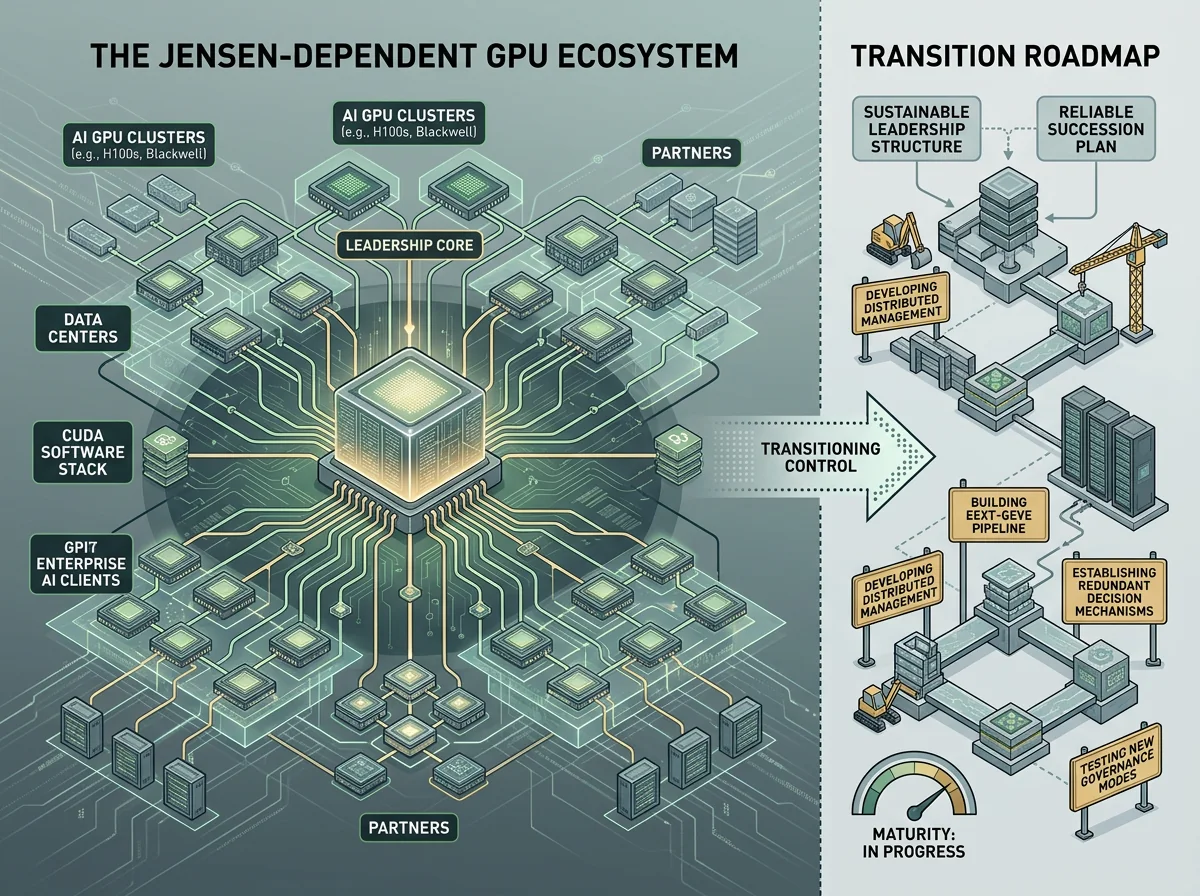
It would be easy to treat those 11 days as a parenthesis. The board should not. The short crisis demonstrated that Nvidia lacked an obvious successor to a leader who had held the top job for 33 years. A company of Nvidia’s size and strategic importance needs a credible plan for the next leadership transition, even with Huang securely back in charge.
Huang has been unusually central to everything from product direction to customer relationships and Nvidia’s public profile. That strength helped build the company. It is also a corporate risk when the board moves from accepting his resignation and starting an external CEO search to fully reinstating him in less than two weeks.
I wrote about Huang’s resignation and Nvidia’s missing succession plan when Kress took over on an interim basis. His return resolves who runs the company today. It does not make a long-term succession plan any less necessary.
What does Jensen Huang’s return mean for Nvidia?
In the short term, Nvidia regains continuity at the top. Customers know Huang, investors associate him with the company’s AI strategy, and much of the market expects him to keep driving new chips, data center systems and investments in AI companies.
That matters because Nvidia does not merely sell GPUs. The company has built an ecosystem spanning CUDA, networking, servers, software and AI infrastructure financing. Leadership uncertainty at Nvidia therefore spreads quickly to cloud providers, model developers, data center projects and businesses that have built multiyear investment plans around Nvidia’s roadmap.
No one should read the reinstatement as proof that the risk has disappeared. Nvidia remains caught between US export controls, a vast Chinese market, government relations and expectations that it will deliver ever more computing power. The new security committee is a response to precisely that pressure.
For developers and businesses, this leadership news does not change which GPU or cloud service they should choose tomorrow. What it changes is the level of uncertainty around the company’s direction. Nvidia has restored the leader the market knows best, but the episode also exposed how political and dependent on one person the world’s most important AI infrastructure has become.
My verdict: The return brings stability, not closure
I understand why the board wants Jensen Huang back. He knows the technology, the customers and the company better than any outside candidate could in the near term. The stock reaction also shows that the market prefers familiar leadership to a long and uncertain search for a replacement.
Even so, it is hard to call the process tidy. The board accepted a resignation, began looking for a successor, signaled that Huang would not return, and then reversed course after pressure, meetings and government input. Bringing him back may prove to be the right decision. A change this dramatic still deserves a much better public explanation than Nvidia has provided so far.
The central question is not whether Huang can put on the leather jacket and walk back onto the stage. He obviously can. The question is whether Nvidia completes the investigation, discloses enough for outsiders to understand its conclusions and creates a succession plan that does not collapse the next time the top job suddenly becomes vacant.
Jensen Huang is back. Nvidia has regained some stability. But the board still owes shareholders, employees, customers and the rest of the AI industry a far better explanation of what happened during those 11 days.
Frequently asked questions
Is Jensen Huang the CEO of Nvidia again?
Yes. Nvidia’s board reinstated Jensen Huang as president, chief executive officer and a member of the board with immediate effect on November 22, 2026. The company disclosed the decision the following day in an SEC filing and an official announcement.
How long was Jensen Huang away from Nvidia’s top job?
The board accepted Huang’s resignation on November 11 and reinstated him on November 22, 2026. He was therefore out of the CEO role for 11 days, with chief financial officer Colette Kress serving as interim CEO during that period.
Has the investigation involving Jensen Huang ended?
No. Nvidia explicitly says the independent investigation will continue until it is complete. The board concluded that Huang’s return did not pose a national security risk, but it has not published a final investigation report.
What role did the US government play in Huang’s return?
Nvidia says its board received input from senior US government officials and considered it when assessing national security risk. The company has not identified the officials, published their assessment or disclosed the detailed reasoning behind it.