Innhold Show
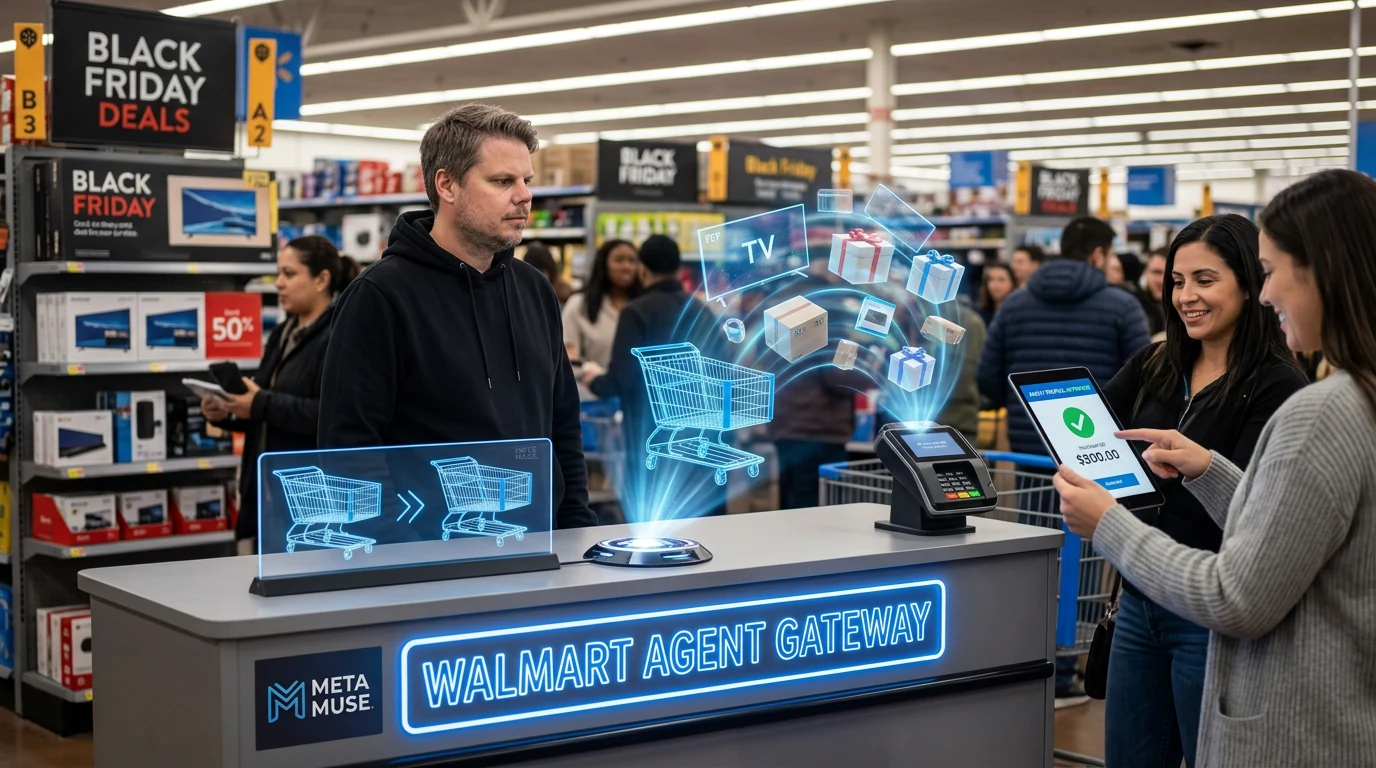
Meta Muse will be able to shop at Walmart on your behalf starting November 24. The AI agent can find Black Friday deals, build a cart and complete the purchase, while you decide how much it may spend and when it must ask for approval.
That may sound like another shopping assistant that recommends a television and then sends you off to the retailer’s website. The difference is that Muse gets an official route all the way to checkout. Walmart is opening its new Agent Gateway to an external AI agent and giving that agent a separate profile inside the customer’s account.
This is a concrete move from AI that talks about taking action to AI that actually takes action. It is not completely autonomous and it does not operate without limits, but it goes far enough to make the division of responsibility real: the agent searches and acts, while the customer sets the boundaries and can require approval before any money is spent.
What can Meta Muse do at Walmart?
Meta Muse can search for relevant Walmart products, find Black Friday deals, add items to a cart and complete a purchase within the conversation. The first live rollout of Walmart Agent Gateway begins on November 24, 2026, according to The Verge.
You could, for example, ask Muse to find a good deal on a television or show you Black Friday products that can be delivered to your home. The agent explores Walmart’s selection and puts together a cart. The first time it adds an item, Muse sends you to Walmart to sign in and create a dedicated Agent Profile. You then return to Muse and can pay with a card that is already stored in your Walmart account.
Prices are supposed to be the same as those on Walmart.com, and Walmart’s normal return rules still apply if the purchase does not turn out as expected. That matters. Agentic shopping becomes far less charming if a mistaken order lands in a legal no man’s land.
The agent gets its own profile
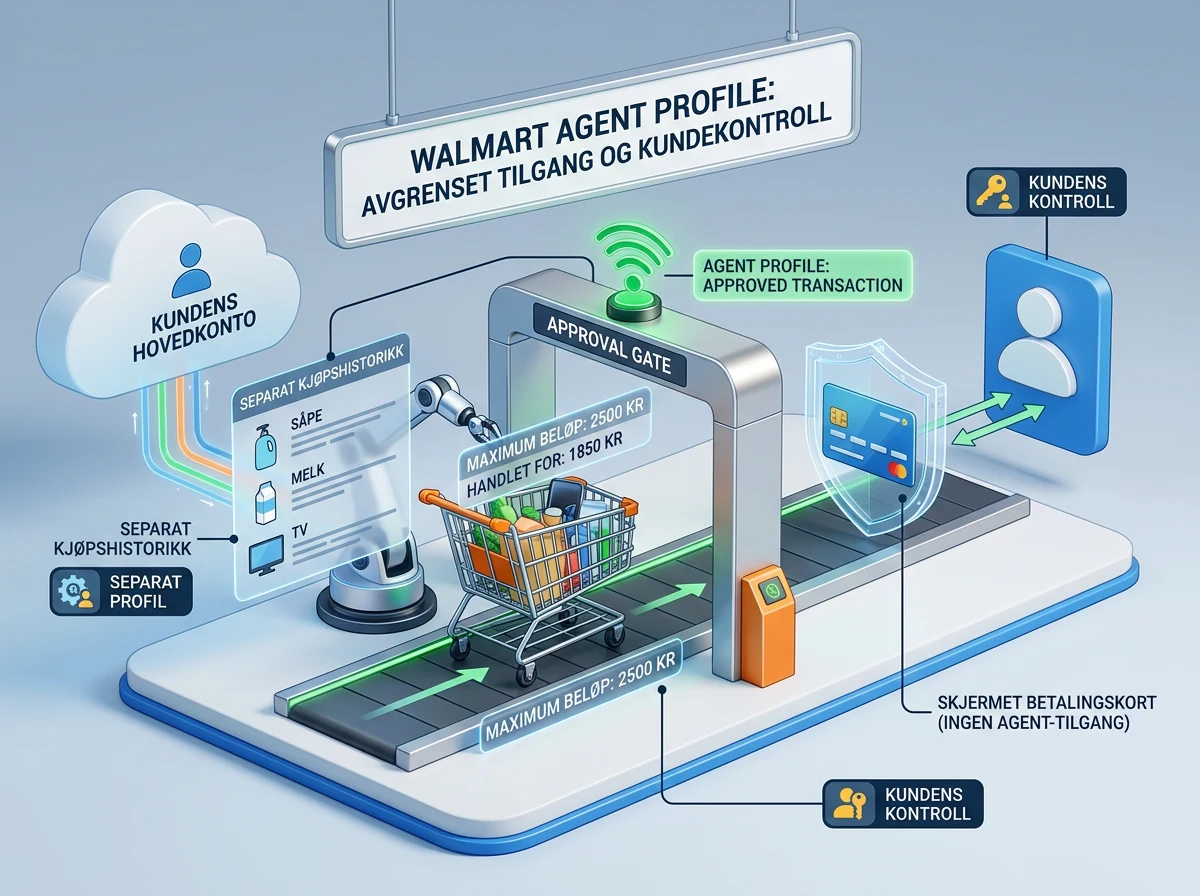
Walmart Agent Profile separates the agent’s activity from the rest of the customer’s account. You can see what Muse has bought, set a spending limit and decide whether every purchase requires approval. The profile can also be deleted or disconnected later, according to Walmart’s October 21 announcement.
That is a much cleaner model than giving a general browser agent access to an entire account and hoping it behaves. Muse gets a bounded workspace with its own permissions, purchase history and spending limit. Walmart also says the agent does not receive the customer’s payment card details and cannot add or change payment methods.
By default, the customer must approve purchases made by the agent. The customer can authorize it to shop within a selected limit, but Walmart may still require additional approval. That does not make mistakes impossible, but it limits how expensive a mistake can become. For agents that are supposed to do more than suggest products, this kind of boundary is far more important than a glossy demo.
Why does Walmart need an Agent Gateway?
Agent Gateway gives approved AI agents a structured connection to Walmart instead of forcing them to click through web pages designed for people. Walmart describes conventional browser use as slow and prone to errors. The gateway is intended to make product discovery and shopping faster and more reliable while Walmart retains control over data access and the checkout process.
The technical point is simple. An online store is full of menus, banners, sign-in screens and interfaces that can change. People usually understand what happened when a button moves. An agent can get stuck, select the wrong element or lose context. A machine-oriented channel gives the agent explicit functions and structured responses instead of a screen it must interpret.
Walmart also says the gateway can help the agent find products the customer regularly buys without sharing the customer’s complete purchase history with the agent company. If it works as described, the agent receives the answer it needs without being given access to everything else you have bought. That is a sensible application of least privilege: share the result needed for the task, not the entire drawer of data.
This goes beyond a Black Friday feature
Black Friday is an obvious stage for the launch because people are already searching for specific products, prices and delivery options. The lasting development is that one of the world’s largest retailers has created an official entrance for external shopping agents. Muse is the first live integration, not the endpoint.
Meta had already announced in September that Walmart was among 10 new retailers coming to Muse. The Walmart connection is now moving from a partner list to actual transactions. Muse is no longer merely passing a product suggestion to the user and leaving the difficult part for later.
For ordinary users, that means a shopping request can become one continuous task. You describe what you need, the agent finds alternatives, you check its choice and the purchase can be completed without restarting the search inside the retailer’s website. The real test will be whether Muse chooses the correct product and variant, not merely whether the payment can technically go through.
Walmart and Amazon are choosing different paths
Walmart is inviting approved agents through a controlled gateway. Amazon chose earlier this fall to block Meta Muse from its online store. Those strategies show how important control of the customer interface is becoming.
When an AI agent selects the products, the store’s own front page can lose much of its power. The customer may never see the campaign banner, sponsored placement or product the retailer most wants to promote. The agent can instead compare price, delivery and requirements directly. The retailer risks becoming a supplier behind another company’s interface.
Walmart is responding by offering an approved machine interface on its own terms. It gives up some control over where the customer journey starts, but gains more control over how the agent connects, which data it can access and how the purchase is completed. I think that is a more practical direction than pretending shopping agents will disappear if the door is kept shut.

How much control does the customer really have?
The customer can set a spending limit, require approval, view the agent’s purchases separately and disable access. Walmart also says the agent should receive only information that is necessary for the task and permitted by the customer. The normal return process applies even if the agent did not do what the customer intended.
Those are useful safeguards, but they do not remove the need to read before you approve. An agent can find the right product category and still select the wrong size, color, model year, delivery time or subscription. “A television on sale” is not a precise specification. The more autonomy you give the task, the more important it becomes to state requirements that can actually be checked.
Privacy responsibility is also divided. Walmart processes the information the agent sends to the retailer, while Meta handles what you share with Muse under its own rules. Walmart not sending your complete purchase history to the agent does not mean the entire workflow stays inside Walmart. Two companies and two sets of terms are still two companies and two sets of terms.
Who can use Meta Muse at Walmart?
The rollout is for Muse users who have access to the service and can shop through a Walmart account. Meta launched Muse in September, and the integration is built around Walmart.com and payment cards already stored in the customer’s account. The sources do not describe this as an international retail launch or promise access outside Walmart’s supported market.
Meta describes Muse as a personal agent that can work in the background and request approval before sensitive actions such as purchases. The Walmart connection gives it an official retail interface instead of relying only on conventional browser access.
Walmart says more agent experiences and apps are coming. Agent Gateway began as beta access for companies and developers, so this is not an open invitation for any random bot. Muse is the first live integration showing how the new infrastructure is meant to work in practice.
The shopping agent becomes real at checkout
AI agents have been able to find products, compare alternatives and suggest purchases for some time. The decisive shift comes when an agent gets a safe, approved route to take the action. On November 24, Walmart and Meta will connect product discovery, the shopping cart, the customer account, permissions and payment in one flow.
The customer should still make the final judgment. A spending limit does not stop an agent from buying the wrong item within that limit, and an approval step is worthless if you press yes without reading. Technically, however, this is far more interesting than another product carousel with a chat box placed above it.
Black Friday will be the test, with heavy traffic, many nearly identical products and offers that change quickly. If Muse can find the right item, respect the boundaries and complete the purchase without nonsense, Walmart will have demonstrated a model other retailers can copy. The shopping agent is no longer a demo pointing toward the checkout. It is standing at the checkout.
Frequently asked questions
Can Meta Muse buy products at Walmart without approval?
The customer controls the approval level in Agent Profile. Purchases require approval by default, but the customer can authorize the agent to shop within a selected spending limit. Walmart may still require extra approval, and the connection can be disabled.
Can Muse see my payment card and full Walmart purchase history?
Walmart says the agent does not receive payment card information and cannot add or change payment methods. The gateway is also designed to help find products you regularly buy without sharing your complete purchase history with the agent.
Do Walmart’s return rules apply when an AI agent shops?
Yes. Walmart says its normal return process still applies, including when the agent did not do what the customer intended. Purchases use the same prices as Walmart.com, with current offers and applicable fees shown before payment.
Can shoppers outside the United States use Meta Muse at Walmart?
The sources describe a connection to Walmart.com that requires a Walmart account and a stored payment method. They do not announce broader international availability, so access will depend on Muse availability and the markets Walmart.com supports.