
Innhold Show
AI training and copyright need a line between learning from a work and delivering that work all over again. Wikimedia Foundation is asking a US court to draw exactly that line before a blunt ruling leaves the open web poorer for everyone.
The organization behind Wikipedia has filed an amicus brief in the consolidated copyright litigation against OpenAI. Wikimedia is not siding with either OpenAI or The New York Times. Its point is that model training, search, retrieval-augmented generation, and outright reproduction are different uses, even though they are routinely tossed into the same legal bag.
That distinction makes sense. A free pass to retrieve and reproduce anything could undermine the people who create the material. A blanket licensing requirement for all model training could give the richest AI companies even more power because only they can afford the entrance fee. The court must do better than choosing between two bad extremes.
What is Wikimedia asking the court to do?
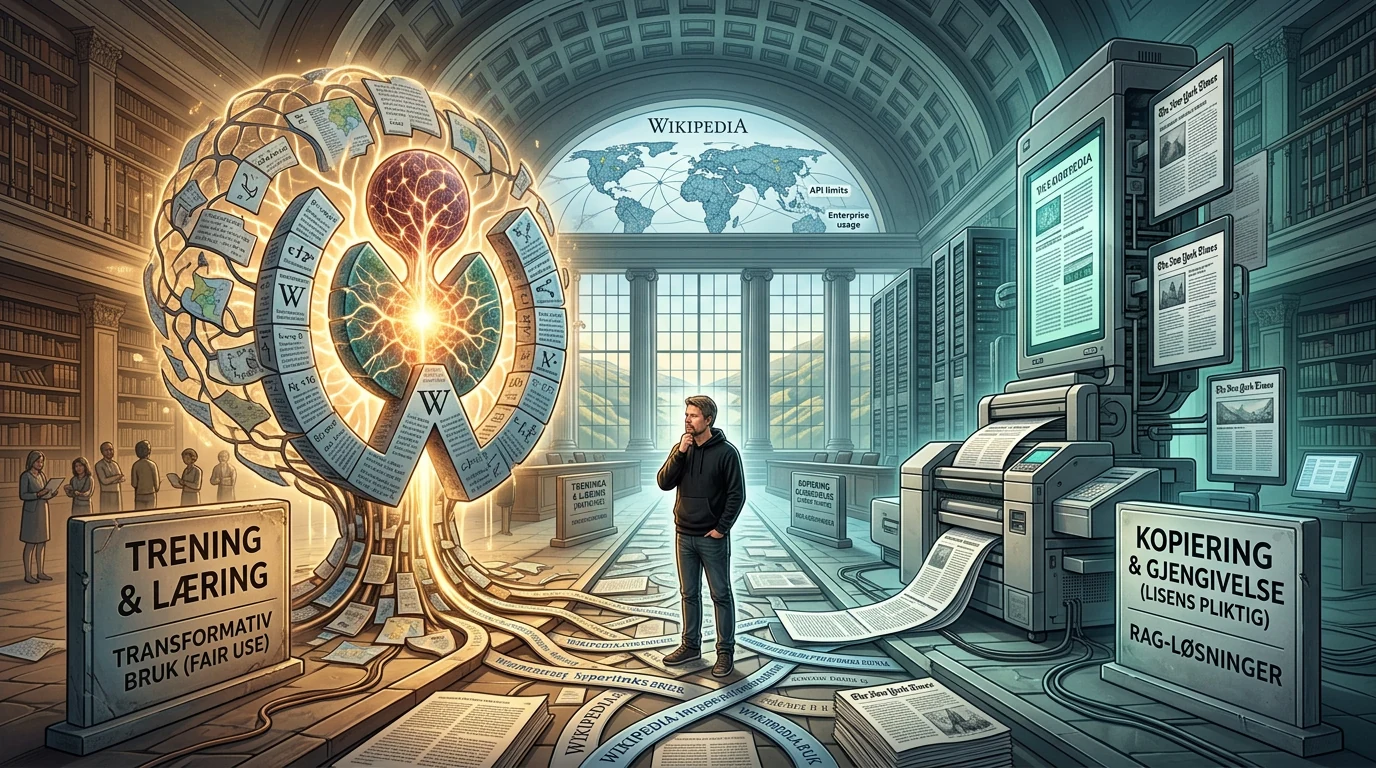
Wikimedia wants the court to examine how a copyrighted work is actually used. It argues that model training can qualify as fair use when it produces something new and different from its sources, while AI services that retrieve and reproduce specific content for a user must honor the source’s license.
The brief was filed in the US District Court for the Southern District of New York in In re: OpenAI, Inc. Copyright Infringement Litigation. The proceeding combines 12 lawsuits against OpenAI, with The New York Times case the best known. Among the issues before the court is whether using copyrighted material to develop large language models can be protected as fair use under US law.
Wikimedia occupies an unusual position in this dispute. Wikipedia is a major source for AI models, but it also depends on the continued existence of reliable secondary sources. If the newspapers, publishers, researchers, and other specialists who document the world disappear behind paywalls or stop producing work, Wikipedia has less to build on. The next generation of AI models then gets worse source material too.
AI training and copyright: Why does the use matter?
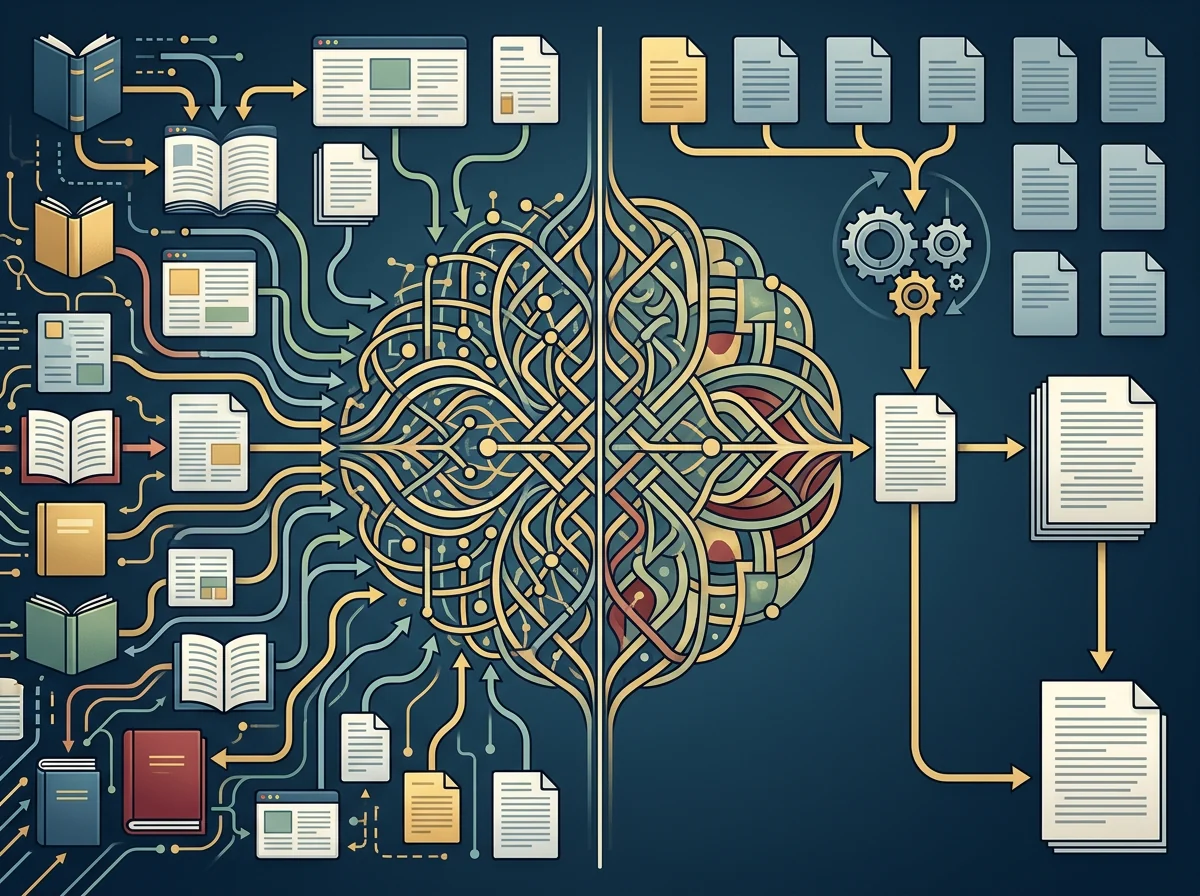
The difference lies in what the user gets back. During training, a model analyzes enormous amounts of material to learn patterns in language and knowledge. A retrieval-augmented generation system, usually shortened to RAG, instead searches for particular sources when a question arrives, retrieves their content, and uses it directly in the answer.
That does not make every form of training acceptable. How the material was obtained, what the model can reproduce, whether its output replaces the original, and how the use harms the market are all real questions. My position is clear: AI companies should not be allowed to scrape copyrighted books, music, and articles, build a commercial cloud service, and pretend the rights holders do not exist.
But it is just as wrong to claim that every machine analysis of a work is identical to selling a copy of it. I must, for example, be able to use material I have legally purchased as reference material in my own local AI without uploading it to a cloud service or distributing it to anyone else. Use, copying, and public distribution are different acts. Any sensible rule has to recognize that.
Wikimedia draws the line by asking whether the finished model is new and different from the source material. When a chatbot instead finds a particular article and delivers its content back as the answer, Wikimedia says the license terms should apply. That is far more precise than either “everything is theft” or “everything online is free training data.”
Wikipedia is open, but it still has terms
Open content is not ownerless content. Wikipedia uses the Creative Commons CC BY-SA 4.0 license. It requires attribution to the original contributors, and adaptations must be shared under the same or a compatible license.
Wikimedia therefore argues that AI services using Wikipedia through RAG or similar methods must follow those terms. They must also retrieve data without shifting the cost of their commercial activity onto the nonprofit organization. Wikimedia’s legal analysis explicitly says operators should respect the public API limits or use Wikimedia Enterprise.
That is not some theoretical footnote. Earlier in October, Wikimedia documented millions of requests to its projects from OpenAI agents. An open door is not an invitation to tear it off the hinges.
Wikipedia now contains more than 67 million articles in 300 languages, according to Wikimedia, and nearly 250,000 volunteers contribute every month. When an AI service builds a commercial product on that work, attribution, license compliance, and sustainable access are remarkably modest demands.
An overly strict ruling could strengthen the biggest AI companies
If the court decides that all model training requires individual licenses, AI development will not disappear. It will simply move behind the gates of companies with the largest legal departments and the deepest pockets.
Wikimedia warns that small developers and open-source communities could lose the opportunity to train and experiment with their own models. The largest companies can buy enormous content packages, sign deals with media groups, and treat licensing costs as one more moat around the business. Everyone else stays outside. That is a familiar outcome when a broad rule looks equal on paper but costs millions to follow in practice.
This is also why a ruling against one specific business model should not be written so broadly that it treats local use, research, search, indexing, and open model development as the same activity. The court is hearing a conflict between powerful commercial parties, but the precedent may land on people who were never in the courtroom.
Publishers naturally disagree with the defendants. The New York Times says OpenAI infringed its copyright by scraping its website for training data, while OpenAI and Microsoft argue that model training is fair use. This is a genuine legal conflict, especially when commercial models can reproduce or replace the original works. It will not be solved well by pretending every kind of learning and every kind of reproduction is legally identical.

An overly broad ruling could drain the web of good sources
The opposite extreme is no better. If OpenAI and others receive a general right to retrieve, use, and deliver content without caring about the license or whether the output replaces the original, publishers gain a powerful incentive to close the web.
More paywalls and less publicly available knowledge would hurt far more people than media companies and AI labs. Wikipedia editors need reliable sources. Students, researchers, small businesses, and ordinary readers need a web where documentation can still be found without subscribing to 20 different services. The open web will not remain open for long if openness means someone else can take all the value and send the bill back.
This is where Wikimedia gets to the heart of the matter. The AI industry depends on the people and institutions that create the knowledge its models use. A model can process and combine huge amounts of information, but it cannot attend a local council meeting, interview a whistleblower, or conduct years of original scientific research on its own. If those sources dry up, Wikipedia and the next generation of AI both become worse.
That is why a small link at the bottom of a chatbot answer is not enough after the service has already given the user everything they came for. Attribution matters, but license terms and actual market harm can still matter too. “But we included a link” is not a magic eraser for the rest of copyright law.
My view: Judge the use, not the label
Wikimedia’s middle position is the most sensible one I have seen in this round. Not because it makes everyone happy, but because it refuses to pretend that model training and direct reproduction are the same act.
I do not accept the argument that AI companies should be free to take anything they want simply because the technology is new and useful. A commercial service that replaces the original, reproduces substantial parts of it, or violates clear license terms must be capable of being held responsible. At the same time, I do not want a system in which only OpenAI, Google, Meta, and Microsoft can afford to work with the world’s knowledge.
The court should reject the temptation to build one giant switch marked “legal” or “illegal.” Look at how the material was obtained. Look at what the model or service actually does. Look at whether the user receives a new work, an answer grounded in a source, or a substitute for the original. Then look at who is actually locked out by the rule.
For AI developers, the practical message is already simple: respect licenses, credit sources, and use APIs without abusing the infrastructure behind them. Publishers should distinguish between a model that learns patterns and a service that competes by delivering their content again. The court has a harder job than repeating a slogan. That is exactly why it needs to do the job properly.
Frequently asked questions
Is Wikimedia supporting OpenAI in the copyright case?
No. Wikimedia Foundation explicitly says it is not supporting either OpenAI or The New York Times. It asks the court to distinguish transformative model training from AI services that retrieve and reproduce particular content for a user.
Does Wikimedia believe all AI training is legal?
No. Wikimedia argues that using copyrighted material can qualify as fair use when training produces a model that is new and different from its sources. That is not a general exemption for every dataset, model, acquisition method, or output.
Why can RAG raise different copyright questions from training?
RAG retrieves specific sources when a user asks a question and uses them directly in the answer. That makes the use closer to search, copying, and reproduction than the statistical learning performed during model training, so the source’s license terms become especially important.
What does Wikipedia’s license require from AI services?
Wikipedia uses CC BY-SA 4.0, which requires attribution and places share-alike conditions on adaptations. Wikimedia also says AI operators should respect public API limits or use Wikimedia Enterprise when they need large-scale, high-volume access.