Innhold Show
Tidal will ban fully AI-generated music from December 9, 2026 and remove about 29 million tracks. That is a drastic move – and I think it targets the wrong thing.
The streaming service has a real problem. Fully AI-generated music accounted for 43 percent of all tracks delivered to Tidal during the previous 90 days. On November 6, the figure exceeded 60 percent. No music service can pretend that volume has no effect on its catalog, search results or efforts to stop fraud.
But volume is not the same as quality, fraud or abuse. Tidal has chosen the simple boundary: if an entire track was made with AI, it has to go. Music made with AI assistance can stay. That means the production method decides whether a song is allowed to exist on the platform – not whether somebody tried to deceive listeners, steal an identity or manipulate streams.
What exactly is Tidal banning?
Starting December 9, Tidal will reject and remove tracks that it identifies as wholly AI-generated. Music made with assistance from AI tools, but not produced solely by them, will remain allowed. Tidal drew that distinction in its announcement of the new rule.
Distributors will no longer be allowed to deliver music created solely with AI tools. Tidal also says it will reject a delivery when its metadata identifies the track as wholly AI-generated. Existing tracks covered by the rule will begin disappearing on the same date.
The scope matters. This is not a ban on every use of AI in music. An artist can still use AI during parts of the process. The line is what Tidal calls “wholly AI-generated” – a track that is solely the output of an AI tool. That may sound clear until human selection, rewriting, editing and production enter the workflow.
Tidal plans to remove 29 million tracks
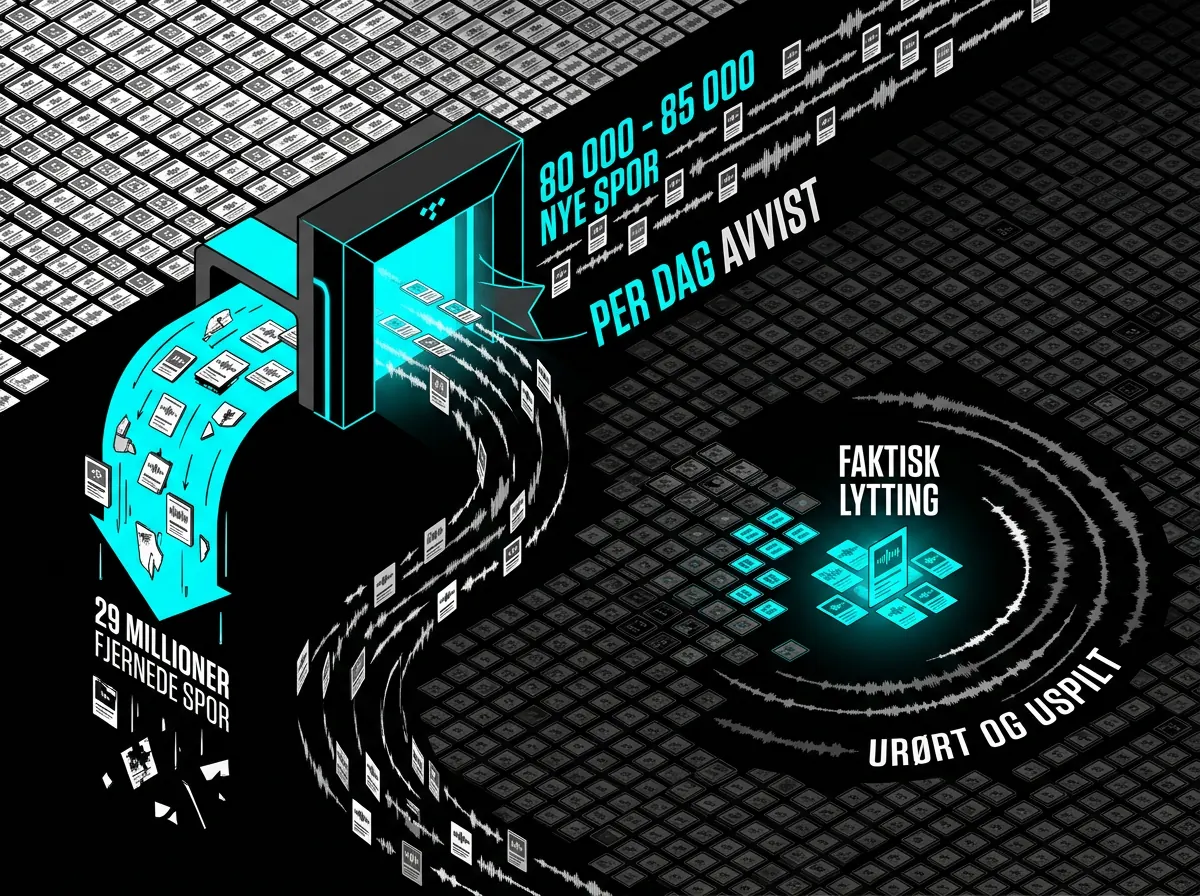
Tidal estimates that the ban will remove about 29 million tracks. The company says approximately 27 million tracks are already tagged as wholly AI-generated, representing 6.3 percent of its catalog. New deliveries will continue until the rule takes effect, which helps explain why the estimated total removal is higher.
After December 9, Tidal expects to reject between 80,000 and 85,000 tracks every day. Music Business Worldwide reports that 94 percent of the tracks carrying Tidal’s AI badge are attributed to Suno. This is not a tiny niche being cleared from a quiet corner of the service.
Another number makes the situation stranger: 96 percent of the AI-tagged tracks received no streams at all during the previous three months. They still consume storage, detection and moderation resources, but they clearly do not command 96 percent of listeners’ attention. That is a catalog and capacity problem. It is not proof that every one of those tracks is fraudulent or deserves to disappear.
Tidal tried labels and demonetization first
The ban is a major change in direction. In June, Tidal introduced a policy that labeled fully AI-generated tracks and excluded them from royalty payments. The official AI policy published in June explicitly said that artists should be free to create with AI tools and that listeners should have the autonomy to choose what they consume.
That approach was not perfect either, but at least it allowed the music to exist. Labels gave listeners useful information, while demonetization removed the most obvious financial incentive to mass-produce tracks and run artificial streams. Tidal could still remove impersonation, copying and fraud without declaring an entire production method unwelcome.
A few months later, Tidal says that was not enough. Robert Andersen, Tidal’s lead at Block, points to the 43 percent share of wholly AI-generated deliveries over the previous 90 days. The platform has also removed more than 65,000 AI tracks for suspected impersonation of artist names. Those numbers explain why the company is acting. They do not turn every fully AI-generated song into the same problem.
Tidal is confusing AI music with AI spam
This is where Tidal gets it wrong. One fully AI-generated song can still come from a clear idea, deliberate choices, many attempts and substantial human editing. Another can be track number 4,731 from an automated conveyor belt built to flood a catalog. Under Tidal’s rule, both fall on the wrong side of the same line.
That makes about as much sense as banning every photograph taken with a camera because somebody uploads millions of rubbish images. By all means, punish mass uploads, fake artist profiles, name abuse, copying and manipulated streams. Those are actions a platform can define and enforce. “Made entirely with AI” describes how a tool was used, not what its user intended to do.
AI is taking over more creative tasks. That will continue whether Tidal likes it or not. The sensible response is to learn the technology, set clear rights requirements and stop actual abuse. Declaring an entire production method undesirable is not a forward-looking solution. It is a door being slammed because the line outside became too long.
The problem with making a detector the gatekeeper
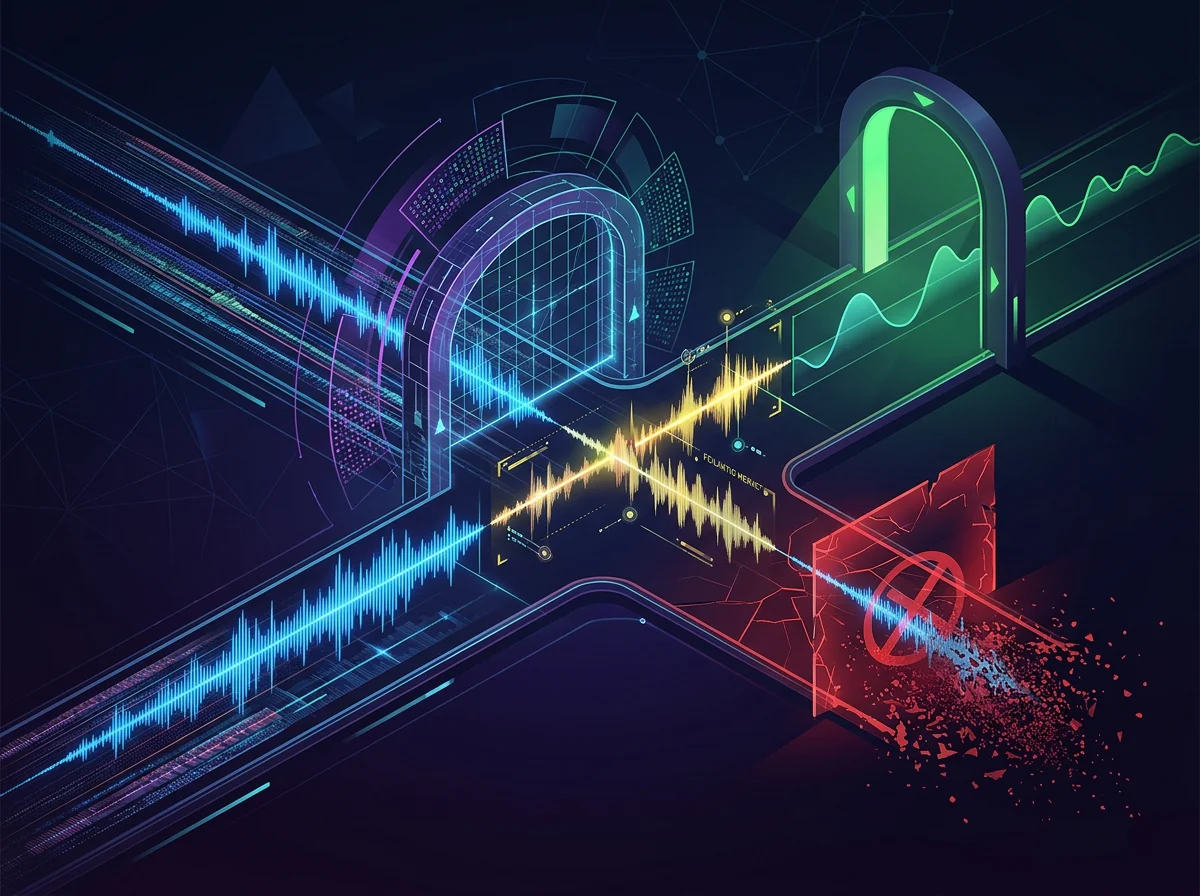
Tidal will enforce the ban with technology from Ircam Amplify. Its system analyzes audio to assess whether a track is AI-generated, and Tidal combines that analysis with distributor metadata. A classification error is annoying when the result is a label. When the result is deletion and automatic rejection, accuracy, transparency and a meaningful appeal process become far more important.
Ircam Amplify says its false-positive rate is below 0.02 percent. Pitchfork also reports a marketed accuracy figure of 99 percent and asked Tidal what recourse artists will have if their work is incorrectly flagged. Those numbers may come from different tests and measure different things. That is precisely why one percentage should never be treated as a guarantee.
Even a very low error rate becomes visible when 27 to 29 million tracks are assessed. The boundary will also grow harder to define as ordinary production tools add more generative features. How much human editing turns a wholly AI-generated song into an AI-assisted one? What happens when the metadata and detector disagree? A policy that deletes music needs clear answers, not merely an impressive removal count.
Other music services have chosen different approaches
Tidal is among the first large subscription streaming services to impose an outright ban on wholly AI-generated tracks. Bandcamp has already taken a similar route. Spotify and YouTube Music have put more emphasis on labels, while Deezer has used detection, excluded AI music from recommendations and targeted fraud.
I find the latter approach far more precise. Deezer has also reported tens of thousands of daily AI uploads, so the catalog problem is not imaginary. But a service can give listeners control, keep manipulated tracks out of recommendations and deny revenue to fraud without pretending that production method and misconduct are the same thing.
The differences between services are useful. The market gets to test several models, while listeners and creators can choose the platform that fits them. Tidal has every right to decide what kind of catalog it wants to pay for and maintain. I have the same right to say that this particular line is crude and misdirected.
What should AI music creators do now?
If you release tracks generated entirely with Suno, Lyria or similar tools, treat Tidal as closed from December 9. Do not hide the production method in the metadata. That can turn a routine rejection into a trust problem with your distributor, and it will not help when Tidal also uses audio detection.
Keep your project files, lyrics, prompts, editing history and documentation of the parts you created yourself. This is good practice on any platform. It can also help if an AI-assisted track is mistakenly classified as wholly AI-generated. Ask your distributor how it interprets the new boundary and what appeal route will be available if a track is flagged incorrectly.
If you want to keep releasing fully AI-generated music, choose platforms that actually allow it or publish through channels you control. The point is not to conceal the use of AI. Use the technology openly, follow the applicable metadata and rights rules, and build an audience somewhere that does not treat the tool itself as the offense.
My verdict: Fight the abuse, not the music
Tidal does not have to spend money and capacity on tens of millions of tracks that almost nobody plays. But that does not make this boundary a good one. The company could cap mass uploads, require clear metadata, give listeners an AI filter and continue to punish fraud, copying and impersonation hard.
Instead, a legitimate AI song is treated as catalog rubbish before anyone asks whether it is good, original or wanted. That is a poor judgment of a tool I believe creators should be allowed to use. Human contribution is not limited to the number of hands that touched an instrument during the recording. The idea, selection, lyrics, direction, editing and presentation count too.
I am not defending a conveyor belt that spits out 10,000 tracks and tries to game the algorithms. Throw it out. Close the account. Keep the money away from fraud. But an open and honest AI creator is not the same thing as a scammer. Tidal should have been able to tell the difference.
Frequently asked questions
When will Tidal begin removing AI music?
Tidal will begin removing wholly AI-generated tracks on December 9, 2026. On the same date, it will start rejecting new deliveries made solely with AI tools. Music produced with AI assistance, rather than entirely by AI, will remain allowed.
Will Tidal ban every song that uses AI?
No. Tidal says music made with assistance from AI tools can remain on the service. The ban applies to tracks classified as wholly AI-generated. Practical questions remain about where that boundary falls when a person edits or builds upon AI-generated material.
How many AI-generated songs will Tidal delete?
Tidal estimates that it will remove about 29 million tracks. Around 27 million are already tagged as AI-generated, equal to 6.3 percent of its catalog. After the ban takes effect, Tidal expects to reject another 80,000 to 85,000 tracks each day.
Can I still release an AI-generated song elsewhere?
Yes, if the platform and distributor permit it and you follow their metadata and rights requirements. Policies vary. Some services use labels and anti-fraud measures instead of a general ban, so check the current rules before choosing where to distribute a fully AI-generated track.