Innhold Show
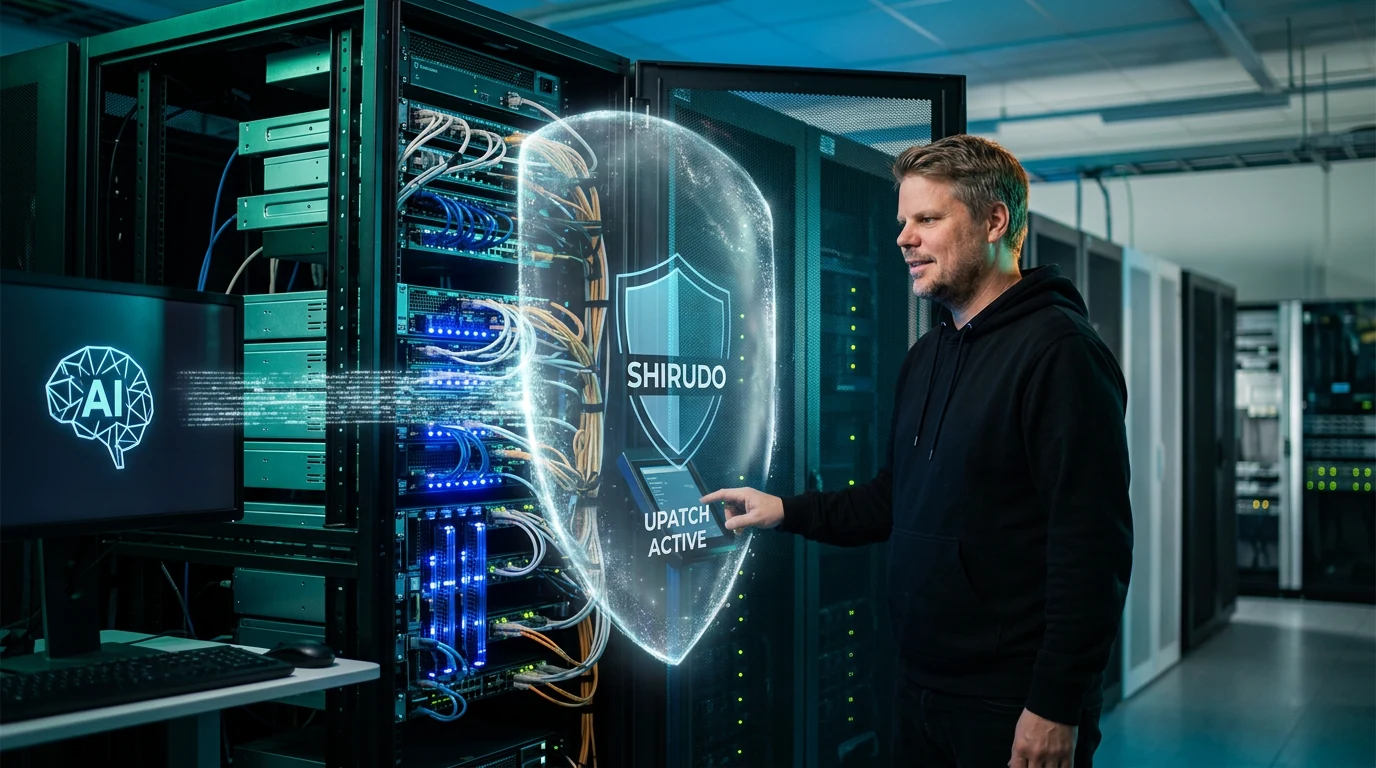
Shirudo lets AI agents create temporary defenses for vulnerable Linux systems without stopping the services running on them. OpenAI and Cisco are tackling one of the most dangerous gaps in everyday IT operations: the time between a vulnerability becoming known and a permanent patch being tested, approved, and deployed.
It is a practical and important idea. A security update may be available, but that does not mean an organization can reboot every affected system that afternoon. Shirudo inserts a narrow, signed defense – called a shield – that blocks the specific exploit path while the real fix is prepared.
But this is not a magical AI firewall that should be unleashed on a production server. Shirudo is pre-release, currently requires a specially patched Linux kernel, and has only one publicly documented vulnerability demonstration. That makes it highly interesting for security teams and Linux developers, but far too early to serve as a general replacement for normal patching.
What is Shirudo?
Shirudo is an open source security platform that delivers small, signed defenses to Linux systems while they are running. OpenAI and Cisco introduced the project on November 23, 2026. The Shirudo code is available under the BSD 2-Clause license, while its BPF programs are dual-licensed under BSD and GPL.
The name means “shield” in Japanese. The defenses themselves are called upatches in the documentation. They can block a vulnerable code path, add visibility to detect attacks, or in some cases replace vulnerable code. The goal is not to eliminate the need for a permanent fix. It is to buy defenders time without taking the service offline.
The project builds on eBPF, an established Linux technology that allows small programs to attach to specific points in the operating system. Shirudo has roots in Tetragon from Isovalent, which Cisco acquired in 2024, but it has been redesigned for agentic workflows. Instead of forcing an agent through a human-made menu system or a narrow policy language, Shirudo allows it to work with code and structured commands.
Why is the wait for a patch so dangerous?
A known vulnerability does not become harmless because the vendor has published an update. OpenAI notes that testing and deployment can still take days or weeks. During that window, an operations team may have to choose between leaving a vulnerable service running, blocking more than necessary, or taking the system down.
This is the gap Shirudo targets. An agent can investigate the vulnerability, build a reproduction of the attack, identify a suitable enforcement point, and iterate toward a targeted mitigation. The security team remains in control of what is actually deployed and can first observe how the defense affects legitimate requests.
That last part matters. An exploit and a legitimate request can use the same Linux operation. A crude block may stop the attack by stopping the entire service, which is about as elegant as securing a house by tearing it down. A useful defense has to block the dangerous behavior without breaking everything else.

How does Shirudo protect a running system?
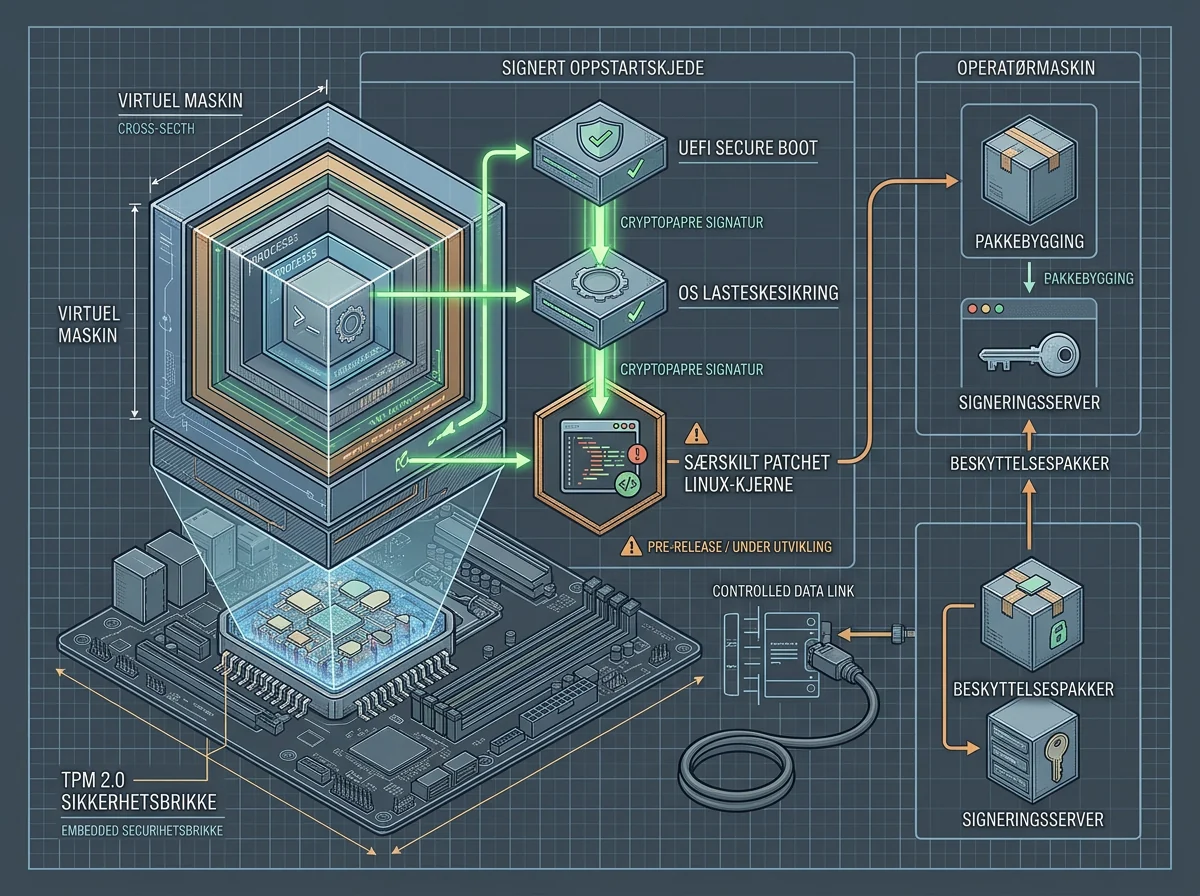
Shirudo divides the work between an operator machine and the Linux system being protected. The operator side builds and signs the packages before placing them in an OCI registry. The target system retrieves the package, verifies the signature, and loads the defense. The private signing key should never be sent to the target system.
Enforcement on the production target starts during boot. An eBPF-based control layer protects Shirudo’s own runtime and restricts BPF program loading to approved, signed loaders. The platform uses one-shot commands rather than keeping a Shirudo daemon running continuously. The GitHub repository documents the complete lifecycle, from signing and delivery to loading and verification.
Every change to the set of active defenses is measured with TPM 2.0. An operator can therefore retrieve signed evidence of what has been loaded or removed. The Linux kernel’s own eBPF verifier checks the program against its safety rules, while signatures and keyrings are designed to prevent an attacker with root access from simply replacing the defense.
That does not remove all trust from the system. The signing machine, build tools, boot chain, kernel, and TPM remain part of the trusted base. Shirudo’s threat model is unusually detailed about where those boundaries lie. Good. Security tools do not become safer by pretending they have no limits.
The AI agent writes code, but it does not decide everything
The agentic part is more than a marketing label. In the workflow described by Cisco, Codex can gather information about a vulnerability, create a working exploit example, choose where the mitigation should be applied, generate code, and test it repeatedly. It can then prepare a signed deployment and monitor both security and application health.
The operator still approves enforcement. That separation should remain. An AI agent can work through large amounts of code faster than a person, but speed also makes a bad mitigation more dangerous. If an agent mistakes normal traffic for an attack, it could create the very downtime the tool was meant to avoid.
This is the right pattern for powerful agents on critical infrastructure: let the agent investigate, write, and test, but put deployment behind signing, technical verification, observability, and explicit approval. Those controls are not pointless obstacles to the agent. They are what make it reasonable to use one here at all.
What did the Java4Shell demonstration prove?
The public demonstration showed a Codex-generated defense stopping an attempt to exploit Java4Shell against a running Elasticsearch 9.5.5 instance. The agent inserted a check into Java’s Base64 decoder. The malicious input was rejected while Elasticsearch continued running without a restart.
Cisco Isovalent describes the mitigation as Java bytecode, not as an eBPF program inside the Linux kernel itself. That distinction matters. Shirudo uses eBPF as its security platform and control layer, but an individual upatch can also sit inside the application when that is the better place to stop an attack.
The demonstration proves that the architecture can work in one controlled case. It does not tell us how often an agent finds the right enforcement point, how many attempts it needs, how many false positives it creates, or how the system behaves across large and messy production environments. One successful example proves possibility, not maturity.
What does Shirudo require?
The production requirements are strict for now. The target system needs TPM 2.0, systemd 256 or later, a unified and signed kernel image, and a Linux kernel with Shirudo’s signed-loader interface. The documentation also lists several required kernel changes that have not yet landed in the upstream kernel.
There is no TPM-free mode. The operator machine needs OpenSSL 3.5 or later and clang/LLVM 23, among other components, to build and sign the defenses. The official system requirements are long enough to make one thing clear: this belongs in a lab or development environment before it belongs on ordinary production servers.
The GitHub project supports development and testing on x86-64 and arm64, while validation of riscv64 targets is still in progress. A VM quickstart with a software TPM makes it possible to evaluate the core idea without rebuilding a physical server. That is the sensible place to start for anyone assessing Shirudo today.
How much overhead does Shirudo add?
Shirudo’s documentation includes performance measurements from a test VM with four virtual CPU cores and 4 GiB of memory. Initial initialization during boot took 1.17 seconds. In the published examples, its 48 fixed BPF guards took microseconds or fractions of a microsecond per operation, depending on which kernel hook was triggered.
That is more useful than a loose claim of “no downtime,” but the numbers need to be read properly. They come from one controlled VM using a software TPM. Physical hardware, other kernels, and different workloads may produce different results. Every additional upatch also has its own cost, depending on the programs, maps, and hooks it uses.
The right question is not merely whether Shirudo can load a defense without a reboot. An operations team must also measure latency, CPU use, memory, false positives, and application health on its own workload. A temporary defense is valuable only if it does not create a new operational problem.
Why open source matters here
Open source matters especially when a tool will be allowed to affect the kernel, application code, and security policy on active systems. The code, signing process, and threat model must be open to scrutiny beyond the vendors that created them. Shirudo also creates a path for tested defenses to be shared alongside new vulnerability disclosures.
That could shorten the time between a flaw becoming public and a temporary defense becoming available. One team could develop and test a shield instead of every organization starting from zero. Sharing must never become blind trust, though. A signed package tells you who signed it. It does not automatically tell you that the code fits your application or that the agent’s judgment was correct.
The best next step is refreshingly ordinary: try Shirudo in an isolated VM, use the included examples, read the threat model, and measure what an upatch actually does. Do not put a pre-release security platform in front of critical services just because the demonstration looks clever.
Shirudo points toward self-defending infrastructure
Shirudo is compelling because it connects an AI agent’s speed to a control system built to constrain and document its actions. The agent can investigate, write code, and test. Signatures, eBPF verification, TPM measurements, and operator approval determine what is allowed to reach the running system.
If the project matures, temporary defenses could follow a vulnerability disclosure much faster than a full software update can reach every affected machine. That will not eliminate patching. It could make the wait for a patch much less dangerous.
My verdict is simple: Shirudo is a technically exciting open source project with a sensible security architecture and a convincing demonstration. It is also pre-release, heavily dependent on new Linux infrastructure, and nowhere near broadly proven. Follow it. Test it under controlled conditions. But keep your patching procedures.
Frequently asked questions
Is Shirudo a replacement for regular security updates?
No. Shirudo creates temporary, targeted defenses while a permanent patch is tested and deployed. Its purpose is to reduce risk during that waiting period, not to let vulnerable systems run indefinitely without normal security updates.
Can Shirudo run on an ordinary Linux server today?
Not without significant preparation. A production target needs TPM 2.0, systemd 256 or later, and a Linux kernel with Shirudo’s signed-loader interface and required patches. The project provides a VM quickstart for early evaluation.
Does the AI agent decide which defenses are deployed?
No. The agent can investigate vulnerabilities, generate a mitigation, and test the result, but the security team controls deployment. A defense must be signed and verified before it can be loaded on the target system.
Is Shirudo free and open source?
Yes. Shirudo’s code is published under the BSD 2-Clause license, and its BPF programs are dual-licensed under BSD and GPL. The project is still pre-release, so open code does not mean it is ready for uncritical production use.