Innhold Show
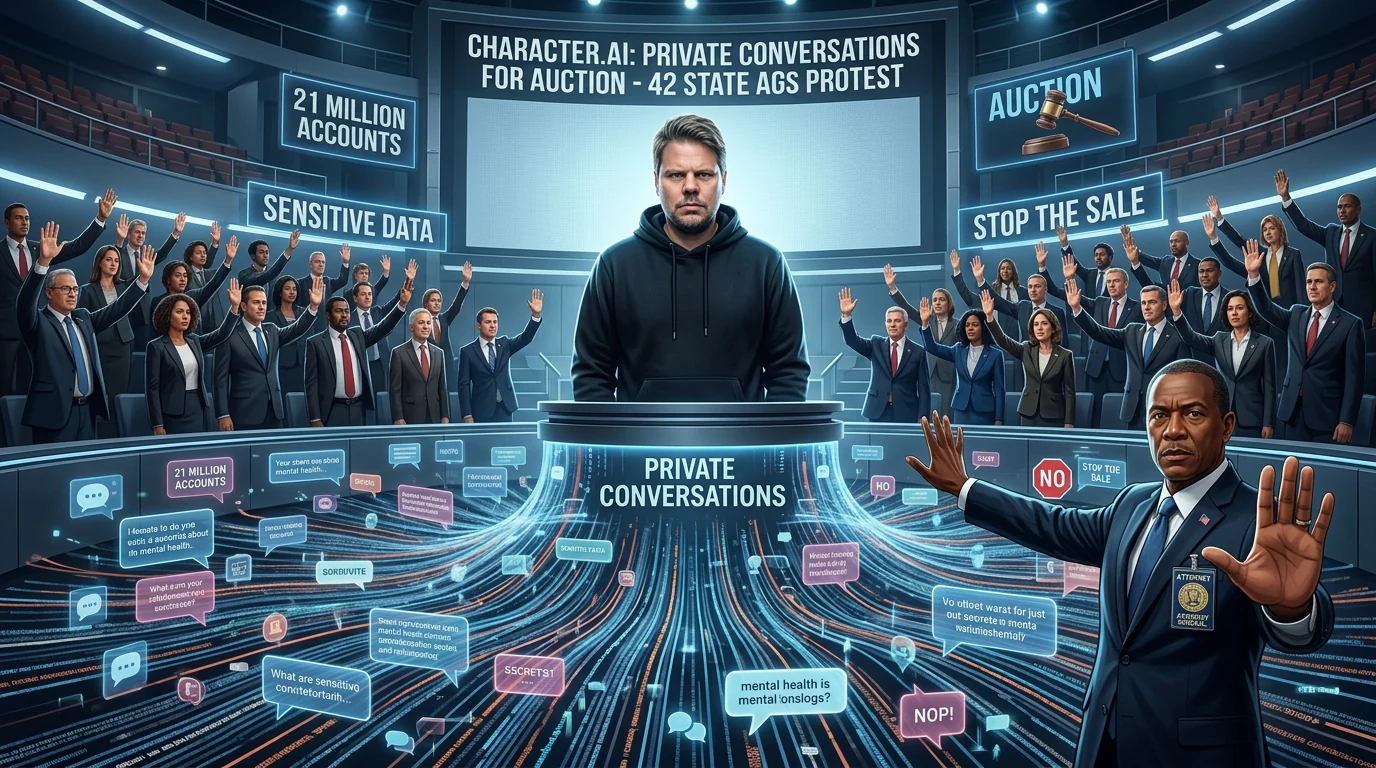
If you have used Character.AI for private conversations, export anything you want to keep and consider deleting your account before the proposed sale moves forward. The company’s planned bankruptcy auction includes chat logs and other personal data from more than 21 million U.S. accounts. More than 2.1 million of those accounts are registered to minors.
This is not an ordinary transfer of a customer list. According to the states’ filing, the material includes intimate conversations about mental health, self-harm, eating disorders and suicidal thoughts, alongside IP addresses, possible location data and risk assessments attached to users. A coalition of 42 U.S. state attorneys general has asked the bankruptcy court to reject the terms or impose much stronger protections.
The auction is scheduled for December 1, 2026. Technology, models and an app can reasonably change hands when a company goes bankrupt. Private conversations are different. When a service has told users that it does not sell their personal information for money, bankruptcy cannot become a magic eraser for that promise. This is not okay.
What is Character.AI trying to sell?
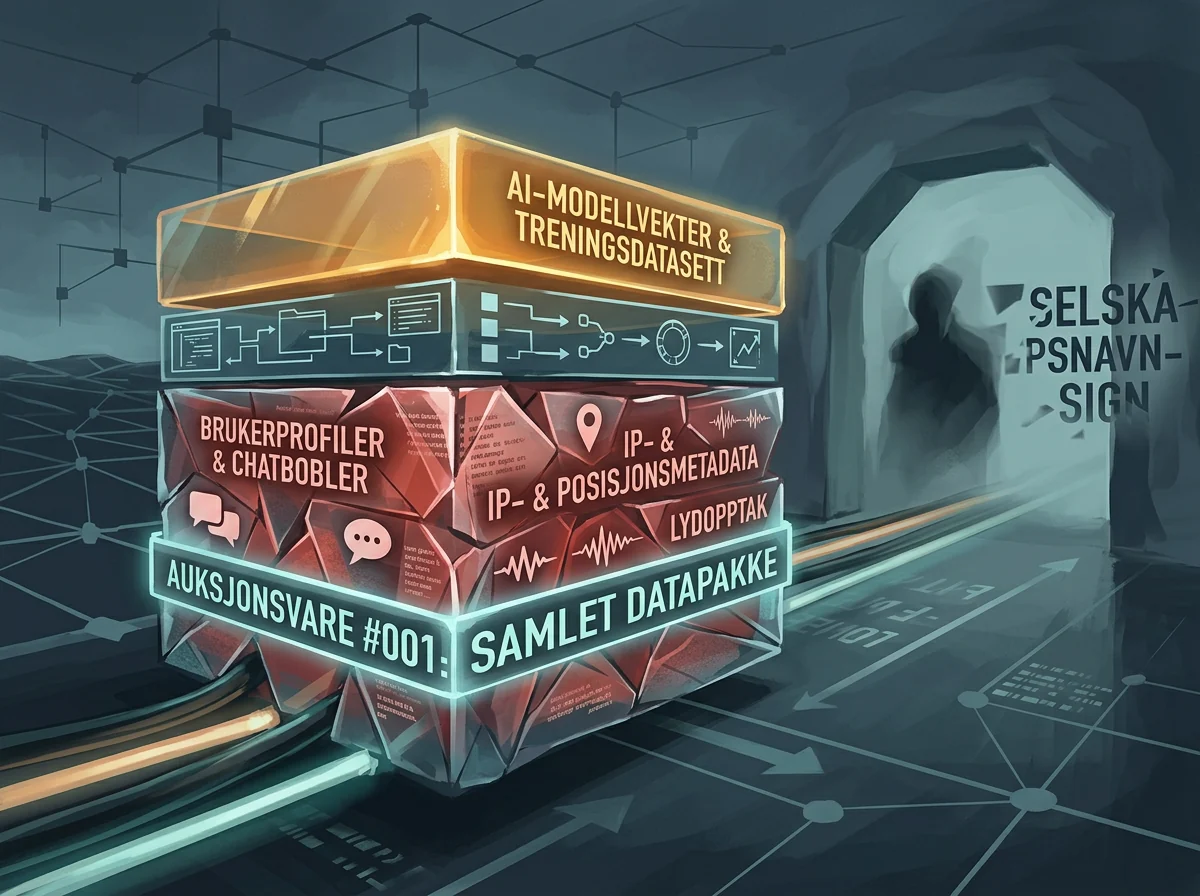
Character.AI is proposing to sell its platform and an extensive package of user data to a new owner. According to the attorneys general’s objection filed with the bankruptcy court, the package includes account and profile data, user-created characters, chat content, training data and AI models with their weights. It also includes privacy choices, age information and recorded requests for access or deletion.
The combination is what makes this so serious. A chat log can be sensitive on its own. Link it to a profile, email address, phone number, IP address, voice material, risk score and a history of privacy choices, and a buyer can get an extraordinarily detailed picture of a person. A user’s most vulnerable moments could effectively travel with the bankruptcy estate.
The court filing also says the proposed sale includes training datasets and models trained on the material. It is therefore not enough to ask whether somebody can open an old chat. The harder question is whether those conversations have already been incorporated into datasets and models that a new owner could exploit commercially.
The initial bidder, Smirks and Pangs Acquisition LLC, was formed in Delaware on November 13, 2026 – one day before Character.AI selected it as the stalking-horse bidder. Its $10 million offer sets the floor for the auction. The attorneys general say the purchase agreement identifies neither a parent company nor any investors, while allowing foreign investors whose identities would be disclosed only to Character.AI.
How private are the conversations?
The conversations are private in the basic and important sense that users did not write them for the public. They are not necessarily protected like a conversation with a doctor or lawyer. The problem is that Character.AI offered characters that could present themselves as therapists, psychologists and doctors, while users shared details they would probably never post on an open website.
The Illinois attorney general’s account of the objection describes chat logs about self-harm, eating disorders and suicidal thoughts, as well as sexually explicit conversations involving adults and children. Each chat may be connected to the user’s profile, IP address and other metadata. Character.AI also created risk scores for users flagged by its systems.
It is difficult to imagine a more sensitive data package. An advertising ID might reveal what you clicked. A long conversation with a character acting as a confidant can reveal what you fear, who you love, what you are ashamed of and when you were at your lowest. Such data could be abused for anything from aggressive targeting to blackmail, discrimination or manipulation.
The attorneys general also say minors may have been misclassified as adults between 2022 and 2025, when age checks were inadequate and relied heavily on what users entered themselves. That means the 2.1 million accounts registered to minors may not represent the entire group. If the company cannot reliably separate children’s data from adults’ data, it cannot credibly promise that children’s conversations can simply be removed from the package.
What did Character.AI promise its users?
Character.AI stated in a regional privacy notice that it did not sell personal information for payment. Its general policy also allowed information to be transferred during a merger, acquisition or sale of assets. That distinction is now central to the dispute: Is this a legitimate transfer of an operating business, or a data sale to an entity that has not even committed to keep the service running?
The attorneys general argue that the proposed agreement does not require the buyer to honor the original privacy promises, respect earlier opt-outs or let users control future use of their information. The agreement also does not explain what Smirks intends to do with the data. In their view, the buyer could therefore use or transfer the material in ways users had no reason to expect.
Character.AI, for its part, says the information remains protected by its privacy policy. The company’s bankruptcy update also points users to options for exporting their data or deleting their accounts. The platform remains online, and subscriptions are continuing for now.
But saying that today’s practices remain unchanged does not answer what a new owner may do tomorrow. That is why users should act while they still have access to their accounts and the export and deletion tools. A privacy promise is not worth much if its obligations disappear at precisely the moment the data becomes most marketable.
Why are 42 attorneys general intervening?
The coalition says the sale may violate federal and state privacy laws. Its objection focuses particularly on children’s data, health information, content from characters presenting themselves as licensed health professionals, and conversations flagged for self-harm or suicide risk. The objection has been filed in the Delaware bankruptcy court, but the court has not yet decided whether the legal claims are valid.
The attorneys general want data from known or flagged minors excluded from the sale. They are asking for the same treatment for sensitive health information, sexual content involving minors, data from users who opted out, training data built from such material and models trained on it. They also want every user to receive a genuine opportunity to delete data before any transfer.
I am skeptical of broad regulation that builds an expensive gate only the largest companies can afford to pass through. That is not the point here. This is about enforcing specific promises, privacy choices and responsibility for data that has already been collected. A company should not gain greater control over your conversations simply because it ran out of money.
The case is not settled. The figures, data categories and description of the sale agreement come from a formal objection submitted by the states. Character.AI and the buyer may dispute both the legal interpretation and the proposed restrictions, and the bankruptcy judge must decide what can actually be transferred. For now, the accurate statement is that the data is proposed for sale – not that it has already been handed over.
What should Character.AI users do now?
Start by exporting anything you want to keep. Character.AI says users can request an export through the app or website. An export does not give you control over the company’s copies, but it can prevent you from losing conversations or characters if the service changes or shuts down.
If you do not want old conversations to follow the service to a new owner, consider deleting your account and sending an explicit deletion request. Keep the confirmation. There is no guarantee that everything can be erased immediately – some material may have to be preserved as evidence in ongoing litigation – but a documented request is far better than hoping an unknown buyer interprets silence as a privacy choice.
Do not add new sensitive information while ownership and terms remain unresolved. That includes details about health, finances, identity, sexual matters and other people. If you use AI as a private journal or confidant, choose a system where you actually control storage. This is one of the strongest arguments for local models: the data can remain on your own machine instead of becoming another copy held by a third party.
Parents should check whether their children have accounts and help them export or delete data. Do not turn that into an interrogation. The aim is to protect information that may be intensely personal, not to make an already unsafe data situation harder for the child.
Paying users should also check their subscriptions. Character.AI says billing is continuing for now. If you no longer want to use the service while the auction is pending, there is no reason to let a subscription renew out of habit.
What does this mean for other AI services?
The Character.AI case shows what can go wrong when a service gathers diary-like conversations, identity data and training material in the same cloud. While the company is healthy, the collection is described as personalization and better models. When the business collapses, the same collection appears on a list of assets a buyer can pay for.
This is not limited to social AI characters. People use general chatbots for workplace problems, legal questions, health, relationships and money. Others connect AI agents to email, documents, cloud storage and bank data. The more useful a service becomes, the greater the damage if the data receives a new purpose or a new owner.
That does not mean everybody must stop using cloud AI. It means we must stop pretending that a conversation is private merely because it sits behind a login screen. Read what the provider stores, disable training where possible, limit sensitive disclosures and use local systems when the material should not leave your own machine.
A bankruptcy can sell servers, code, trademarks and contracts. It should not turn people’s most vulnerable conversations into fair game. If Character.AI cannot separate and protect material that should never have been treated as an ordinary commodity, that material must stay out of the sale. It is that simple.
Frequently asked questions
Have Character.AI users’ conversations already been sold?
No. The sale is proposed as part of the bankruptcy process, but 42 attorneys general have filed a formal objection. The bankruptcy court must decide the terms and which data, if any, can be transferred.
Can data from a deleted Character.AI account still be included?
That depends on what Character.AI has actually deleted and what it must preserve for legal reasons. Send an explicit deletion request, keep the confirmation and do not assume that uninstalling the app deletes either the account or the data.
Who is Smirks and Pangs Acquisition LLC?
It is the initial bidder offering $10 million. The company was formed in Delaware on November 13, 2026, one day before it was selected to set the floor for the auction. The purchase agreement did not identify a parent company or any investors.
What should I do if I have private conversations in Character.AI?
Export anything you want to keep. Then consider deleting the account and submitting a documented deletion request if you do not want the data transferred. Avoid adding new sensitive information while the proposed sale remains unresolved.