Innhold Show
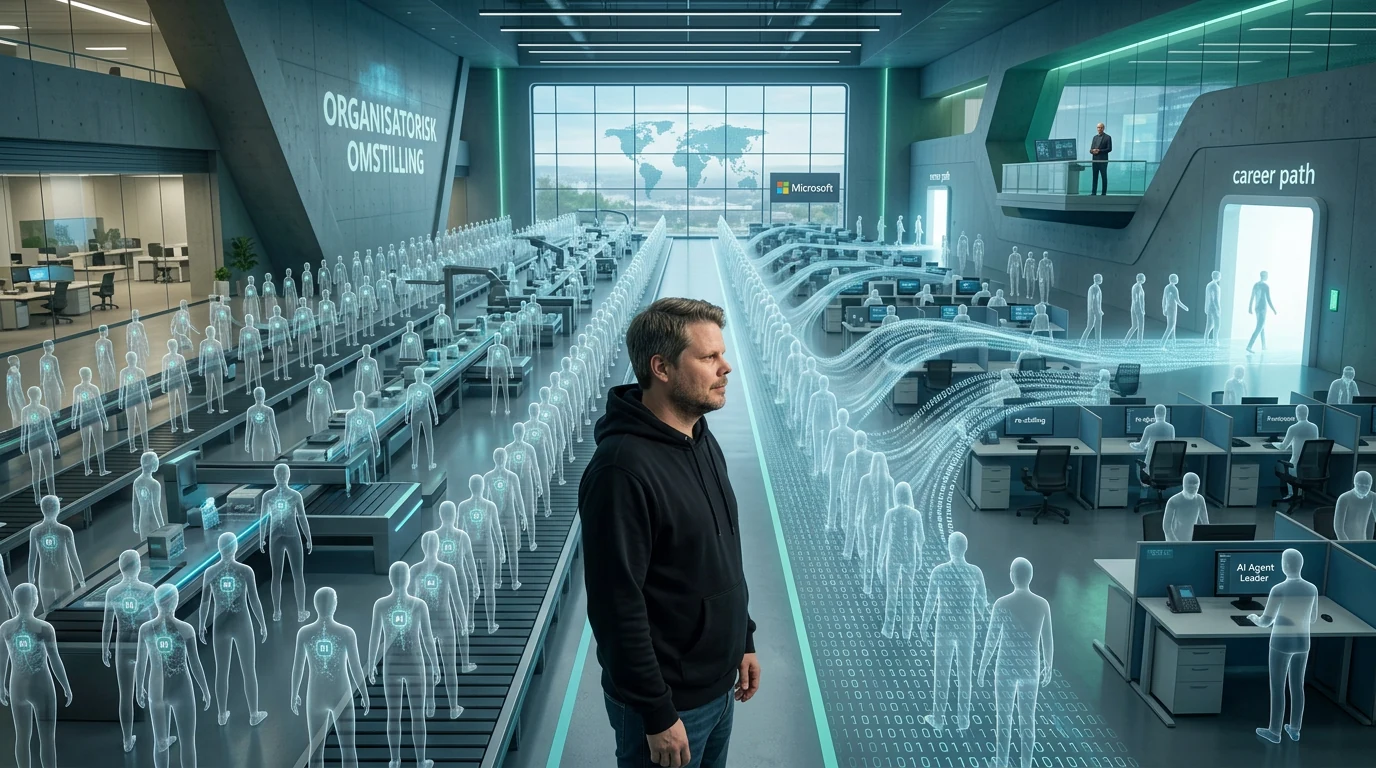
Microsoft has offered voluntary exit packages to about 60,000 employees because the company wants to rebuild work around AI. That does not mean 60,000 people have been fired, nor does it prove that AI has already replaced them. But Satya Nadella is not hiding the central message: Jobs, teams and the way software is built are going to change.
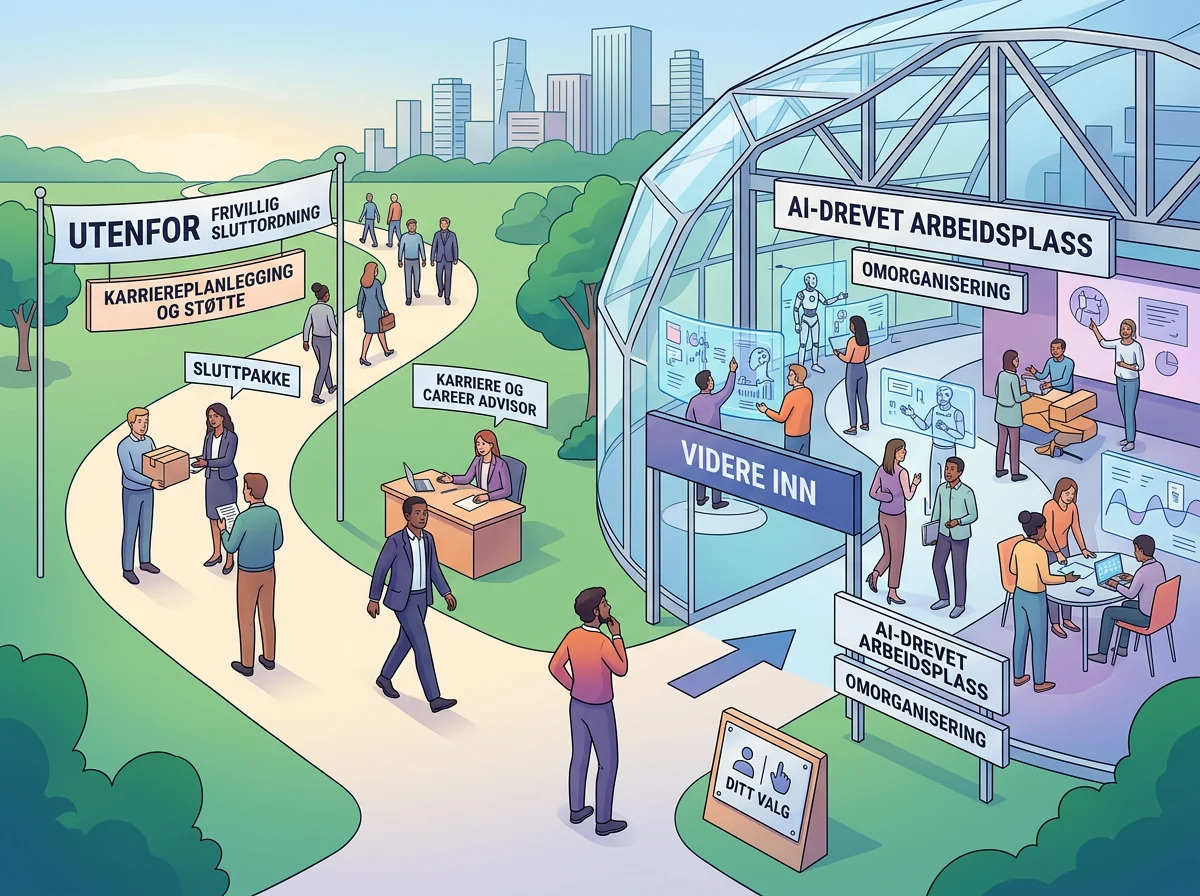
The offer covers eligible employees in selected parts of Microsoft in the United States, Canada, the United Kingdom and India. Those who accept receive financial support and help planning what comes next. Those who remain should not expect AI to sit beside the old job as one more optional tool. Microsoft intends to reorganize the work itself.
That is the important story. The AI transition will not arrive as nothing more than a new Copilot button and a prompt-writing course. It changes which tasks people perform, how large teams need to be and what a company expects from each employee. Employees and managers are better served by facing that honestly than pretending the organization will look much the same afterward.
What has Microsoft offered the 60,000 employees?
On October 26, 2026, Microsoft introduced a time-limited voluntary exit offer for eligible employees at level 70 and below in participating teams. About 60,000 people may qualify, representing roughly 27% of the company’s global workforce. Microsoft describes the program as voluntary and says it includes financial support and career-planning assistance.
That distinction matters. Sending an offer to 60,000 employees is not the same as laying off 60,000 employees. Microsoft has not publicly said how many people it wants to accept. Participation also varies by division according to business priorities, customer commitments and staffing needs.
At the same time, this is more than a generous option for people who happened to be considering a departure. It gives Microsoft a way to reduce or move capacity without another huge round of compulsory layoffs. It also gives employees a choice before the reorganization proceeds. Voluntary means voluntary, but nobody should pretend the offer arrived without a clear direction from management.
Why does Satya Nadella connect the offer to AI?
Nadella says Microsoft is becoming a company where employees use AI to do their work and increasingly manage AI agents that perform parts of it. In TechCrunch’s account of the interview, he describes a redesign of teams, workflows and the work product itself – not a simple one-for-one replacement of people with software.
Software development is his example. The argument first went that AI could never write proper software. Then the pendulum swung all the way to asking whether developers were needed at all. Nadella’s view now is more practical: Developers remain important, but teams will be organized differently and the job will start from a different place.
He points to the team behind Cowork, an AI agent in Microsoft 365, which reportedly consists of just 11 engineers. Nadella describes them as a team building a “software factory” that in turn builds the product. Eleven is not a magic number that every manager should copy. The point is that Microsoft is moving developers from writing every step themselves toward designing, directing and checking the system that produces the solution.
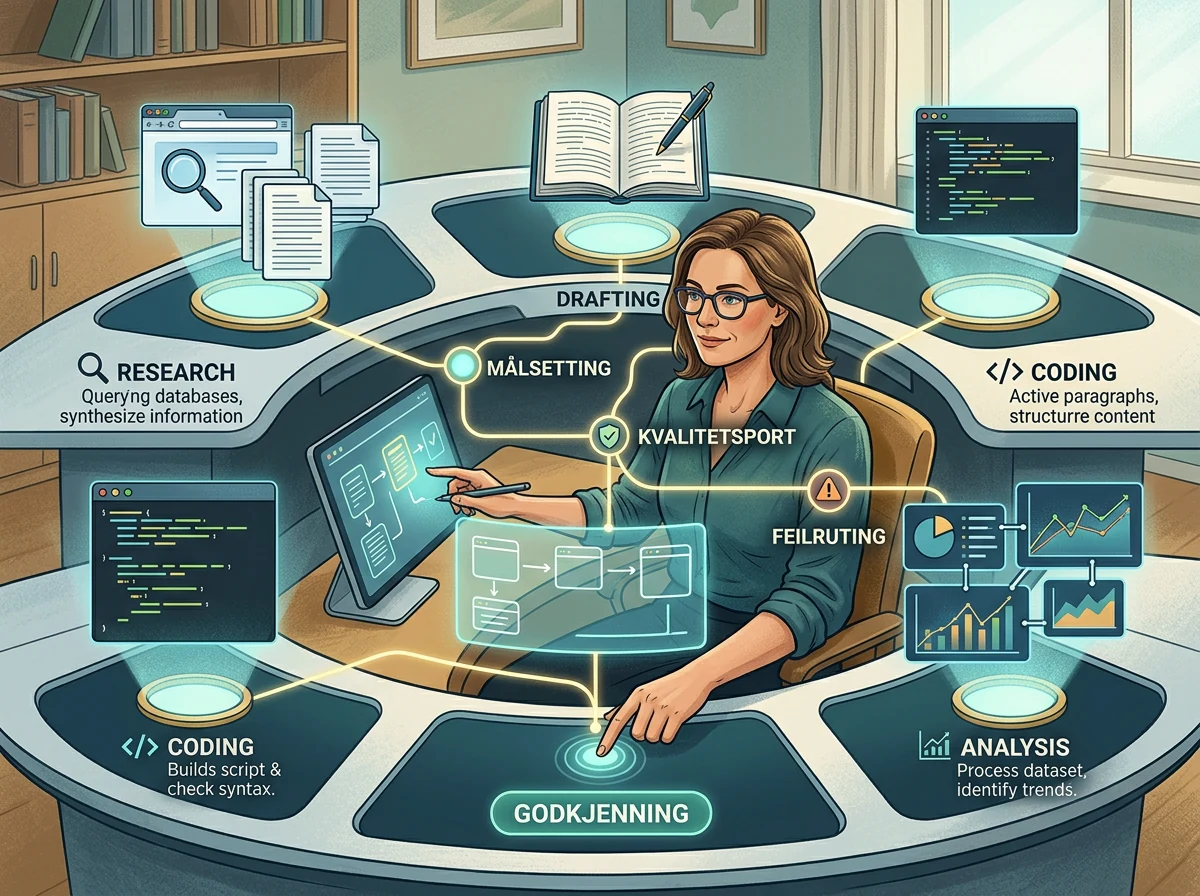
I recognize that shift from agentic work. The big gain does not come from opening a chatbot and hoping for a miracle. It comes when work is divided into clear tasks, agents receive firm boundaries and a person controls the direction and the result. Move that way of working into an organization with more than 200,000 employees and it becomes an organizational change, not merely another tool.
Are these AI layoffs in disguise?
Not on the evidence available. Microsoft is not saying AI replaced these 60,000 employees, and all 60,000 are not expected to leave. The accurate description is that they have been given access to a voluntary exit program while the company adjusts its workforce for an AI-driven organization.
But that qualification should not become a sleeping pill. Nadella says jobs will have a new starting point, teams will be organized differently and some employees may choose another path. When AI makes teams more productive, it obviously affects how many people a company needs for particular tasks. The entire purpose of a productivity gain is to do the same work with less effort, or to let the same people produce more.
Microsoft has already shown that it is using several methods. In July, the company eliminated about 4,800 positions, roughly 2.1% of its workforce. Chief People Officer Amy Coleman explicitly said those particular roles were not replaced by AI, while also stating that AI is automating tasks and demanding new skills. Microsoft’s own announcement described layoffs, internal redeployment and voluntary departures as parts of the wider transformation.
The new offer is a separate event and uses a different mechanism, but the direction is the same. Microsoft wants people and teams suited to a way of working in which AI is embedded in production. That is a stronger and more useful claim than the dramatic but unsupported line that Microsoft has simply replaced 60,000 people with machines.
What does it mean to manage AI agents?
It does not mean every employee receives a grand management title and stops doing professional work. A person directing AI agents still needs to understand the objective, the field and the quality requirements. The difference is that more production can be delegated to models while the person spends more time breaking down the work, setting priorities, checking results, fixing errors and making decisions.
For a developer, that may mean less time writing routine code line by line and more time on architecture, specifications, tests and reviewing changes. For another knowledge worker, an agent may collect information, prepare a first draft and follow a workflow, while the person decides whether the result is correct and whether the proposed action should happen.
This takes more than a two-day course. Poorly specified agents merely produce mistakes faster. If nobody can verify the result, the company has not automated the work – it has automated the risk. Professional expertise remains essential, but it now has to be combined with the ability to use and direct AI.
That is also why Microsoft’s push toward more autonomous Copilot agents matters beyond a product update. When agents can continue working through tasks, the division of labor between human and machine becomes a miniature organization chart. The people who can design that division and judge the outcome become more valuable, not less.
What should employees do now?
My most important advice is simple: Learn AI through the work you actually do. Do not stop after getting a chatbot to write an email. Identify which parts of your job can be described clearly, performed by a model and checked safely. That is where the practical transition begins.
Start with one repeatable workflow. Describe what goes in, what a good result looks like, which errors are unacceptable and where a person must approve the next step. Then measure whether the workflow really saves time without lowering quality. Someone who can demonstrate that is in a stronger position than someone who can merely list the names of AI tools.
The advice for managers is just as direct: Do not buy licenses and call it transformation. If the workflow, responsibility and quality control remain unchanged, you have only added another expense to the old organization. Microsoft’s example shows how far a company may be willing to go when AI moves out of the slide deck and into production.
People affected by change deserve clear information and decent terms. But care for people cannot become an excuse to pretend technology can be kept outside working life. AI is taking over more tasks, and some jobs will disappear or change substantially. The sensible response is to learn, adapt and become the person who can use these tools with professional judgment.
Microsoft is saying what more companies will soon have to say
Nadella is trying to give employees more control over the choice while making the direction unmistakable. Some can move into different roles. Some can learn a new way of working. Some will take the package and move on. That is far more honest than promising that AI will remove only the boring tasks while leaving the rest of the organization untouched.
We do not yet know how many employees will accept or how much smaller Microsoft’s workforce will become. Nor do we know whether the new structure will perform as well in practice as it does in Nadella’s examples. Eleven capable engineers in one AI-native team do not prove that every established team can be reduced by the same formula.
But the direction is hard to misunderstand. Microsoft is not asking 60,000 people to choose because AI might matter someday. It is doing so because management believes AI is already changing how work should be organized. The message for the rest of us is blunt: Learn to direct AI before the transition is directed for you.
Frequently asked questions
Has Microsoft laid off 60,000 employees?
No. About 60,000 eligible employees have received access to a time-limited voluntary exit offer. Microsoft has not said that everyone will leave or disclosed how many acceptances it wants. The program includes financial support and career-planning assistance for employees who choose to depart.
Were Microsoft employees replaced by AI?
Microsoft has not shown that these 60,000 employees were replaced by AI. The company does say AI is automating tasks and changing teams, workflows and roles. That is a real workforce and skills transition, but it is not evidence that every voluntary exit is a direct AI replacement.
Which countries are included in Microsoft’s voluntary exit offer?
The offer covers eligible employees in participating teams in the United States, Canada, the United Kingdom and India. Microsoft says it applies at level 70 and below, but not every division is participating. Eligibility depends on business priorities, customer commitments and staffing requirements.
Which AI skills will matter most at work?
The ability to define a task, divide it into steps, give AI clear boundaries and verify the result will matter. Professional knowledge does not disappear. It is what lets a person judge quality, detect errors and decide what an agent may do alone and what requires human approval.