
Innhold Show
X has stopped using third-party data collected by Grok Bot to train AI systems after Ireland’s privacy regulator intervened. This is not just another argument about which social media posts a company may feed into a language model. It concerns information an AI agent can access while working for one person, even though that information belongs to friends, customers, colleagues or complete strangers.
X should have understood that boundary without help from a regulator. If I give an agent access to my inbox, photos or documents, the people appearing in that material have not thereby given the company permission to use their data for model training. Consent does not spread through a contact list.
X created this mess. Companies that treat access to other people’s data as a free training stockpile invite the bureaucrats straight through the door. It is bad privacy, bad product design and a remarkably efficient way to produce more rules that the largest companies can absorb more easily than their smaller competitors.
What exactly has X stopped?
According to Politico’s reporting, republished by UA.NEWS on November 17, X stopped using third-party data collected by Grok Bot to train its AI systems. The agent reportedly began collecting this category of data in late October 2026. Ireland’s Data Protection Commission, or DPC, asked X to stop after Commissioner Dale Sunderland raised what he described as significant concerns.
X confirmed that it had complied with the DPC’s request. Precision matters here: X halted the use of this particular data category for model training. It did not shut down Grok Bot, and it did not stop all AI training. The DPC has not said that AI agents themselves are the problem.
The regulator will continue talking with X to establish exactly what happened and decide what comes next. X did not respond to Politico’s request for comment. I therefore do not yet know how much data was collected, which agent features supplied it, whether it had already affected a model or how X intends to handle the material after stopping the processing.
Third-party data is not the same as user data
Third-party data is personal information about someone other than the user who shares material with an agent or gives the agent access to it. A simple example is a holiday photo you sent to a friend. If that friend gives Grok Bot access to a photo library, the agent may technically gain access to a picture of you even if you have never used Grok Bot and never asked X to process your information.
The same applies to customer emails, internal documents containing names, calendar entries, phone numbers and information the agent finds online. Combining many data sources is precisely what makes an AI agent useful. Practical access, however, is not a right to reuse everything for an entirely different purpose.
That is the important part of this case. A conventional chatbot primarily handles what a user types or uploads during a conversation. An agent may work across services, apps and websites over time. Grok Bot can also continue working on its own cloud computer. The more useful and autonomous the agent becomes, the more information it may encounter about people who were never part of the agreement between the user and the AI company.
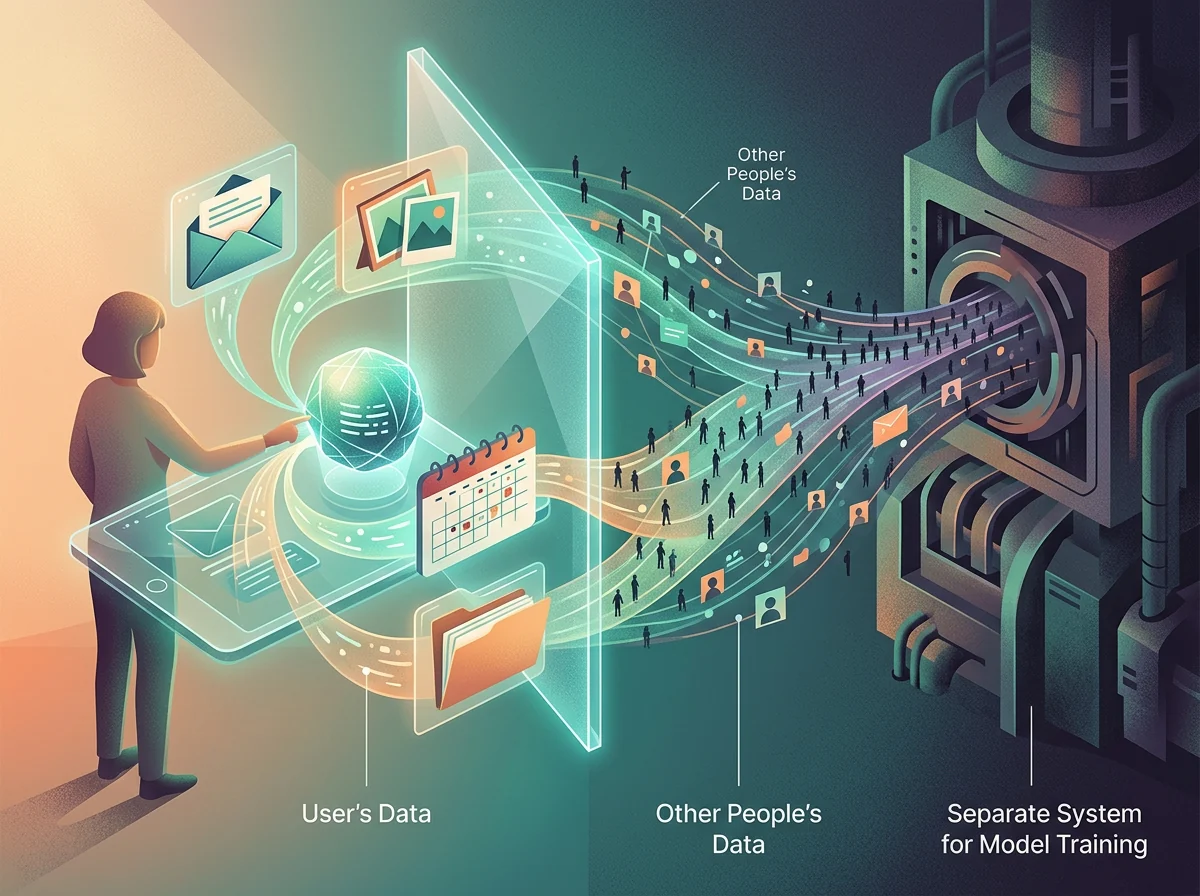
An agent can get permission while the people in the data get no choice
You can authorize an AI agent to read a folder or use an app. That permission describes the relationship between you, the service and the data you control. It does not automatically decide what the company may do with personal information about everyone else who happens to appear there.
This distinction is easy to lose in an interface. A user presses one button to connect a service, and the agent gains access to thousands of items. To the user, it feels like one product setting. In legal and ethical terms, the material may involve a large number of people, purposes and expectations.
The problem becomes more serious if the data is not merely used to complete the task but is passed into the training or improvement of future models. The information then moves from working material for a specific job to raw material for the company’s product development. That is a substantial change of purpose, and it may be invisible to both the user and the third party.
X has faced this conflict before
The DPC and X already have a long history involving training data. In August 2024, the Irish authority went to the High Court after X used personal data from public posts by EU and EEA users to train Grok. The DPC said on August 8, 2024, that X had agreed to suspend processing data collected between May 7 and August 1 that year.
In April 2025, the DPC opened a separate inquiry into whether X had lawfully used publicly accessible posts by European users to train Grok models. The inquiry covered issues including lawfulness and transparency. The new Grok Bot case involves a different and, in several respects, more difficult source: personal information about other people that an agent encounters while performing tasks.
Reducing this to the familiar argument that public posts are already online misses the point. A private photo in a friend’s folder is not public because an agent can read it. A customer’s email does not become training data because an employee connects an AI agent to an inbox. Technical availability does not erase confidentiality or the expectation that information will be used for the purpose for which it was shared.
The regulator found a real problem, but the state is no privacy machine
The DPC’s intervention targeted the specific training use, not agent technology as a whole. That distinction matters. X used third-party data collected by an agent for model training, and the company has now stopped the processing while the scope remains unclear.
That does not mean more regulation is automatically the answer. Large technology companies have lawyers, compliance departments and enough money to handle new reporting requirements. A small European agent developer may be priced out by the same burden. The companies that created the problem can end up with the strongest moat around the market.
That is the political catch that should not disappear amid applause for the intervention. This case is not a blank check for prior approval of every agent or for a fresh bureaucratic paperwork hell. Broad compliance machinery will protect the largest companies, slow down the smaller ones and leave users with fewer options.
The better counterweight is competition around clear data minimization, local processing where practical, short retention periods and real choices. Companies must explain the difference between data an agent needs to complete a task, data stored in account history and data used for training. If they bury all of that behind one switch and 30 pages of terms, they have not earned anyone’s trust.
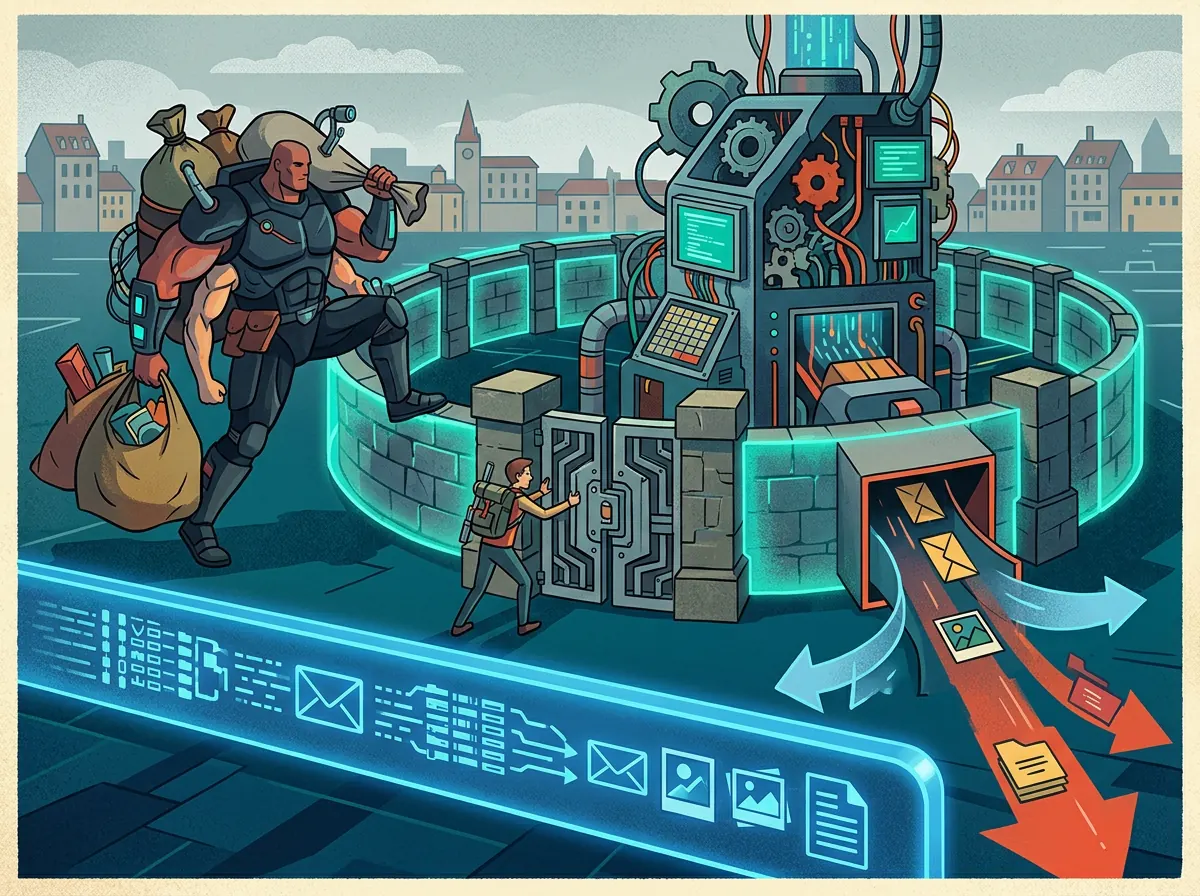
What should you do when an AI agent asks for access?
Treat every connection as a data-sharing decision, not as a routine button you must press to continue. Check which folders, accounts and apps the agent actually needs. Grant the minimum access required, and remove it when the task is complete.
Do not put customer archives, employee records or private messages into an agent service until you know whether the content can be stored or used for training. A business cannot focus only on its own trade secrets. It must also understand which information about customers, staff and partners travels with the connected data.
If you have already connected Grok Bot or another agent to a substantial data source, review those permissions now. Find out whether the service distinguishes task processing from model training, whether training use can be disabled and what happens to material already processed. An opt-out for your own data does not solve the entire problem if the agent can still see information about other people.
For a business, the supplier agreement should answer four straightforward questions: What data does the agent read, where is it stored, is it used for training, and how is it deleted? Vague answers are a warning sign. Clarifying this before the agent receives access is much cheaper than doing so after a regulator or customer asks what happened.
This will test the entire agent market
The DPC says it is also talking with another unnamed technology company about plans to use agent-collected data for training. This is therefore not just an X problem. Grok Bot reached the headlines first, but the same conflict exists anywhere agents can access email, documents, photos, customer systems and public web sources. It becomes especially clear when a shared Data Bot works with an entire team’s knowledge.
I use agents extensively and consider this development enormously useful. That is exactly why the line must be clear. An agent needs data to do its job. The supplier does not thereby gain the right to turn every person appearing in that material into an involuntary contributor to the next model.
X deserves criticism for crossing that line. The DPC does not deserve a blank check to regulate the entire agent market because of it. The requirement for suppliers should be simple: Use data for the task the user requested, disclose any further use clearly, and do not treat third parties’ privacy as free raw material.
If AI companies cannot manage that basic discipline, more regulators will intervene. X will not be the only one paying the bill. Smaller developers will pay too, while users get fewer, more expensive and more constrained products. The industry should clean this up before bad choices and good intentions build yet another moat.
Frequently asked questions
Has Ireland shut down Grok Bot?
No. X stopped using the relevant category of third-party data collected by Grok Bot for AI training. Grok Bot itself remains available, and the DPC has explicitly said that AI agents as such are not the problem.
What counts as third-party data in an AI agent?
It is personal information about someone other than the user granting access. Examples include photos of friends, customer emails, contact details, employee documents and personal data the agent encounters online while completing a task.
Could Grok Bot data already have been used for training?
The reporting says collection began in late October 2026 and X later confirmed that it had stopped the processing. It is not yet publicly known how much data was processed, whether it affected a model or how X will handle the material after the halt.
How can I reduce the risk when using AI agents?
Grant access only to the data sources required for the task, check whether the service stores data or uses it for training, and remove permissions that are no longer needed. Businesses should also require clear terms for storage location, deletion and data concerning customers and employees.