
Innhold Show
If you have been waiting to actually use Gemini 4 Carbon, the wait is over. Google’s most powerful model is now available through the paid Gemini API, to businesses and to Google AI Ultra subscribers. At the same time, Google is previewing /swarm in Antigravity, where a coordinated team of AI agents works on the same task.
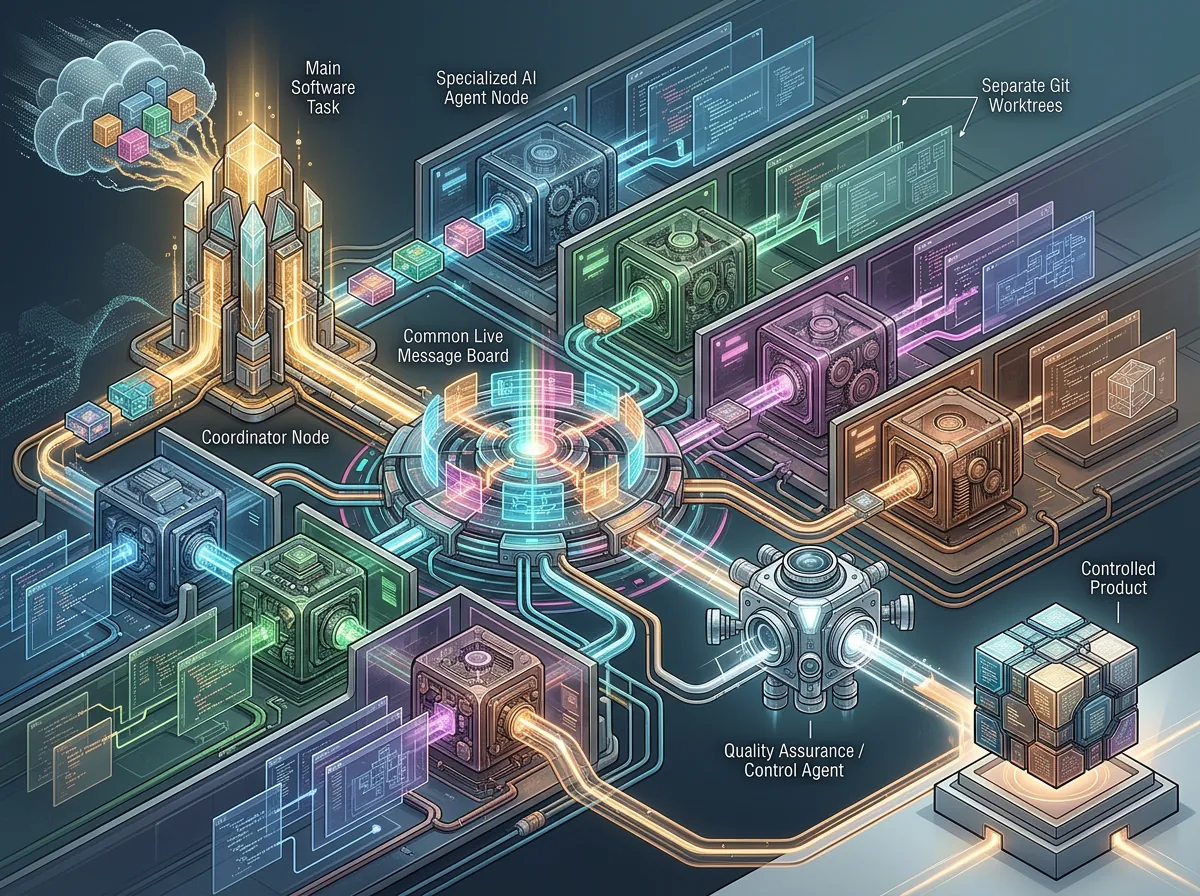
This is more than a new label for ordinary subagents. A coordinator divides the work among specialized agents in isolated Git worktrees, while separate review agents test the changes and challenge the results. Everyone collaborates through a shared message board that the user can watch and steer.
I like this direction. One huge context window and one agent expected to remember everything, build everything and review its own work is a rather fragile way to handle a large project. But an “agent swarm” is not the same thing as a finished autonomous development team. This is a preview, Google’s impressive examples are selected demonstrations, and the company warns that parallel agents consume quota far faster than a normal conversation.
Who can access Gemini 4 Carbon?
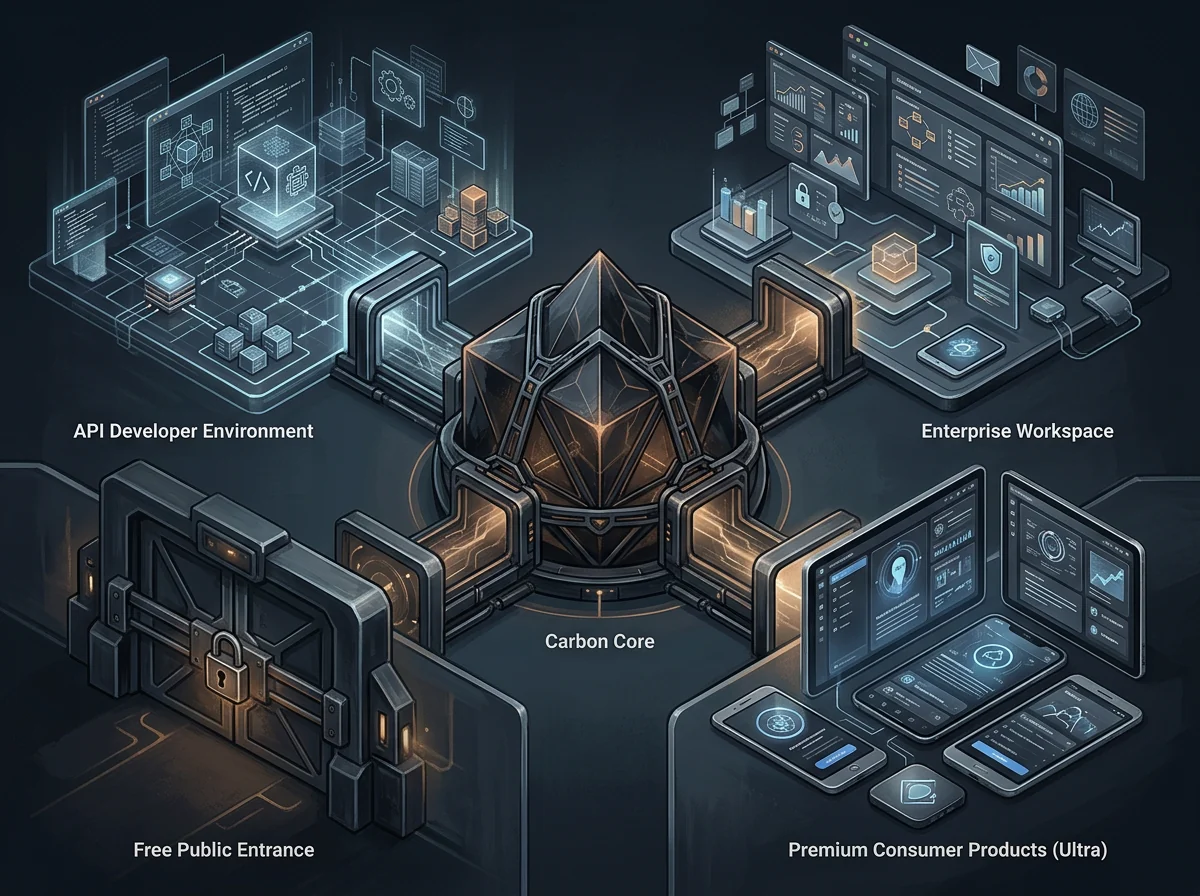
As of November 10, 2026, Gemini 4 Carbon is available to paying developers through the Gemini API in Google AI Studio and Android Studio. Businesses get the model in Gemini for business, while Google AI Ultra subscribers get it in AI Studio, the Gemini app, AI Mode in Search and Google Antigravity. Google describes the rollout as access for developers, enterprises, researchers and consumers.
So “available to the public” comes with a footnote in rather large type. Carbon has not become a free default model for every Gemini user. API access requires a paid tier, and ordinary consumer access is tied to Google AI Ultra. Researchers can apply for six months of access to the highest Antigravity tier, while the specialized cyber capabilities remain inside the Fairwind program for approved defenders.
This is still a clear change from the October 28 launch. Back then, Gemini 4 Carbon was limited to a small group of cybersecurity defenders. Now there is both API access and a set of product surfaces that ordinary paying customers can use. Only now can the model meet messy codebases, internal documents and workflows outside Google’s hand-picked test environments.
What is /swarm in Google Antigravity?
/swarm is a multi-agent feature that turns one request into a coordinated team effort. The coordinator creates specialized workers in separate Git worktrees, assigns tasks and can use a dedicated review agent to run tests and look for weaknesses. The agents collaborate directly on a shared, live message board instead of routing everything through one long conversation.
With a conventional subagent setup, the main agent is still the bottleneck. It has to delegate, wait for private replies, consolidate the findings and keep the entire plan inside its own context window. Google says /swarm allows workers to communicate with one another, mention specific agents by name and remain parked without using tokens when nobody needs them.
The user can follow the team in a dedicated Swarm interface showing members, activity and the path behind decisions. The command-line version includes a full-screen message board, while the app lets you open each agent’s work and intervene as the job progresses. That matters. More agents are not automatically better if all you get is a larger black box to trust.
Google has rolled out /swarm as a preview in the Antigravity app and CLI. The launch post links Carbon in Antigravity to the Ultra subscription, while the Antigravity documentation says the /swarm command itself is available on both Google AI Pro and Ultra. Access to the feature and access to Carbon are therefore not necessarily the same thing.
Why does Carbon make sense as the coordinator?
Carbon is designed for long-running tasks that demand repeated rounds of planning, tool use and review. Google still recommends Gemini 4 Argon for most coding and knowledge-work tasks. Carbon spends more tokens investigating hypotheses, examining the material in greater depth and running extended verification loops.
That makes it a natural fit as an architect, coordinator, security reviewer or critical counterweight, while faster models can handle routine work in parallel. This is a more sensible use of an expensive model than asking it to make every file edit. If every member of the agent team runs the heaviest model at maximum reasoning, what you have built first and foremost is an extremely efficient quota incinerator.
Google’s model card describes Carbon as particularly suitable for multi-agent collaboration, complex coding tasks, knowledge work, research and cybersecurity. Google also lists familiar limitations: hallucinations, occasional slowness or timeouts, and high token consumption at the deepest reasoning levels. A powerful coordinator can still produce a bad plan with tremendous confidence.
What has Google built with its agent swarm?
One of Google’s examples is an interactive Three.js project about the construction of the Eiffel Tower, created from historical photographs and technical drawings after a single initial request. Another agent team used seven public planning documents containing 206 technical drawings to build an interactive model of a Google office with 906,000 triangles over ten rounds of overnight work.
Carbon has also been used for an interactive textile simulation based on a research paper and for an open 3D game in which different agents produced models, code, visual effects, sound and music. The examples demonstrate the point of dividing the work: each task spans several disciplines and deliverables that can be built and reviewed in parallel.
But these are demonstrations selected by Google. They show that the system can complete very large workflows, not that every large task will be correct on the first attempt. I would rather watch an agent team tackle an old enterprise application with inadequate tests, contradictory requirements and three dependencies nobody dares to upgrade. That is where multi-agent architecture becomes either a working tool or an expensive show.
How much does Gemini 4 Carbon cost?
The introductory price is $2 per million input tokens and $10 per million output tokens. Cached input costs 95 percent less than standard input, which could make a substantial difference when several agents repeatedly read the same project material.
After November 30, 2026, the price doubles to $4 per million input tokens and $20 per million output tokens. These are the API prices for the publicly available Carbon model, not the price of a Google AI Ultra subscription.
The token rate alone does not tell you what an agent swarm will cost. Several workers may read the same files, try different solutions, run checks and debate the result. Google says plainly that parallel multi-agent systems consume quota much faster than a normal conversation, even with free idle time and the option to switch models. Measure the cost of a completed, approved task, not the isolated price per million tokens.
What is the difference between Carbon and Argon?
Gemini 4 Argon remains Google’s recommended model for most ordinary software development and knowledge work. Carbon is intended for the hardest jobs: long debugging investigations, major architecture changes, in-depth research, demanding document analysis and workflows in which the model must try, fail and verify its work over time.
That does not make Carbon the right choice automatically just because its model name is newer. A simple change does not improve because five agents discuss it. Argon or a faster model may be cheaper, quicker and more than capable. Carbon makes the most sense when the coordinator’s decisions carry significant value or when the task is genuinely too large for one agent to keep in view.
Google has released models so quickly in recent weeks that the product map is becoming hard to follow. Argon covers the broad top-tier coding and reasoning role, while Carbon is the more expensive layer for deep reasoning and sustained verification. The distinction is useful: the strongest model should not become the default hammer for every loose screw.
How I would evaluate /swarm in practice
Start with a task large enough to benefit from division of labor but small enough that you can verify the correct answer. A bounded refactoring job with existing tests is better than handing the swarm your entire product and hoping for the best. Ask for explicit roles: one coordinator, workers with clearly separated areas and at least one review agent that does more than agree with everyone else.
Watch whether the division actually reduces waiting time and errors. Look for collisions between subtasks, repeated reading of the same files, tests that never run and a coordinator spending more time on administration than problem-solving. Isolated worktrees stop agents from overwriting one another’s files, but they do not solve logical conflicts between two changes.
And set a cost ceiling. Google’s own warning about quota usage may be the most useful detail in the entire launch. An agent team working through the night can be fantastic when it delivers a verified solution the next morning. If the result is five almost identical proposals and an empty quota, you have merely automated the meeting.
My verdict on Gemini 4 Carbon and /swarm
The public rollout makes Carbon far more relevant than the initial closed cybersecurity launch. Developers and businesses can now measure the model against their own work, and Ultra subscribers can put it inside a real agent environment. That is where the claims about endurance, precision and control have to prove themselves.
/swarm is the most exciting part. Large tasks often need multiple contexts, clear division of labor and independent review. A shared message board, isolated worktrees and visible review agents form a more credible architecture than one model expected to act as project manager, developer and quality lead at the same time.
I am still not ready to call this an autonomous development team. Google has shown that the system can build impressive things, but the preview must now pass the much duller test: real projects, real constraints and bills somebody actually has to pay. If /swarm can do that without coordination and quota consumption swallowing the gains, then the agent swarm starts to look like a tool – not just a good launch phrase.
Frequently asked questions
Can everyone use Gemini 4 Carbon for free?
No. Developers get Carbon through the paid Gemini API tier, while consumer access is rolling out to Google AI Ultra subscribers. Businesses have separate access routes, and researchers can apply for time-limited access through Google Antigravity.
How is /swarm different from ordinary subagents?
/swarm lets specialized agents collaborate directly through a shared message board. Workers use isolated Git worktrees, a coordinator assigns the work and review agents test the result. Conventional subagents more often report privately to one main agent that must consolidate everything alone.
Do I need Google AI Ultra to use /swarm?
Antigravity’s documentation lists /swarm for both Google AI Pro and Ultra in the app and CLI. Gemini 4 Carbon in Antigravity, however, launched for Ultra subscribers. You may therefore have access to the multi-agent feature without Carbon as the model.
When does the Gemini 4 Carbon API price increase?
The introductory price runs through November 30, 2026. It then rises from $2 to $4 per million input tokens and from $10 to $20 per million output tokens.