
Innhold Show
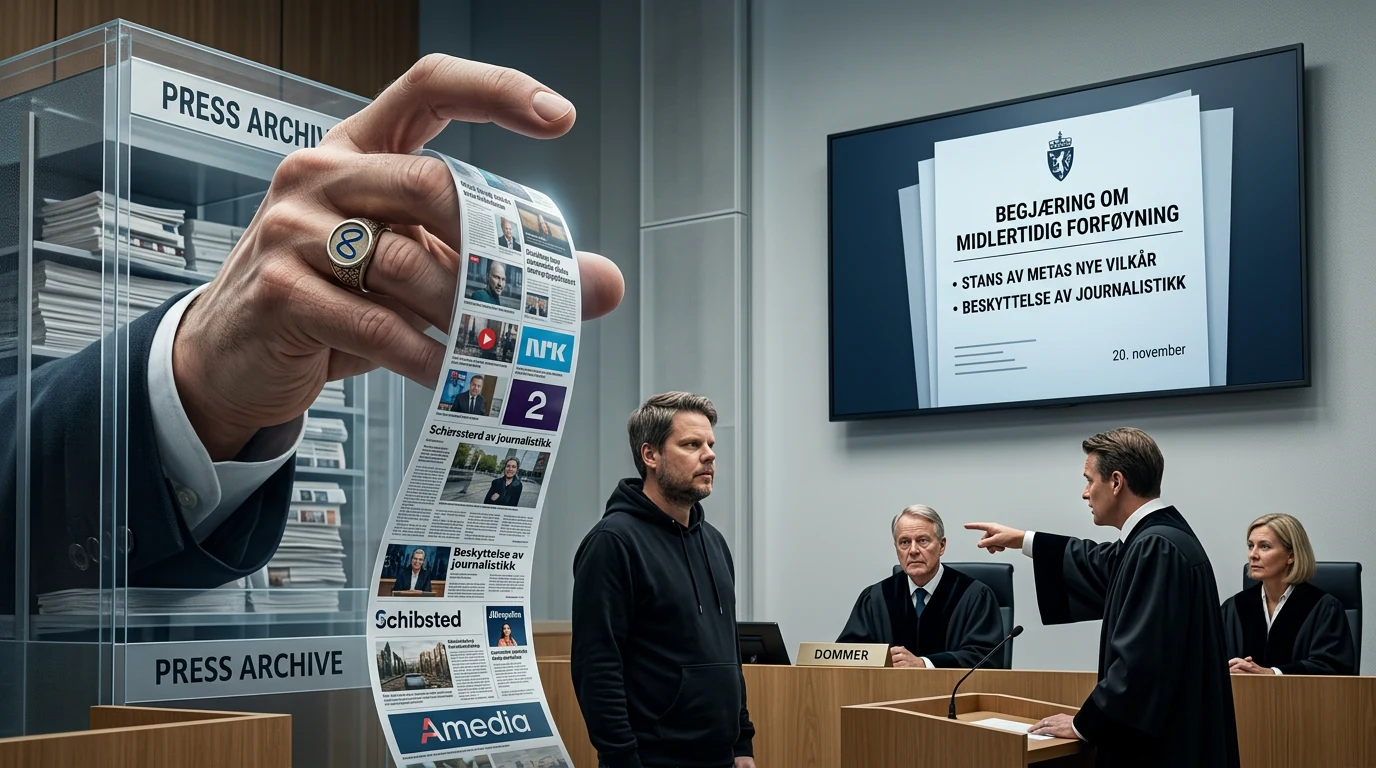
Norwegian media companies are asking Oslo District Court to stop Meta’s new commercial terms before they take effect on November 20, 2026. NRK, TV 2, Schibsted and seven other organizations argue that the terms could give Meta far too much freedom to collect articles, images and video from their websites – including material behind paywalls.
This is a real and important fight. Publishers depend on Facebook and Instagram to reach audiences, while Meta wants continued use of its business products to count as acceptance of the new terms. When the practical way to say no is to leave two of the world’s most important distribution platforms, this looks very little like a voluntary agreement between equal parties.
Precision matters, though. No court has ruled that Meta can train AI on every Norwegian paywalled article. Meta removed an explicit reference to “train” from the revised wording and denies that the change is about scraping news websites. The broad permission for automated collection remains. That is what the Norwegian court is now being asked to examine.
What are the Norwegian media companies asking the court to do?
The publishers are seeking a temporary injunction to halt the new terms while their legality is considered. According to Digi’s report on the Norwegian case, the applicants are NRK, TV 2, Schibsted, Amedia, Polaris, Aller, DN, Mentor Medier, NTB and Hordaland Folkeblad. That is a group of 10 organizations ranging from Norway’s public broadcaster to a local newspaper.
They want the terms stopped before November 20 while a court considers whether they comply with Norwegian law. The Norwegian Media Businesses’ Association, known as MBL, argues that Meta is abusing a dominant position by tying access to its platforms to permission to collect material from websites connected to business accounts.
This case is separate from another dispute unfolding at the same time. Earlier in October, MBL and NRK warned of possible legal action over scam ads that misuse the names, logos and journalism of Norwegian publishers. The present court action concerns Meta’s commercial terms and access to the publishers’ own content. Meta has managed to collect two different Norwegian media disputes in the same month. Almost impressive, just not in a good way.
What do Meta’s new terms allow?
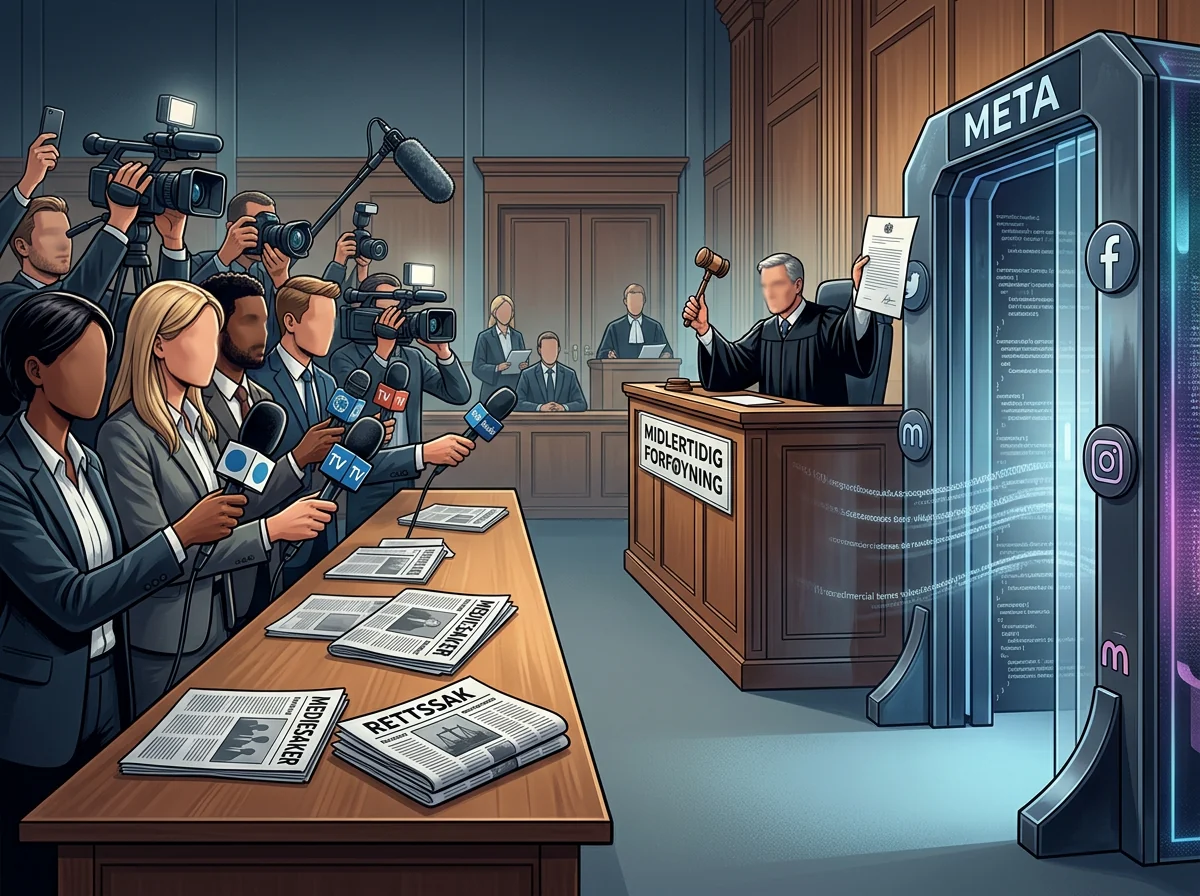
The new terms allow Meta, and companies acting on Meta’s behalf, to use automated software on websites connected to a business’s products or services. That includes crawlers, bots and scrapers that can access, index, cache, analyze and collect content. The wording also allows Meta to create test accounts and return for updates.
The scope is why publishers are pushing back. A business account can be connected to a website containing thousands of articles, a large image archive and subscriber-only material. Permission that follows from continuing to use Facebook or Instagram could therefore reach far beyond the content a publisher deliberately posts on Meta’s own platforms.
Meta’s commercial terms also cover more than buying ads. They apply to business use of the company’s products, including the administration of pages. A company does not have to be a major advertiser to be affected. If it continues using the relevant products after the effective date, Meta treats that continued use as acceptance.
Meta postponed the effective date from October 30 to November 20. The company said the extra time would help it explain to partners and others what is changing and what is not. Three additional weeks are useful, but postponement does not answer the central question: Who gets to decide what happens to the content?
Can Meta use the content to train AI?
The short, honest answer is that this is disputed. An earlier version of the terms explicitly said collected content could be used to develop, improve, research and “train” Meta’s products. The word that explicitly referred to training was absent from the revised English text checked on October 23.
That does not settle the dispute. Meta retains permission to collect content and use it to develop and improve advertising and business products. European publisher organizations argue that the revised language still does not expressly exclude the use of journalism for AI.
Meta disagrees. In a statement carried by Reuters on October 22, the company said the crawler language applies only to advertising and business products, does not change how Meta uses web crawlers, and still lets content owners signal their choices through robots.txt.
So no, it has not been established that Meta has an unconditional right to train AI on everything behind Norwegian paywalls. That is the publishers’ concern and interpretation, not a final legal conclusion. But Meta should not get away with removing one word and leaving everyone else to solve the riddle. If AI training is excluded, the company can say so clearly and make that exclusion binding. This should not require legal guesswork.
Why is robots.txt not a complete answer?
robots.txt is a technical instruction to crawlers, not a negotiated agreement about copyright, payment or competition. Meta says it respects those instructions, but it operates multiple crawlers with different purposes. Blocking one can affect AI indexing, while blocking another can affect link previews or advertising. There is no single switch with no consequences.
That is the power imbalance at the center of the case. Publishers paid for the reporters, photographers, archives and subscription systems. Meta controls two of the channels used to distribute the result. If the platform can make broad access to the underlying website the price of continued distribution, “consent” has acquired a rather creative definition.
Technical controls still matter. Companies should know which Meta crawlers reach their systems and what each one does. But a technical block is not a substitute for clear contractual limits, especially if refusing access can also reduce a publisher’s reach. A detailed analysis of the terms and Meta’s crawlers likewise recommends treating the different bots separately because they do not perform the same function.

Why does this matter outside Norway?
This is more than a quarrel between large companies in a small country. Journalism costs money to produce, and paywalls exist because the work has value. If a dominant platform can collect that material, use it to improve its own products and become the place where readers get answers, traffic, subscriptions and advertising revenue can move away from the organizations that paid for the reporting.
That does not mean the Norwegian publishers automatically win every legal argument. Schibsted, NRK and TV 2 are not tiny, powerless organizations either. Their size does not change the principle: A company should not be able to help itself to someone else’s archive merely because it controls an important route to the audience.
The outcome must not become a system only the largest publishers can afford to use. If the answer is expensive private agreements, complicated opt-outs and stacks of legal forms, the giants will walk through the gate while small publishers remain outside. We know that trap. Control over your own work has to be understandable and practical for a local newspaper, a specialist publication and a small independent publisher too.
NRK and MBL say Norway is the first country to take these specific terms to court. Oslo District Court could therefore influence a dispute that extends well beyond the 10 applicants. The terms are global, and publisher groups in the European Union and the United Kingdom have already protested. Meta is also facing wider questions about control over material people place in its AI products; I have covered what happened when Meta restored Muse sharing but old links stopped working. Different case, same reason to demand precise controls instead of vague assurances.
What should businesses do before November 20?
If your business uses a Facebook page, an Instagram account or another Meta product, read the notice inside your own business account before November 20. Do not rely on a screenshot from a US account or a summary in a news report. Language versions have not always matched, and the terms Meta actually presents to your account are the ones that matter to you.
Save a dated copy of those terms and record which websites and domains are connected to the account. Check server logs or traffic reports for Meta crawlers, and inspect what test accounts can actually access. If you have customer areas, staging sites or other material that should not be indexed, now is a sensible time to review those permissions.
Review robots.txt as well, but do not treat it as a legal magic wand. A block can affect both indexing and how content appears across Meta’s platforms. Separate the company’s different bots by purpose before changing anything, document the decision, and watch the effect rather than assuming one rule solves every problem.
For Norwegian publishers, my advice is even simpler: Keep pressing for an unambiguous answer. Either Meta may use the material for AI training or it may not. Either an opt-out is respected without a distribution penalty or it is not. Those questions must not be buried in terms that most organizations “accept” simply by carrying on as before.
The court should examine the power behind the checkbox
The real question is how much a dominant platform can demand when a business’s alternative is to lose Facebook and Instagram as distribution channels. Meta can certainly produce pages of legal wording. That does not make the underlying bargain voluntary or fair.
The Norwegian media companies are right to seek an answer before November 20, not after content may have been collected and used. Data cannot always be placed neatly back in the archive once it has entered a system. A temporary injunction exists for precisely the kind of situation in which damage may be difficult to reverse.
Meta can defuse much of this dispute itself: State clearly what each crawler may collect, what the material may be used for, how a business can refuse, and whether refusal affects distribution. If the terms are not intended to permit AI training on journalism, say so without a loophole. Until then, asking a court to examine the power behind that checkbox is entirely reasonable.
Frequently asked questions
Have Norwegian media companies already sued Meta?
They have asked Oslo District Court for a temporary injunction to halt the new terms while their legality is reviewed. The request comes from 10 organizations, including NRK, TV 2, Schibsted, Amedia and NTB.
When are Meta’s new commercial terms due to take effect?
Meta postponed the effective date from October 30 to November 20, 2026. The company said the delay would provide more time to explain the changes, but the disputed permission for automated collection from connected websites remains in the wording.
Do the terms let Meta train AI on paywalled journalism?
That has not been decided by a court. An earlier text mentioned training explicitly, but that word was removed. Publishers argue the remaining language is still broad enough to cover AI use, while Meta says it concerns advertising and business products rather than new rights to scrape news sites.
Can a company simply block Meta’s crawlers?
A company can use robots.txt to direct Meta’s crawlers, and Meta says it respects those choices. The crawlers serve different purposes, however, so blocking them may affect AI indexing, link previews or ads. A technical block is not a complete substitute for clear contractual limits.