
Innhold Show
Kimi K3.1 Pro goes straight after the most expensive frontier models with an API price that is much easier to justify. The standard model costs $2 per million input tokens and $10 per million output tokens. At the same time, Moonshot AI says the full model weights will be released by November 4, 2026.
That is a combination worth watching. A model can look magnificent in a benchmark table, but price decides whether you can actually use it for long agent runs, research and coding without the bill outrunning the value. Kimi now offers both the standard model and a Highspeed version that is supposed to run two to three times faster.
I have not tested Kimi K3.1 Pro myself, so this is an assessment of the launch and the documentation available as of October 26, 2026. Moonshot’s own results are strong, and an independent measurement puts the model near the top. But the real test begins when it meets an actual codebase, untidy documents and a long workflow that refuses to behave like a benchmark.
What is Kimi K3.1 Pro?
Kimi K3.1 Pro is Moonshot AI’s new model in the 3-trillion-parameter class, with a context window of 1 million tokens. It targets coding, 3D work, financial analysis and other agent tasks, and is available now through Kimi, Kimi Work, Kimi Code and the API. Moonshot describes it as a major upgrade over Kimi K3, backed by substantially more post-training.
This is not merely a new label pasted onto the same model. Moonshot says it increased the compute used for reinforcement learning and improved the wider training and deployment system for long context, sandbox use and agent rollouts. The aim is to make the model hold its course through longer, more complicated jobs instead of shining for ten minutes and then wandering into the bushes.
The practical API model name is kimi-k3.1-pro, while the faster version is kimi-k3.1-pro-highspeed. Both have the same 1-million-token context window, and Moonshot says API customers can use Zero Data Retention. The model is also available through OpenRouter as moonshotai/kimi-k3.1-pro. For a business considering sensitive code or document analysis, the retention setting matters at least as much as another benchmark win.
Price is the clearest challenge to the frontier
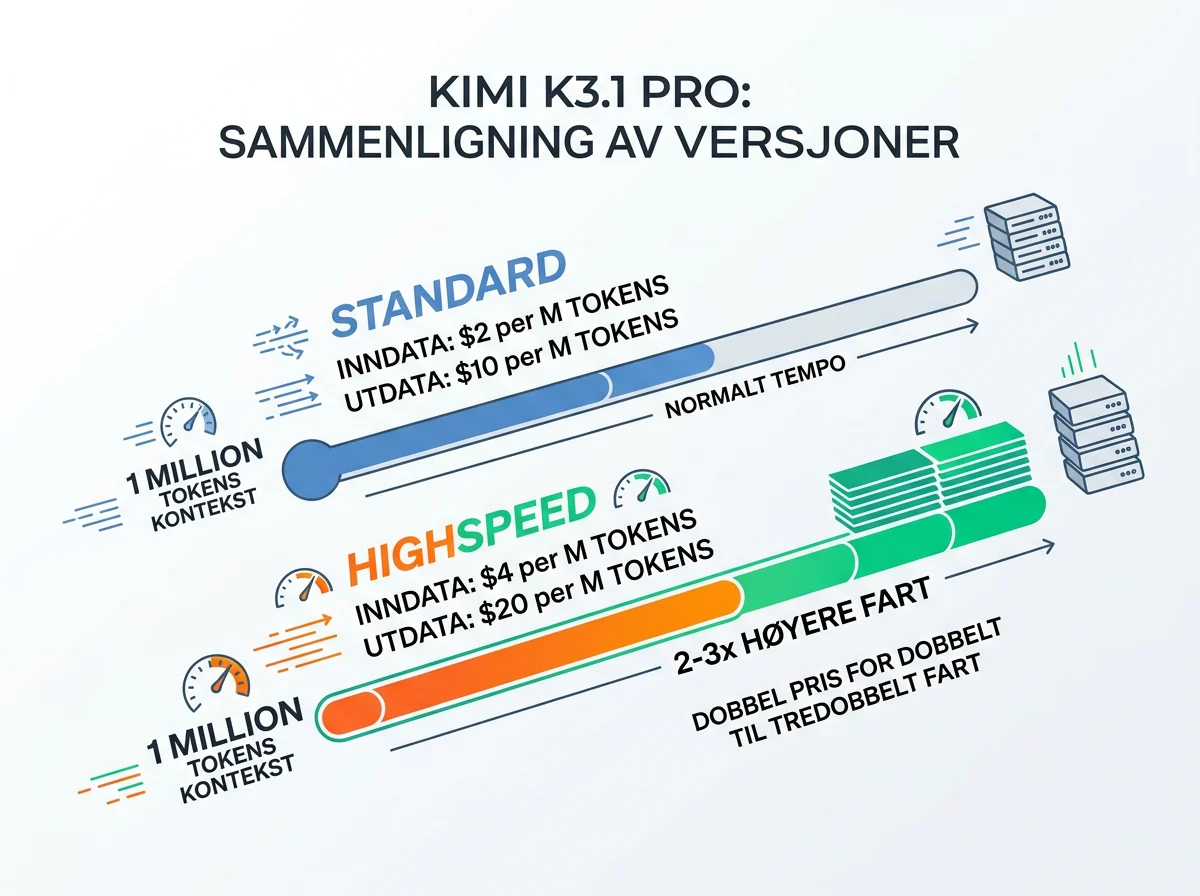
The standard model costs $2 per million input tokens and $10 per million output tokens. An input cache hit costs $0.20 per million tokens. Those figures come from Moonshot’s official API pricing, so international customers can compare the dollar rates directly without routing the calculation through another currency.
It is also cheaper than the previous K3 model from the same provider. K3 is listed at $3 for input and $15 for output per million tokens. K3.1 Pro therefore cuts the list price by one third while Moonshot claims a substantial improvement in capability. That is far more useful than squeezing a couple of extra percentage points into a polished chart while quietly increasing the bill.
Simon Willison notes that Kimi K3.1 Pro is priced at the same level as GPT-6.1 Sol and half the price of Claude Opus 5.5. His review of the launch highlights the same combination of price, speed and promised open weights. Kimi is not asking to be graded on a special curve because it is Chinese and cheaper. It is putting itself directly into the comparison with models developers already pay for.
Is Highspeed worth twice the price?
Kimi K3.1 Pro Highspeed is supposed to deliver two to three times the speed, but it costs twice as much. Input is $4 per million tokens and output is $20 per million. Cache hits remain at the standard model’s $0.20 per million tokens.
That can be a good trade when waiting costs more than tokens. An interactive coding agent, customer service workflow or tool used by an employee who is sitting there watching the cursor has different requirements from an overnight batch job. If Highspeed gets close to three times the throughput for twice the token price, the total economics can improve even while the API invoice rises.
For background work, I would not select the fastest version by reflex. The standard model has the same stated intelligence and the same context window. Highspeed belongs where response time has a measurable value, not where the name merely sounds more impressive. Paying double so a job nobody is watching finishes while everyone is still asleep would be a rather expensive victory.
The benchmarks are strong – and need careful reading
Moonshot’s own measurements put Kimi K3.1 Pro roughly alongside the strongest proprietary models. That is promising for long-running coding and agent work, but several tests were performed by Moonshot, and the compared models were not always running with the same agent tools. I treat those results as a signal that the model deserves attention, not as proof that it will win inside your project.
A more independent data point comes from Artificial Analysis and its Kimi K3.1 Pro evaluation, where the model received an Intelligence Index score of 55. That placed it near the top when the result was reported. The score is especially notable because Moonshot has promised to publish the complete weights shortly after the API launch.
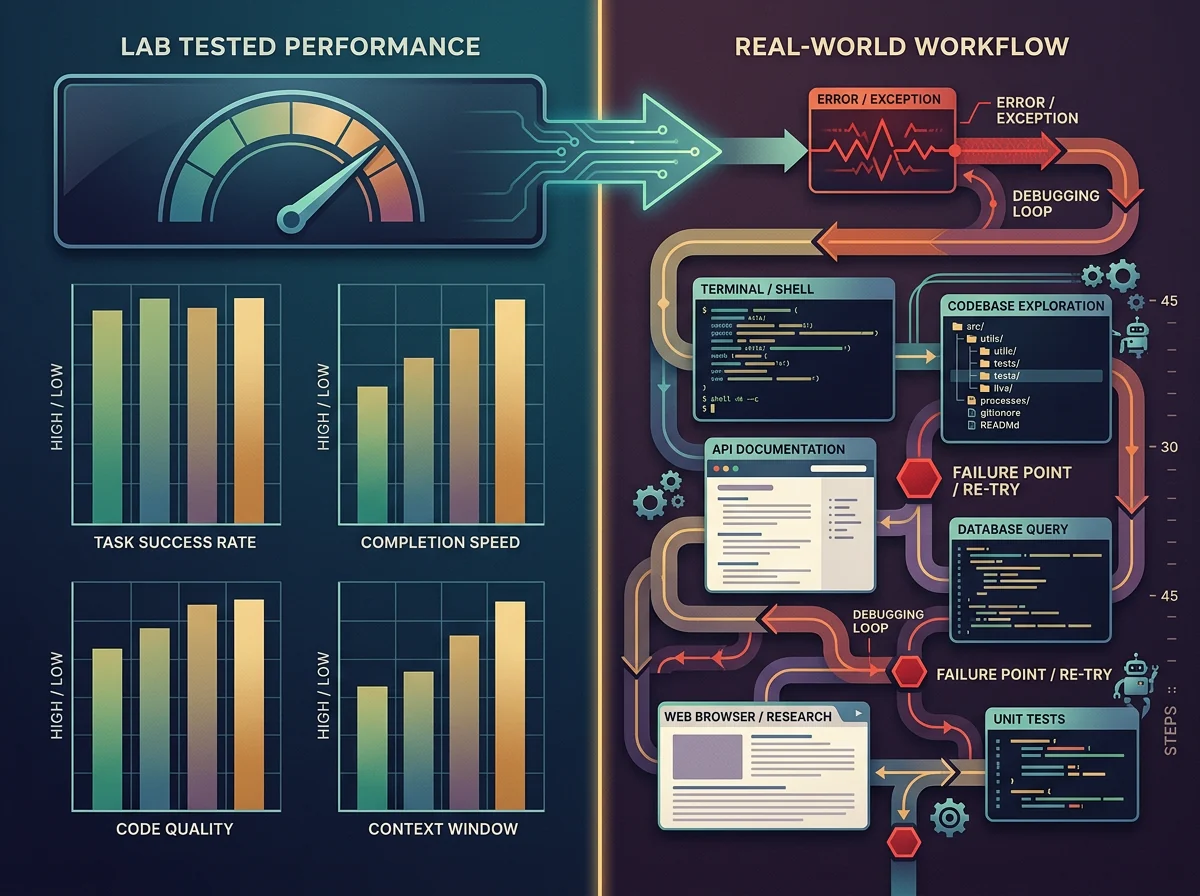
One combined score still cannot tell you whether the model understands your codebase, uses tools reliably or follows requirements throughout a long job. I have seen that movie before: a model can rule the table and then lose the plot in an ordinary workflow. Kimi K3.1 Pro looks like a genuine top-tier model. “Genuine” still does not mean “tested everywhere that matters.”
Open weights are coming – but they are not here yet
Moonshot promises to publish the full model weights by November 4, 2026. As of October 26, Kimi K3.1 Pro is therefore an API and product launch, not a completed open-weight release. That distinction matters. A promise of open weights is welcome, but you cannot load a promise onto your own hardware.
Once the files actually arrive, the practical questions begin: What is the license? How large are the files? What hardware is required? Which quantizations are available? How well does the model run without Moonshot’s own infrastructure? The K3 class is enormous, so “open” will not automatically mean “comfortable on the PC under your desk.” It can still matter greatly to companies and hosting providers that want to operate a frontier model on infrastructure they control.
I like the direction. Open weights give more people the ability to inspect, adapt and operate a model without depending entirely on one API provider. I am not handing out the trophy before the files and license appear, though. Moonshot has attached a clear and very near date to the promise, so we will not have to wait long before it can be checked.
What can you use the model for now?
The clearest use case is coding agents and other workflows that need long context. Moonshot points to work ranging from bug fixing in real repositories to multi-step tasks involving a terminal, 3D tools and research. The model can process images and text in the same system, allowing it to work with screenshots, diagrams and other visual references alongside written instructions.
For financial work, the company reports large improvements over K3 in its internal financial research evaluations. Moonshot also reports a lower hallucination rate in its own stress test. Those are relevant claims, but they do not turn the model into an authority on investments or accounting. The more expensive an error becomes, the more important checks against original documents and human approval become.
My earlier experience with Moonshot’s coding models gives me reason to take this release seriously. I tested Kimi K2.7 Code through OpenRouter and OpenCode by asking it to build a real application from scratch. It made meaningful progress, but that test also showed why long agent tasks must be judged on more than one final result. K3.1 Pro is a different model, and that experience is not a test of the newcomer.
Should you switch to Kimi K3.1 Pro?
If you spend heavily on long agent runs, Kimi K3.1 Pro is absolutely worth a controlled comparison. Give it the same task, the same tool setup and the same quality checks as the model you already use. Measure total token consumption, elapsed time, wrong turns and the amount of human cleanup required. A cheap rate per million tokens means very little if the model has to do the job three times.
For time-sensitive work, Highspeed may be the more compelling option. For batch jobs and experiments, the standard version is the natural starting point. If self-hosting is the main reason you are following this launch, I would wait until November 4 and inspect what Moonshot actually releases before planning hardware or production architecture around it.
Kimi K3.1 Pro is getting difficult to dismiss. The price is aggressive, the documented capability looks strong, and the open-weight promise comes with a date. I remain skeptical of sweeping claims from any model provider, Chinese or Western. But I would not ignore this launch.
Frequently asked questions
How much does the Kimi K3.1 Pro API cost?
The standard model costs $2 per million input tokens and $10 per million output tokens. Input cache hits cost $0.20 per million tokens. Highspeed doubles the regular input and output rates to $4 and $20, while keeping cache-hit pricing unchanged.
Can I run Kimi K3.1 Pro locally today?
Not with the complete official weights as of October 26, 2026. The model is available through Kimi products and the API. Moonshot AI says it will release the full model weights by November 4, 2026, but the files and final license still need to appear.
What is the difference between Standard and Highspeed?
Highspeed is supposed to run two to three times faster with the same stated intelligence and 1-million-token context window. It costs twice as much for ordinary input and output, while cached input remains at the same $0.20 per million tokens.
Is Kimi K3.1 Pro better than Claude or GPT?
Some benchmarks place Kimi K3.1 Pro among the strongest proprietary models, but results vary by task and agent setup. There is no responsible universal winner yet. Compare the models on the actual workflow, tools, quality requirements and total cost you expect to use.