
Innhold Show
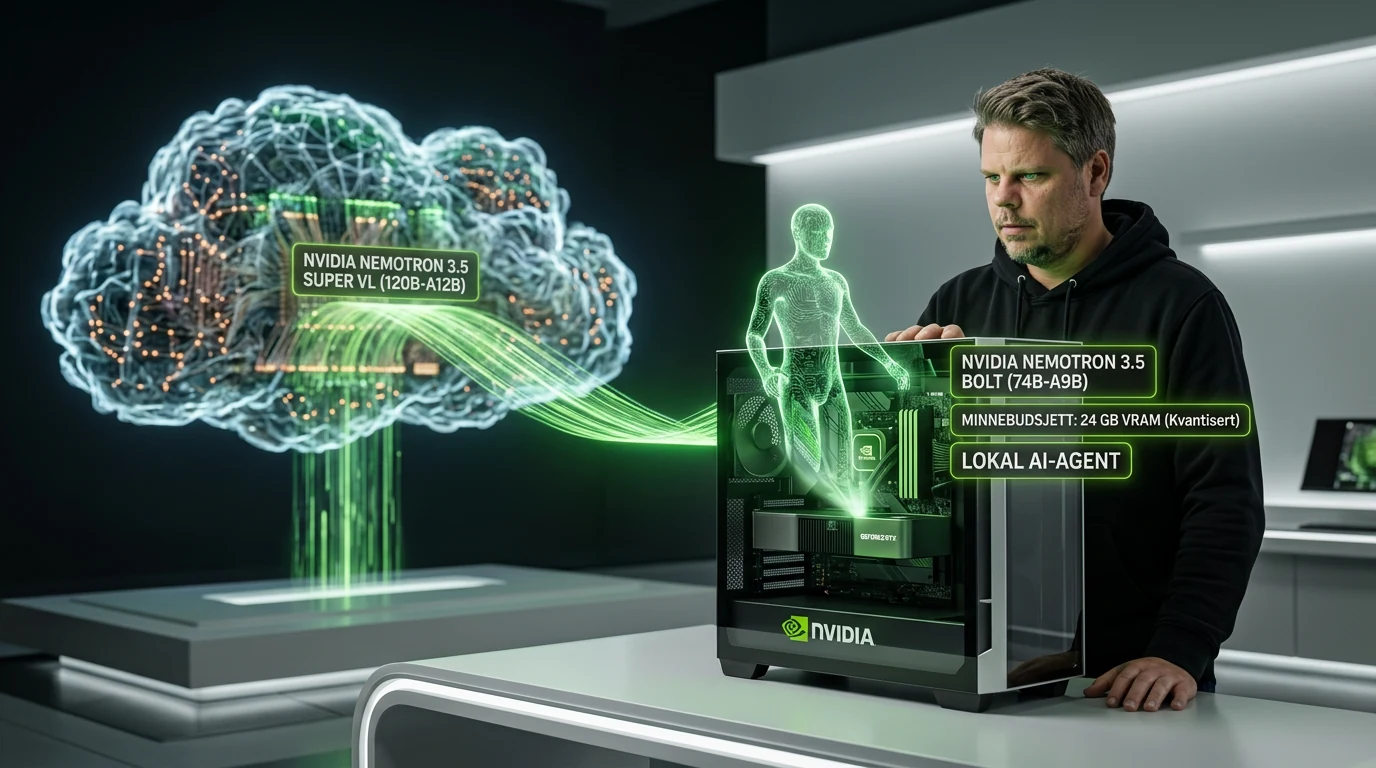
NVIDIA Nemotron 3.5 gives businesses and developers open-weight models for AI agents that can run on their own infrastructure, from the data center all the way down to a local PC. The family includes the large multimodal Super VL model and two lighter Bolt variants. The most tangible PC news is Nemotron 3.5 Bolt 74B-A9B, compressed and quantized for a 24 GB memory budget.
That does not turn an advanced local agent into a finished application you install with two clicks. You still need an agent framework, tools, access controls and suitable hardware. What these models provide is the engine: something you can download, adapt and run without sending documents, code and other working data to an external model API.
For smaller businesses, that is far more interesting than yet another model that needs a whole rack of GPUs. Just keep both eyes open when reading the numbers. Most of the impressive comparisons currently come from NVIDIA itself. The launch is real and the model files exist, but production quality must be measured on the actual job you want the model to perform.
What did NVIDIA launch?
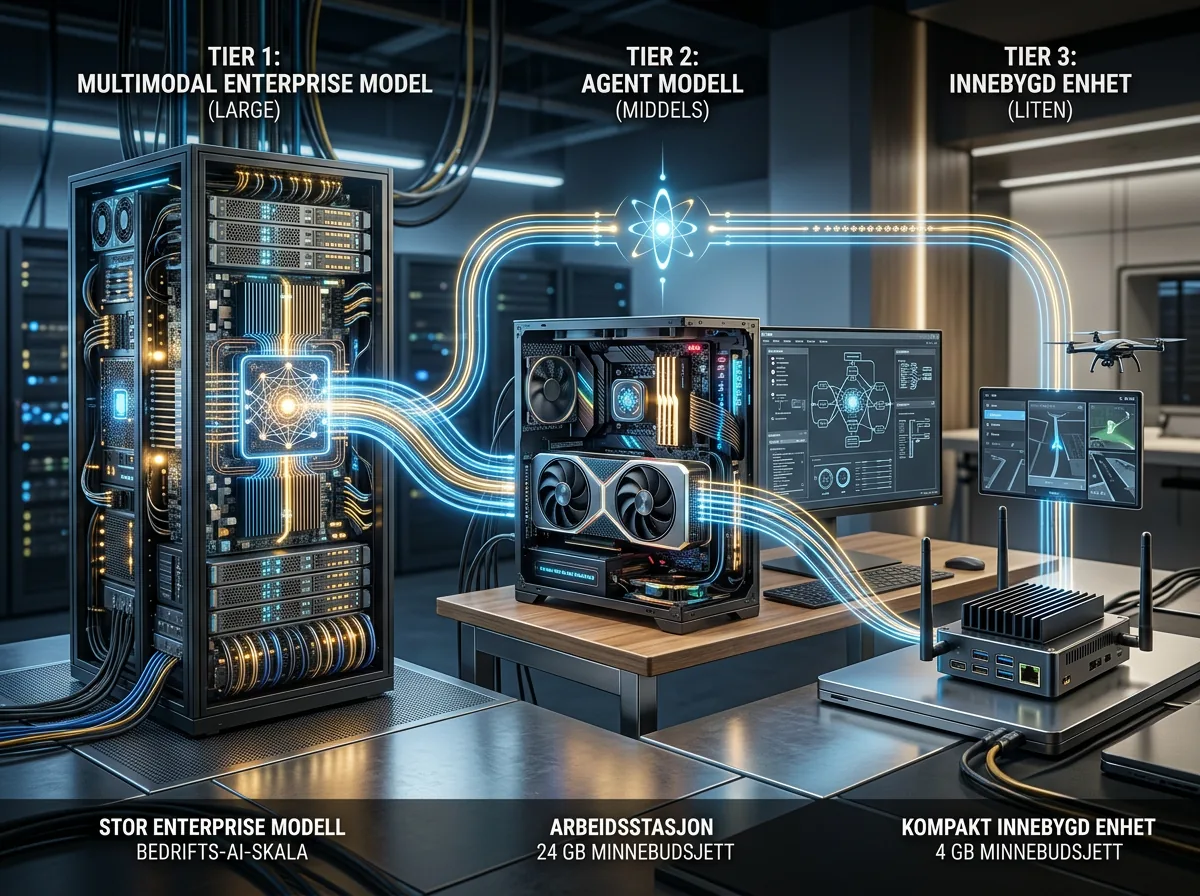
NVIDIA launched three Nemotron 3.5 models for different levels of agent work. NVIDIA’s October 15, 2026 announcement describes Super VL with 120 billion total parameters, Bolt 74B-A9B with a 24 GB memory target, and Bolt E4B with a 4 GB memory target.
Nemotron 3.5 Super VL is the large enterprise model. It combines text and vision, can process material including web pages, PDFs, tables and charts, and targets long-running workflows in which an agent must follow instructions and use tools across many steps. It has 120 billion parameters in total but activates 12 billion for each token through a mixture-of-experts architecture.
Bolt 74B-A9B is the PC and workstation variant. The name refers to 74 billion total parameters and about 9 billion active parameters. NVIDIA positions it for local tasks such as web research, coding, debugging and work through an agent framework. The smallest model, Bolt E4B, targets fast conversational agents, embedded systems and physical agents on GeForce RTX, Jetson and RTX or DGX Spark hardware.
Super VL and Bolt 74B-A9B were available when NVIDIA announced the family. NVIDIA scheduled Bolt E4B for October 23, 2026, but that announced date is not independent confirmation that developers have already tested the 4 GB model in real projects.
Why does Bolt matter for local AI?
Nemotron 3.5 Bolt 74B-A9B matters because NVIDIA designed it around a concrete limit: the model is meant to fit within a 24 GB memory budget while leaving room for other software. NVIDIA’s technical overview of Bolt explains how the model was compressed from Super VL, reduced from 120B-A12B to 74B-A9B and then quantized very aggressively.
Most of the expert weights use just over 2 bits per value, while other parts use NVFP4 or Q8_0. This is not merely a random GGUF conversion someone produced after release. Quantization and further training are part of the model work itself, with the aim of recovering as much as possible of the quality normally lost when a large model is squeezed this hard.
NVIDIA reports 83.99 tokens per second in its coding test with llama.cpp and speculative decoding on a Surface Laptop Ultra with RTX Spark and 128 GB of unified memory. The same test shows some comparable models generating tokens faster, while NVIDIA argues that Bolt provides a better combination of speed and agent quality. That distinction matters. Fast text is not the same thing as an agent completing a task correctly.
The test environment matters too. A model designed around a 24 GB memory budget is not a promise of identical speed or trouble-free operation on every graphics card with 24 GB of VRAM. NVIDIA optimized the quantized build for RTX Spark with llama.cpp and DGX Spark with vLLM. The company also lists support for GeForce RTX PCs, but actual performance will depend on the machine, runtime, context length and the rest of the agent stack.
What can Super VL do inside a business?
Nemotron 3.5 Super VL is designed for specialized agents that process large collections of internal documents and use a company’s own tools. The model can be post-trained on proprietary data, run on infrastructure the business controls, and combine text and image understanding in the same workflow. That is useful when an agent must retrieve information from a PDF, interpret a table and then perform a check in another system.
NVIDIA highlights use cases in finance, insurance, security, research and software development. It says companies including CrowdStrike, Perplexity, Ramp and Salesforce are adapting or integrating the model. That shows this is more than a model file for enthusiasts, but it is not independent evidence that every one of those workflows performs better than it would with a closed model.
The headline performance claim is that Super VL can deliver up to five times the throughput of the nearest model in its class while approaching much larger models on selected agent tasks. The words “up to” and the selection of tests are exactly why I would not make a buying decision from the bar chart alone. Ask for measurements on your own documents, your own tools and the real queue of work.
The strongest argument is control. NVIDIA provides open model weights, datasets and training recipes, and says Super VL was trained on roughly 26 trillion tokens before post-training with around 3.8 million examples. A business can therefore adapt the model and keep processing inside an environment it controls instead of depending entirely on the features and terms of one API provider.
Does local execution make the data safe?
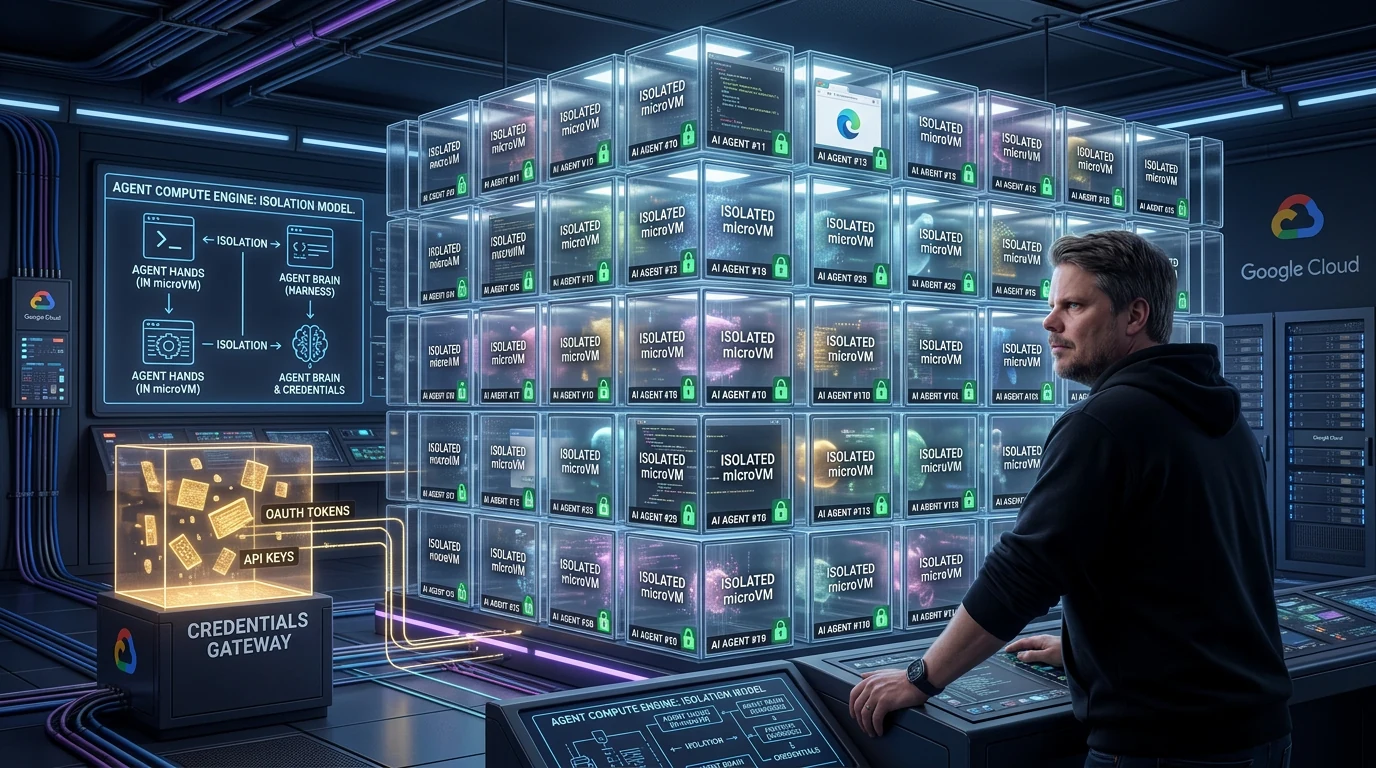
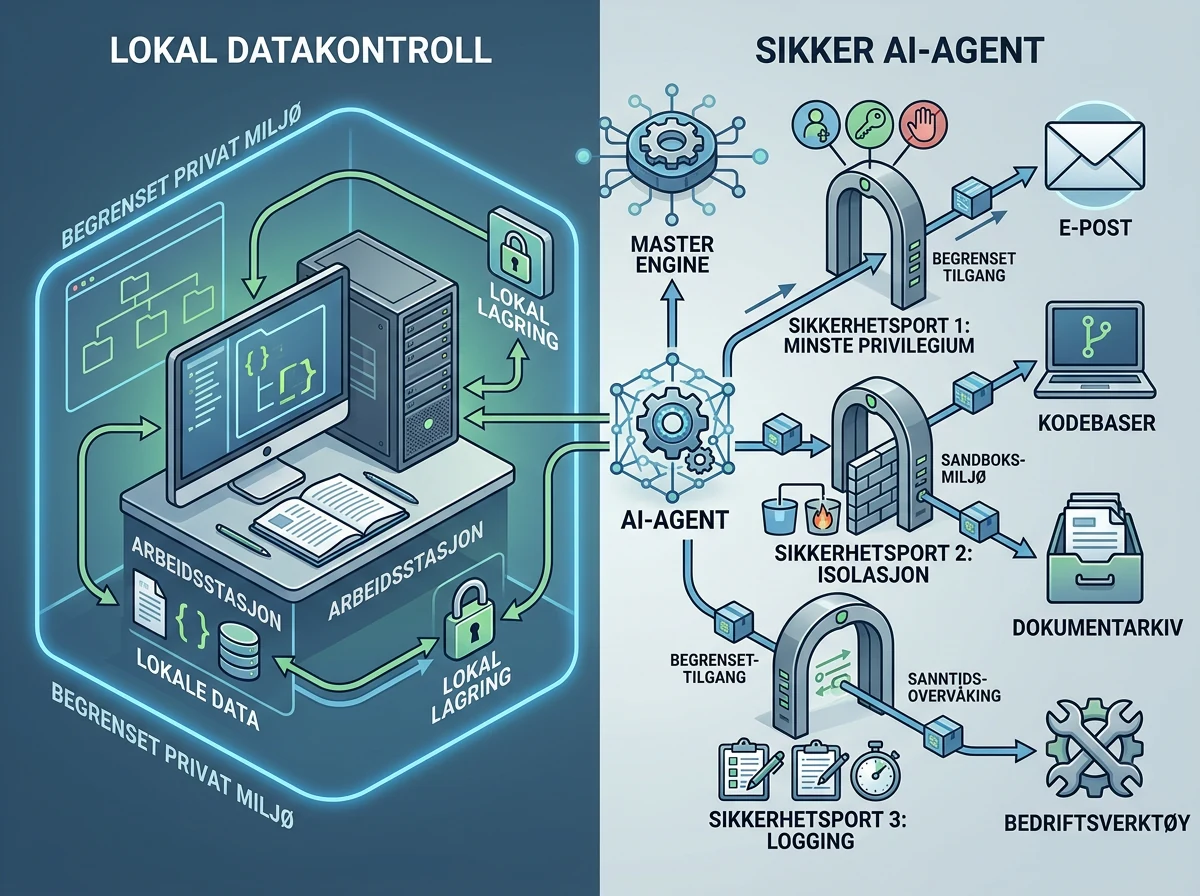
No. Local execution gives you control over where data is sent, but it does not make an AI agent safe by itself. An agent that can read email, open documents, run code and operate business tools needs tight permissions, isolation, logging and clear limits on the actions it is allowed to take.
This matters even more for an agent intended to remain active for long periods. The longer it works and the more systems it can reach, the greater the consequences of a bad instruction, a manipulated document or the wrong use of a tool. Model quality and system security are two different problems.
NVIDIA is therefore building more than models. The company is also developing agent workflows, runtimes and security layers around them. That broader stack is an important part of this launch: an open local model can give you more control over the data, while the execution environment still has to restrict what the agent is actually permitted to do.
Businesses must also check the license, the model card and which parts of the training material are genuinely open. “Open model” is a broader term than traditional open-source software. Available weights can let you run and adapt a model, but they do not automatically make every data source or every stage of training fully auditable.
What does Nemotron 3.5 mean for smaller businesses?
For a smaller business, Bolt 74B-A9B is the most relevant part of the release. A 24 GB memory target puts local agent work within reach of a very different class of hardware from Super VL. The model is available through Hugging Face and supports tools including llama.cpp, Ollama, LM Studio, Unsloth and vLLM.
That does not mean local operation is automatically the cheapest choice. A cloud service can make sense for occasional use because the provider handles updates, capacity and operations. Local execution becomes more compelling when the workload is steady, the data is sensitive, latency needs to be low or the business needs a specialized model that should not sit behind an external API.
The practical starting point should be simple. Choose one narrow job with a clear answer, such as extracting specific fields from documents or checking code against a fixed list. Measure quality, completion time and error rate. Then give the agent the least possible access to surrounding systems. Expand the job only after that limited workflow is stable.
Do not choose a model from its total parameter count alone. Bolt activates only about 9 billion parameters per token, is heavily quantized and is trained specifically for local agent tasks. That may make it better suited to one practical job than a larger general model, but it may also lose ground on language, knowledge or difficult reasoning outside the areas NVIDIA optimized.
Is this a new direction for NVIDIA?
No, but the direction is becoming much clearer. NVIDIA does not want to sell only the GPUs on which other companies build AI. It also wants to provide the models, training tools, runtime and security layer surrounding the agents.
Nemotron 3.5 fills in the model layer with variants for different classes of machine. Super VL covers large, specialized workflows, while Bolt makes local agents a realistic workload for PCs and workstations. That is both practical and strategic.
When a model is optimized for NVIDIA hardware and wrapped in NVIDIA tools, customers get a simpler route from a pilot to production. At the same time, dependence on NVIDIA’s broader platform grows even when the model weights are open. Open weights create choice, but the path to the best performance can still pull you toward one hardware vendor.
My initial verdict is positive and straightforward: this is a useful model release because NVIDIA created genuine choices for different machines, not just one enormous model and a pretty chart. Bolt 74B-A9B is the one I would watch most closely. If independent tests confirm that it maintains useful quality on real agent tasks within that 24 GB target, it could become a very practical option for local AI. For now, it is promising, available and absolutely worth measuring – but NVIDIA’s own numbers have not finished proving the case.
Frequently asked questions
Can Nemotron 3.5 Bolt run without an internet connection?
Yes. You can download the model weights and run the model locally without sending inference through a cloud service. The agent may still need internet access if its task uses web search or external tools, so a local model and a completely offline workflow are not always the same thing.
Do I need 24 GB of VRAM for Nemotron 3.5 Bolt?
The quantized Bolt 74B-A9B build targets a 24 GB memory budget. NVIDIA tested it on RTX Spark hardware with 128 GB of unified memory, so the model size alone does not guarantee the same speed on every 24 GB GPU. Check support and measure performance on the machine you intend to use.
Can I use the Nemotron 3.5 models commercially?
The model files are openly available, but commercial use still has to comply with the license for the specific model and any surrounding tools. Read the model card and license terms before using a model with customer data or embedding it in a product.
What is the difference between Super VL and Bolt?
Super VL is a 120B-A12B multimodal model for large, specialized enterprise workflows. Bolt 74B-A9B is compressed and quantized for local agent tasks within a 24 GB memory target, while Bolt E4B is a smaller 4 GB model aimed at fast conversational agents and embedded systems.