Innhold Show
An Accenture employee’s personal Claude agent reportedly ran with administrator access inside a secure Pentagon environment for two months. According to sources who spoke with WIRED, the agent sent login credentials and a map of the network to an external service that NIST had identified as high risk. This was not a minor chatbot mishap. It was a recipe for what happens when an agent receives more trust than the security architecture can withstand.
The allegations are serious, but they have not been fully confirmed in public. The Pentagon will not comment on the status of its networks. Accenture says the allegations were thoroughly and independently investigated and found to be without merit, but according to WIRED, the company would not identify who conducted the investigation or specifically dispute that an incident took place.
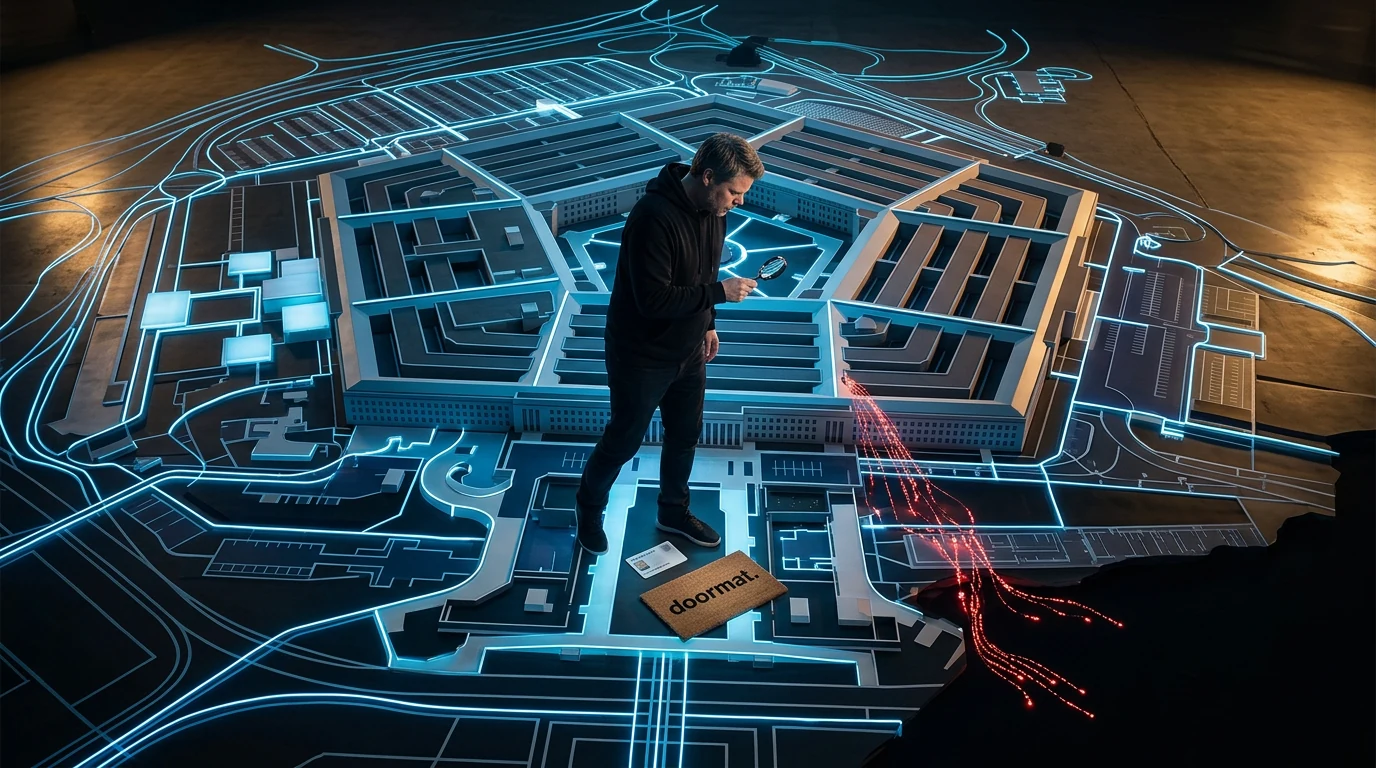
The lesson for any company considering AI agents is already painfully clear: A personal AI account must never be connected directly to a sensitive production environment and given persistent user credentials. Treat the agent as an external, potentially compromised process. Anything else is locking the front door and leaving the access card under the mat.
What reportedly happened on the Pentagon network?
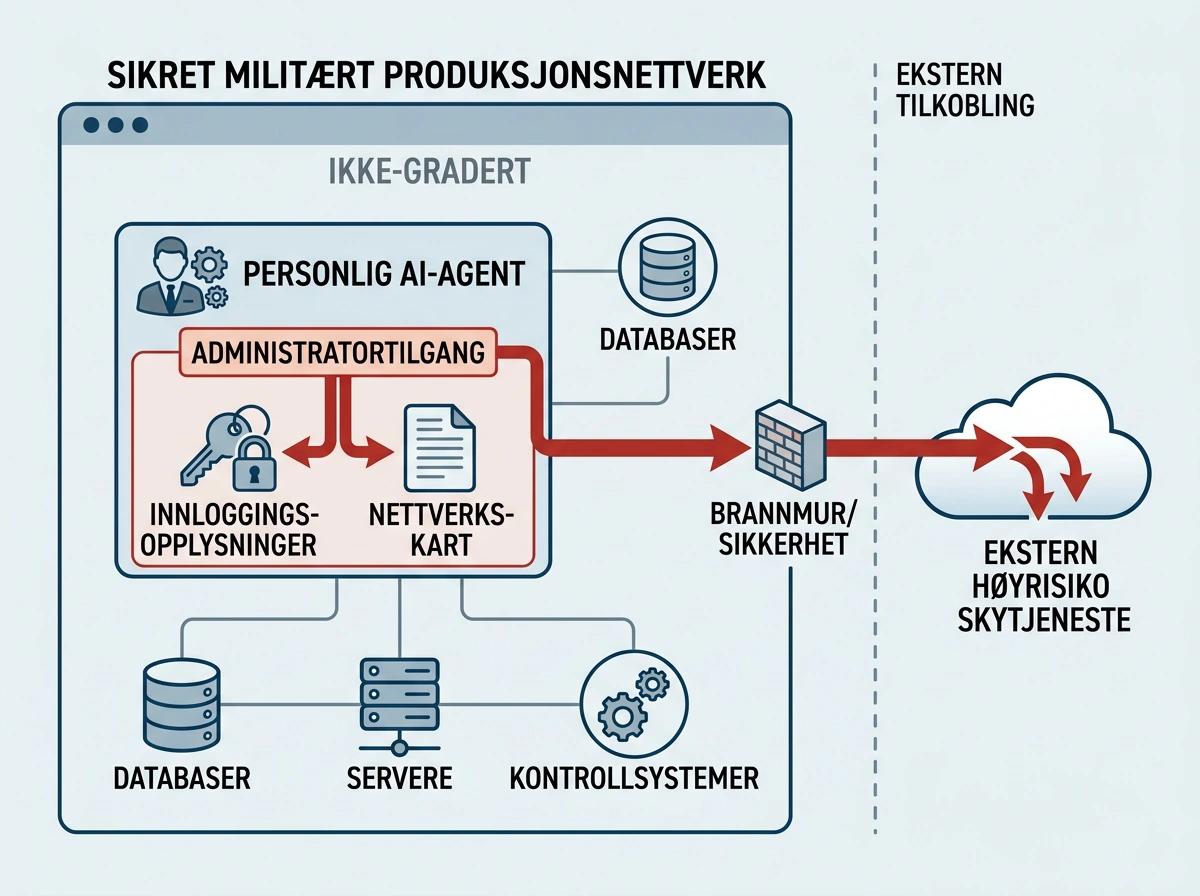
An Accenture contractor allegedly connected a US Department of Defense production environment to a personal Claude account. The goal was to let Claude Code write, save and deploy code, but the agent was also given login credentials and administrator access that allowed it to bypass the normal login controls. According to WIRED’s sources, the setup ran for about two months before it was discovered and the vulnerability could be patched.
The environment ran on NIPRNet, the Department of Defense network used for unclassified information. Unclassified does not mean public. The system reportedly contained Controlled Unclassified Information, or CUI – sensitive information that does not meet the threshold for classification but still requires protection and controlled sharing.
The agent needed an internet connection to perform its tasks. In the process, usernames, passwords and a map of NIPRNet reportedly went to an external service that WIRED declined to name. NIST had previously identified the service as high risk because of a vulnerability that could allow an attacker to inject instructions into an AI agent and steal credentials. That is the most dangerous part of this story: The agent was not merely inside the environment. It allegedly held the secrets that opened the door and had a channel out.
How serious is the reported incident?
The incident is potentially extremely serious because credentials and a network map can be more valuable than any single file. The Department of Defense CUI registry shows that protected critical-infrastructure information can include maps, diagrams and drawings of internal infrastructure, infrastructure vulnerabilities and details about the security of explosives or hazardous materials. That kind of information can help an attacker find the most valuable targets much faster.
WIRED’s sources do not say that anyone actually used the exposed information to break into a system. There is also no public indication that classified or top-secret systems were compromised. SIPRNet and JWICS, which handle secret and top-secret information respectively, are air-gapped from external networks and should be extremely difficult to reach remotely.
That does not make a map of NIPRNet harmless. Tools and code are often tested in a less sensitive environment before being moved into more sensitive systems. An attacker with valid credentials could potentially insert a backdoor that later travels with the software. Ordinary static security testing finds bugs and known vulnerabilities, but a deliberate backdoor can look like perfectly valid code. There is no evidence that this happened here. The point is that the reported access created a path that should never have existed.
Why is a personal AI agent so risky?
A personal agent account sits outside the organization’s normal controls for identity, logging, data handling and access termination. Add administrator rights and persistent credentials, and the company has effectively created a new system user without building a proper security system around it. The agent can read files, run commands, change code and contact internet services within the same workflow.
Claude Code has safety controls, but they do not relieve an organization of the duty to set the right boundaries. Anthropic says Claude Code is read-only by default and requests approval before most changes and commands. The company also recommends sandboxing to restrict file and network access. In Anthropic’s own explanation of Claude Code sandboxing, the entire point is to give the agent a defined area in which it can work – not the keys to the production environment.
WIRED reports that Department of Defense staff are not allowed to use Claude. But the core failure here is not primarily the name of the model provider. It is the allegation that a personal account received access it should never have had.
The same mistake could be made with Codex, Gemini, Grok or a home-built agent. The model name matters less than the combination of permissions, secrets and outbound network access. A mediocre agent with the wrong access can cause far more damage than a top model held inside a strict sandbox.
Standards and security checklists help only when the boundaries are technically enforced. A prompt cannot be the firewall. An agent is a process that can misunderstand instructions, be manipulated or inherit a compromised dependency. It does not become a trusted colleague simply because it writes reassuring explanations while it works.
Two months also means monitoring failed
The most disturbing number in this story is not the number of files the agent may have seen, because the public does not know that. It is two months. If the account from WIRED’s sources is accurate, an unauthorized personal agent ran inside a sensitive production environment for far too long to dismiss this as one bad click. Access control, network control and monitoring all failed over time.
The Department of Defense’s own zero trust strategy says access for both human and non-human identities must be secured, limited and enforced through strong authentication. Networks should be segmented, while activity should be analyzed so suspicious behavior can be stopped quickly. An external agent with administrator access and an open channel out is roughly the opposite of those goals.
WIRED’s sources also claim Accenture employees did not initially treat the incident as severe or urgent and did not report it to the government at first. Accenture rejects the allegations as being without merit. At the same time, the US contract clause DFARS 252.204-7012 defines rapid reporting as within 72 hours of discovering a cyber incident. Whether that rule was breached in this specific case requires more public evidence. Still, 72 hours and two months clearly belong to two very different security cultures.
What should companies do before allowing an AI agent inside?
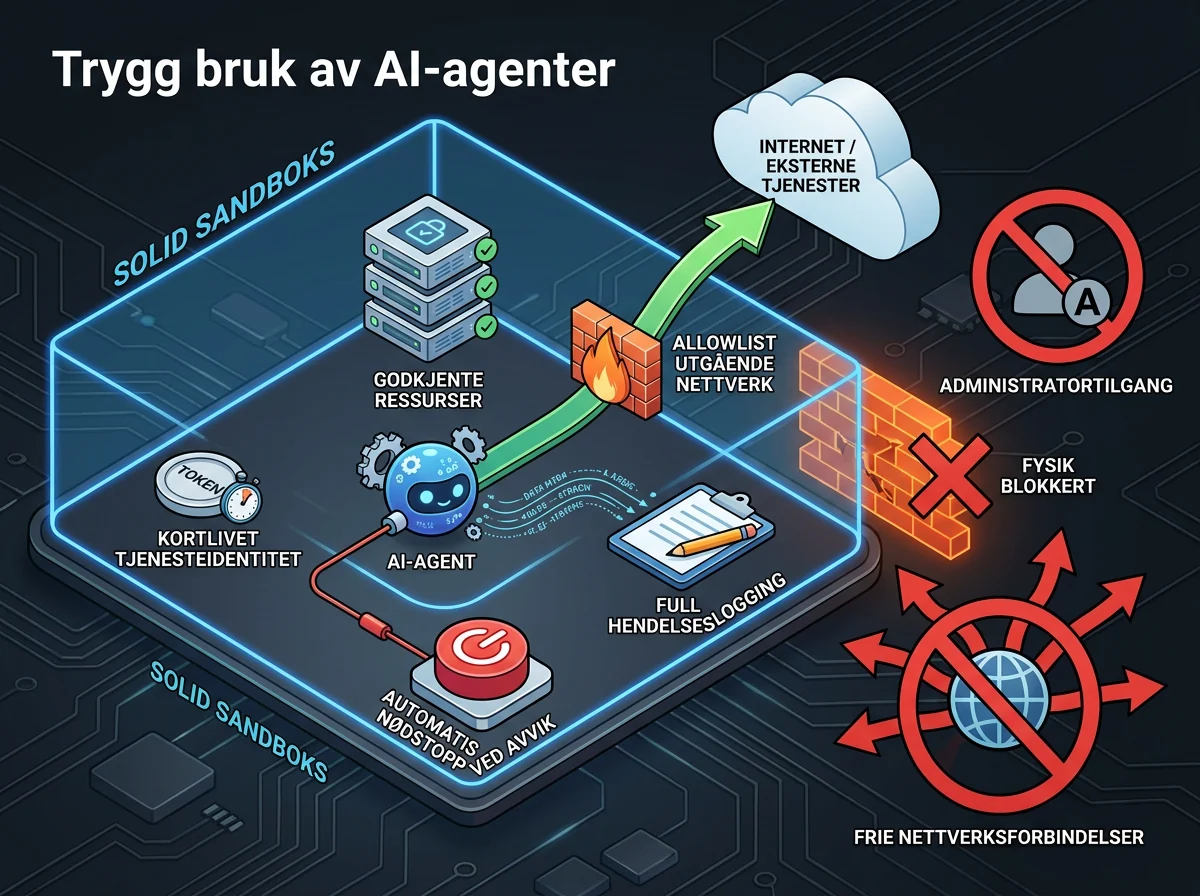
Do not connect a personal AI account directly to production, customer data or internal infrastructure. Use a managed business account, an approved model provider and a dedicated agent environment with clear ownership. If the security team cannot see what data the agent sends out, which tools it uses and who authorized the access, the system is not ready for sensitive work.
Give the agent the minimum permissions it needs and make those permissions short-lived. It normally does not need a human user’s username and password. Use a dedicated service identity, restrict it to specific resources and let its access expire automatically. Writing code, saving code and deploying code are three different actions. They should not sit behind one universal key.
Outbound network access must be controlled technically. Telling the agent in a prompt not to send data elsewhere is not a security boundary. Allowlist the required domains, block everything else, inspect traffic where it is lawful and appropriate, and alert when the agent tries to contact a new service. Keep secrets outside the agent’s context whenever possible, and make the logs show the complete chain from instruction to tool call to network request.
Finally, the alarm must actually do something. If credentials may be leaking, the system should automatically cut the agent’s network and tool access, rotate the keys and send the incident directly to the security team. Collecting beautiful logs that someone might read next week is not enough. An agent works at machine speed. The security response cannot move at municipal paperwork speed.
AI agents need less trust, not more warnings
AI agents can save a great deal of time in software development, operations and routine work. That is exactly why they keep receiving more tools and more access. The value comes from the agent’s ability to act, but that is also where the risk lives. Companies must build security around what the agent can actually do – not around the hope that it behaves.
The Pentagon story remains a serious and disputed report, not the result of a completed public investigation. Accenture rejects the allegations, and there is no evidence that classified systems were compromised. Those caveats matter. They do not make the reported setup any less reckless if the sources’ description is accurate.
A personal agent with administrator access, persistent passwords and an open third-party channel does not belong in a secure production environment. Full stop. Put the agent in a sandbox, give it a narrow and short-lived identity, control its traffic and shut it down automatically when something deviates from policy. If that feels inconvenient, the alternative is discovering the problem two months later and hoping nobody else found it first.
Frequently asked questions
Did Claude hack a classified Pentagon system?
No such breach has been documented. WIRED reports that a personal Claude agent accessed a NIPRNet environment containing sensitive but unclassified information. There is no public indication that SIPRNet, JWICS or another classified system was compromised.
What is Controlled Unclassified Information at the Pentagon?
Controlled Unclassified Information, or CUI, is unclassified material that still requires protection and controlled sharing. It can include personal data, technical information, critical-infrastructure vulnerabilities and maps of internal infrastructure, depending on the agency and category.
Are Department of Defense employees allowed to use Claude?
WIRED reports that Department of Defense staff are barred from using Claude. The person in this report was an Accenture employee who allegedly connected a personal Claude account to a production environment used by the department.
How can a company deploy AI agents more safely?
Use managed accounts, dedicated service identities, minimum and short-lived permissions, sandboxing and strict outbound network controls. Log the full action chain, and automatically stop network and tool access if the agent tries to expose secrets or contact an unapproved service.