
Innhold Show
ChatGPT is merging Chat and Work, so you can move from a quick question to a larger agent task without changing tabs. That is an overdue cleanup. At the same time, ChatGPT and Codex will begin drawing from the same token-based usage allowance.
The first change makes ChatGPT easier to understand. The second could change how much work you can finish before you have to wait for the allowance to reset. OpenAI says most people should not have to wait more often than they do now, but that is not the same as publishing the actual limits.
So this announcement contains two different stories. Chat and Work are becoming one continuous workspace, while ChatGPT and Codex are getting a shared capacity budget. I like the first change. The second deserves much closer scrutiny than a routine interface update.
What is happening to Chat and Work in ChatGPT?
OpenAI is preparing to bring the agentic capabilities of Work into the main ChatGPT experience. According to TechCrunch’s November 2, 2026 report, the company will first test the combined experience with a small group of users and expand it after gathering feedback.
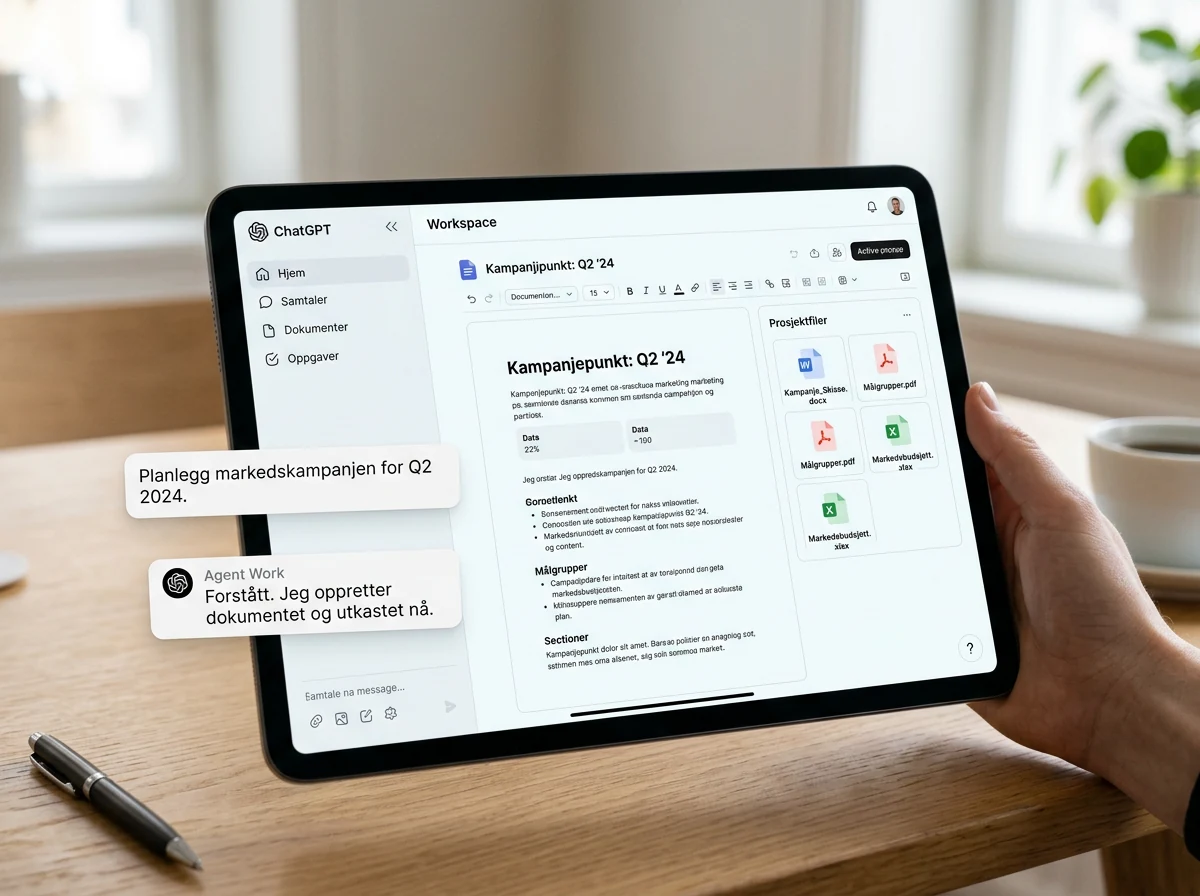
The idea is simple: a conversation should be able to grow into actual work. You might begin by exploring an idea, add files and plugins, and then ask ChatGPT to build a website, create a presentation, or carry out tasks on the web. You can still review the work and steer it while it is running.
That is how people actually use these tools. A task does not always begin with a neat label saying “chat” or “work.” It starts with a question, becomes a plan, picks up a few files, and suddenly needs tools and several steps. Making the user understand OpenAI’s product map before that work can continue never made much sense.
The merge removes that artificial decision at the start. Instead of choosing the correct mode before you know how large the task will become, you can begin in one place and let the job develop. That is a genuine usability improvement, especially for people who do not spend their week memorizing which OpenAI feature lives behind which tab.
Is Codex disappearing into regular ChatGPT?
No. Codex will remain a separate experience in the ChatGPT desktop app. OpenAI is merging Chat and Work inside ChatGPT, not folding the entire coding environment into an ordinary conversation.
That distinction makes sense. Coding work has repositories, local folders, terminals, permissions, diffs, tests, and history that do not naturally belong in every chat. The official ChatGPT Work and Codex documentation still describes Codex as the dedicated environment for software development and technical work.
The boundaries are becoming less obvious, though. ChatGPT can already research, work with files, use connected tools, and produce finished deliverables. Codex can handle longer technical tasks and work across a repository. The products remain different, but the user increasingly sees a collection of agents rather than a chatbot on one side and a completely separate tool on the other.
A cleaner entrance does not make agent work more reliable by itself. You still need to check files, sources, permissions, and the final result. OpenAI has simplified the workspace. It has not removed the need for human supervision, and I would not hand an important job to an agent simply because the button is now easier to find.
How will ChatGPT and Codex share usage?
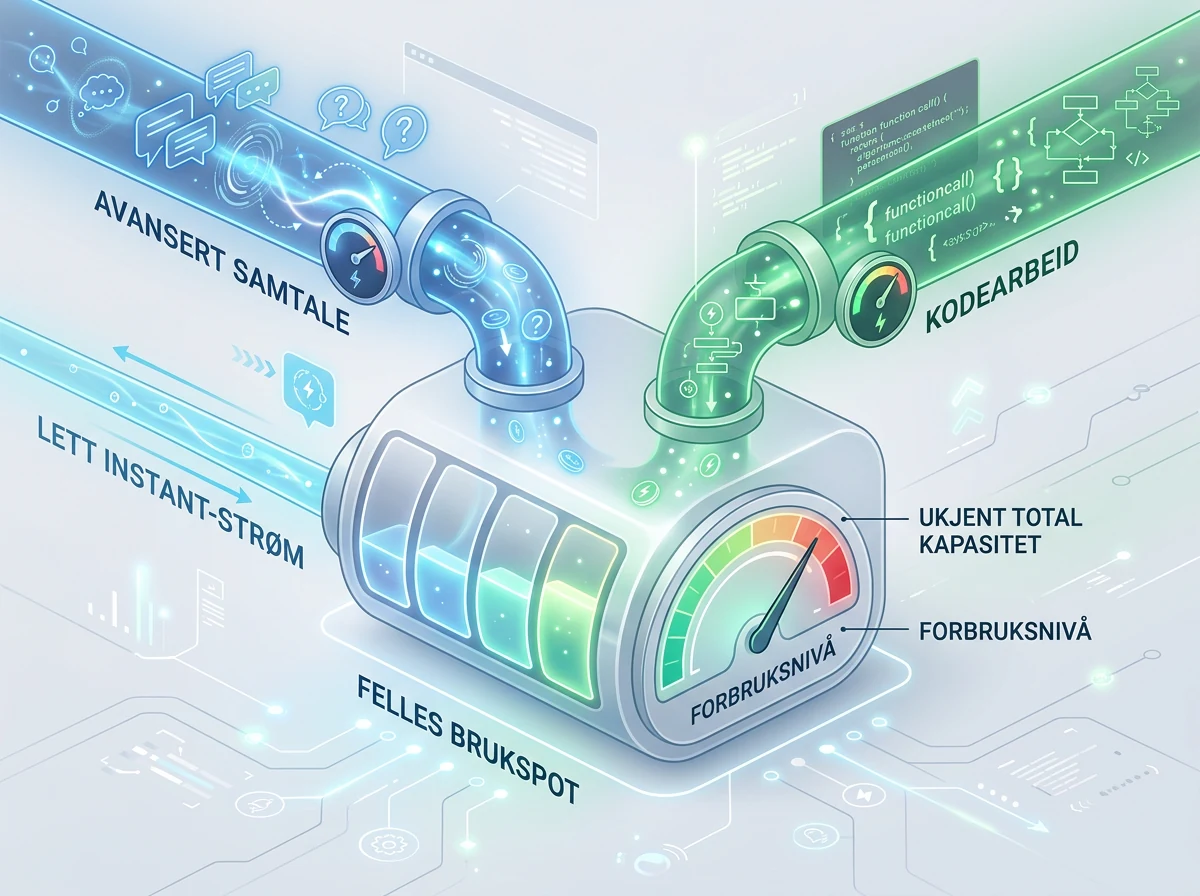
Starting in December 2026, the included usage allowance on Plus, Pro, and Business plans will be shared across ChatGPT and Codex. OpenAI’s official usage guide says usage will be measured in tokens, and the amount consumed will depend on the model and the complexity of the task.
OpenAI also says Instant chat will not draw from this shared allowance. More advanced models and complex tasks will consume more of it, while eligible users will be able to see their combined remaining usage and reset times under Settings → Usage. If the allowance runs out, the listed options are to wait for a reset, upgrade the plan, or buy credits for eligible features.
Those details answer part of the question, but not the part heavy users need most. OpenAI has not published one simple token figure for each plan or a calculation showing how a demanding ChatGPT task compares with a long Codex session. The company says the task, model, settings, and amount of context all matter. That may be technically true, but it makes the practical limit difficult to judge before the new system arrives.
This is where the tidy product cleanup gets a catch. One allowance can be flexible when it is generous. If a long Codex session leaves less capacity for advanced work in ChatGPT, however, OpenAI has changed far more than the navigation. Two work surfaces are now competing for the same budget, and users deserve concrete numbers before anyone calls that an unqualified improvement.
Will the shared allowance reduce what you can do?
We do not know yet. OpenAI expects most users not to wait for a reset more often than they do today. That is a useful promise, but it is still an expectation rather than a measurable guarantee for every plan and workflow.
The result will depend heavily on how you use the products. Someone who mostly uses Instant chat may barely notice the change because Instant does not count against the shared allowance. Someone who alternates between advanced ChatGPT work and long Codex tasks could feel it much more quickly. A model choice that consumes more tokens, a larger context, or a complex multi-step task can all change the equation.
A shared pool is not automatically a cut. It could let users spend more of their included capacity on the tool they need that day instead of leaving one separate allowance unused. But without plan-specific figures and a clear comparison with the old limits, it is impossible to know whether the transition gives a particular user more flexibility, roughly the same capacity, or a hidden restriction.
That uncertainty matters because ChatGPT and Codex are not interchangeable workloads. A quick analysis, a presentation built from several files, and an agent working through a repository can have wildly different token demands. “It depends” is honest, but it is not enough information for someone planning real work around a paid subscription.
What should you watch when the change arrives?
If you use both ChatGPT and Codex heavily, record what your usage looks like before and after the December transition. Check the combined allowance and reset times in Settings → Usage, and pay attention to whether long Codex sessions make you wait more often for advanced ChatGPT work.
Do not assume that a simpler workspace means the limits stayed the same. Look at which model you selected, how complex the task was, and whether the work used a large amount of context. Instant chat is excluded from the shared allowance, so ordinary fast conversations should not be confused with the more expensive agentic work that draws from it.
Businesses should also watch how the shared allowance behaves across the workflows their staff actually use. A person who spends most of the day in Codex will have a different pattern from someone building presentations and researching in ChatGPT. A pooled limit may be easier to administer, but only if the usage display is clear enough to explain where the capacity went.
If you hit the limit, OpenAI says you can wait, upgrade, or buy credits. That makes visibility even more important. A warning after the allowance is already gone is not much help when an agent is halfway through a deliverable. The combined meter needs to make consumption understandable before the work stops, not merely explain why it stopped.
A better workflow needs transparent limits
Merging Chat and Work is the right decision. ChatGPT should let an idea develop into finished work without forcing you to switch mental models halfway through. The product becomes easier to approach, while Codex retains the specialist environment that serious coding work needs.
The shared allowance is a separate judgment. It may work perfectly well for most people, exactly as OpenAI expects. But the company still owes paying users a clearer account of what the pool contains and how demanding work drains it. When the answer determines whether you can finish a task or have to wait, vague capacity is not a small footnote.
I like the cleaner entrance. But OpenAI still owes paying users concrete, understandable capacity figures. A cleaner entrance is good. It must not hide a tighter exit. Watch the numbers when the change lands, compare them with your real workflow, and judge the new system by how much useful work it lets you finish.
Frequently asked questions
When will Chat and Work merge in ChatGPT?
OpenAI plans to test the combined Chat and Work experience with a small group before expanding it. The company has not announced one fixed rollout date for every user, while the shared ChatGPT and Codex usage allowance is scheduled to begin in December 2026.
Which ChatGPT plans will share usage with Codex?
OpenAI says the included usage allowance on Plus, Pro, and Business plans will be shared across ChatGPT and Codex starting in December 2026.
Does every ChatGPT message use the shared Codex allowance?
No. OpenAI says Instant chat will not draw from the shared allowance. Advanced models and more complex ChatGPT or Codex tasks will consume tokens from the pool, with usage depending on the model and task.
Where can I check my combined ChatGPT and Codex usage?
Open Settings > Usage in ChatGPT. OpenAI says this page will show the combined remaining allowance and reset times. If you use both products heavily, compare the display before and after long Codex sessions to see how your own workflow is affected.