
Innhold Show
If you pay for Grok Bot, the weekly limit is part of the product you are actually buying. Elon Musk now says the service was unsustainably expensive to deliver relative to revenue, while users were reaching their limits days before the weekly reset.
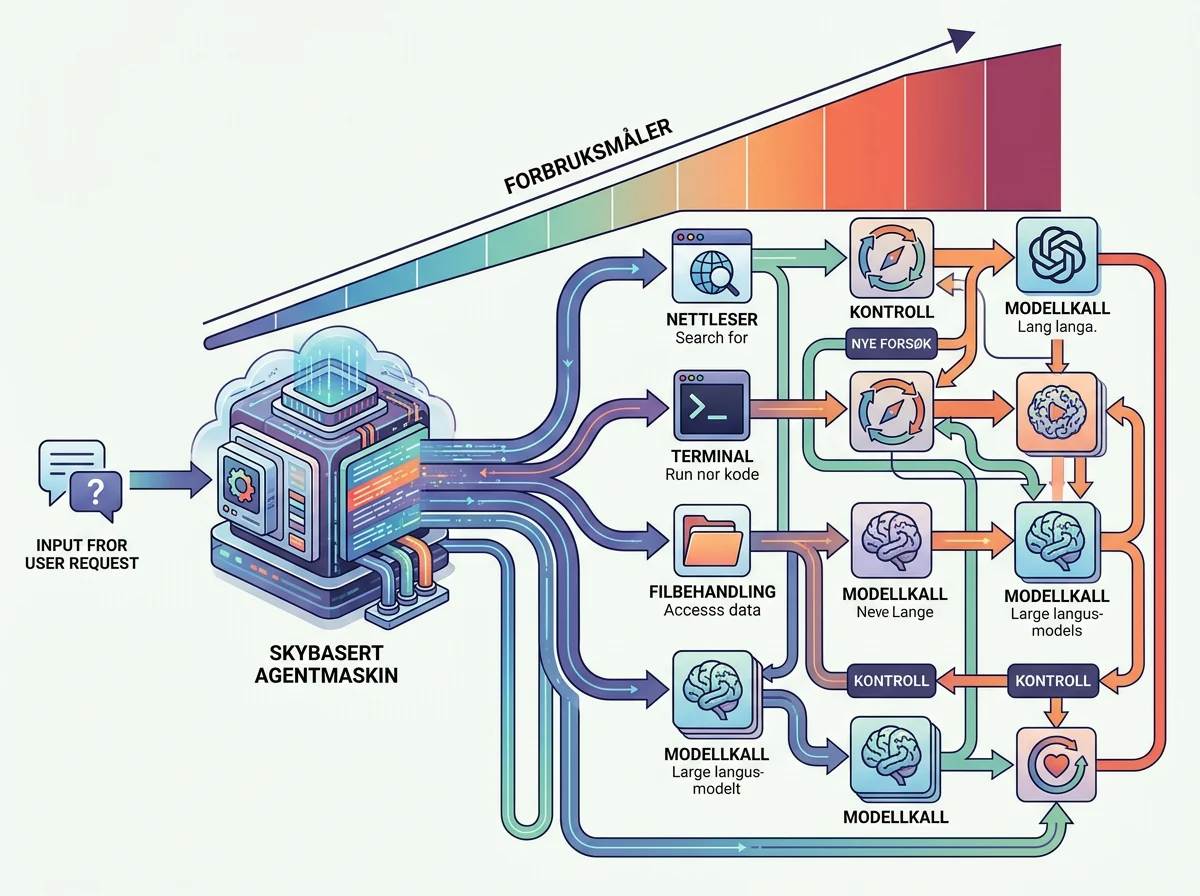
That is a rare and rather revealing admission. Grok Bot is not just a chatbot answering one message at a time. The agent works on its own computer in the cloud, uses a browser, terminal and files, and can continue working after the user’s own computer has been closed. All of that consumes compute over time.
I do not accept high provider costs as an excuse for vague terms for the customer. Musk gave no cost figures, no specific old or new allowance, and no indication that affected users would receive a reset. Paying customers got an explanation, but not the answer they need: How much Grok Bot are they actually getting for their money?
What did Elon Musk say about Grok Bot’s costs?
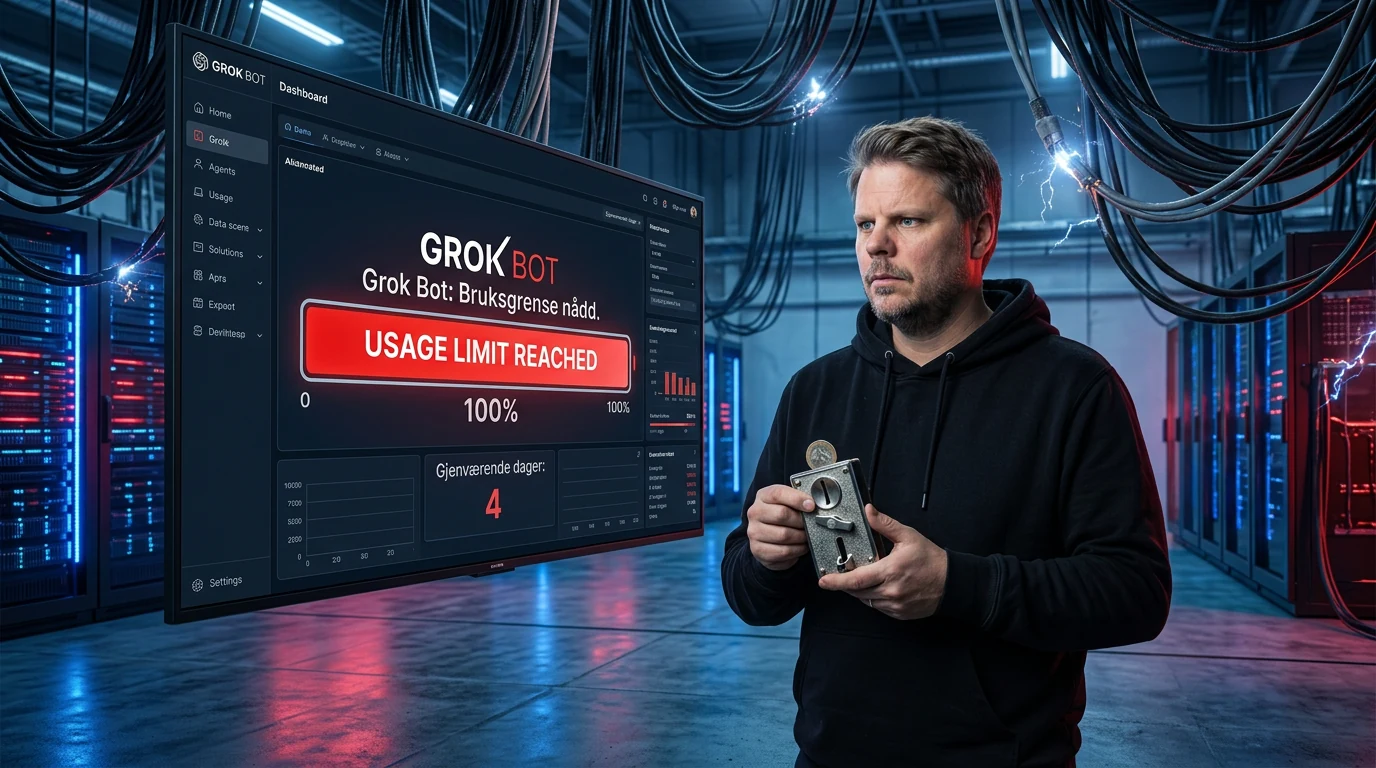
On November 1, 2026, Elon Musk wrote that the cost of providing Grok Bot was “unsustainably high relative to revenue.” His reply on X came after a user asked for weekly usage to be reset because many people had reportedly exhausted their allowance unusually quickly.
The user who prompted the reply showed a meter at 100 percent with four days remaining until the next reset. Musk explained the cost problem, but he did not directly answer whether the account would receive a fresh allowance. He also did not say when the economics became unsustainable, what an average task cost SpaceXSI, or how much usage patterns had changed.
That distinction matters. Musk confirmed a serious mismatch between cost and revenue, and user complaints show that the limits became painfully noticeable. The public evidence does not establish that SpaceXSI made one specific quota cut, how large any cut may have been, whether every subscription tier was affected equally, or whether every rapidly rising meter had the same cause.
Why can an AI agent cost more than an ordinary chat?
Grok Bot performs longer and more complicated workflows than an ordinary chat. According to the official product overview, the agent receives a persistent cloud computer with a browser, file system and terminal. It can use several tools, work across websites and keep going in the background after you close the app or your computer.
One short instruction can therefore start many model calls and a long chain of actions. The agent may have to interpret the task, make a plan, read pages, run commands, inspect the result and try again. What the customer sees as one task may be far more expensive to deliver than one conventional conversation with Grok.
SpaceXSI says trial use is deducted according to agent steps and tokens, not simply the number of messages. One large task can consume an entire trial credit. The same mechanics explain why a percentage meter can move quickly even when the user has sent very few messages. Counting prompts tells you almost nothing about the real bill behind an agent.
What do paying subscribers get?
Grok Bot is not included with every subscription. Under the combined X Subscription offering, access begins at the Premium tier. The official pricing page lists Premium at $30 per month, Super at $100 and Ultra at $200, before any applicable taxes. Those are substantial monthly prices when the most important capacity is still expressed as a percentage rather than a clear amount of work.
Super and Ultra include larger weekly allowances than Premium, but the pricing page describes them in relative terms: 4x, 15x and 50x included usage. That shows that the tiers differ. It does not tell a customer how many hours of agent work, how many tasks or how many tokens the subscription will reliably cover.
The allowance becomes even harder to understand because it is shared. Under X Subscription, Grok Bot, Grok and Cursor draw from the same weekly usage pool. Heavy use of one service can leave less capacity for the others. Grok Bot does not receive a separate allowance on top of the subscription.
Customers on older Cursor and SuperGrok arrangements may have different account links and meters. The official documentation says Grok Bot usage on older Cursor plans is measured against the Cursor account, while the newer combined subscription uses the meter on the Grok account. It is easy to inspect the wrong meter and misunderstand whether two products share a limit when the account type determines the answer.
Was the fast-moving meter a quota cut or a bug?
Musk answered the complaint by pointing to costs, but he did not describe a specific change to the allowances. Cost pressure could explain tighter access. It does not prove that SpaceXSI implemented one particular quota cut, and the company has not published a numerical new limit.
Users reported different symptoms. Some said they reached 100 percent several days before the reset. Others described the meter rising quickly or moving while they believed the agent was idle. Those observations matter, but they are not a complete measurement of SpaceXSI’s system. Background work, shared allowances, delayed accounting and an actual bug can produce similar symptoms from the outside.
What we know is that Musk responded to a usage complaint by citing cost. What we do not know is whether SpaceXSI changed the accounting, and if so, how and when. The company should publish that in plain language. When a subscription costs as much as $200 per month, hiding its central capacity behind a percentage with no useful conversion into work is not good enough.
This is not only a Grok problem. The whole industry is trying to sell agents like conventional software subscriptions even though the cost of individual tasks can vary wildly. A flat monthly fee looks wonderfully simple on the sales page. Inside the product, it often turns into weekly allowances, credits, metered overages and a gauge that needs its own instruction manual.

What does this mean for individuals and small businesses?
For an individual user, the immediate problem is predictability. A weekly limit may be perfectly acceptable if you use Grok Bot for one research task in the evening. If the agent is part of a workflow that has to deliver every day, an unexpected stop with four days left before reset is something else entirely.
Small businesses should not judge the subscription by the monthly price alone. They need to know how much real work the allowance covers, whether extra usage is enabled, and what happens in the middle of a running task as the limit approaches. SpaceXSI says an agent already at work may go slightly beyond a configured spending limit before it stops. That sounds like a small detail until an unattended agent begins a large job.
An agent that creates enough value can absolutely justify a higher cost. There is nothing unreasonable about heavy use costing more than light use. The problem begins when a provider changes the practical capacity of a subscription and leaves customers to discover the difference by hitting the wall.
Musk’s explanation makes the provider’s cost problem easier to understand, but it does not make the product more predictable. Paying users need a visible price per unit of usage, a history showing what consumed the allowance, warnings before large jobs and concrete figures for every tier. A percentage meter without the calculation behind it is information, but only just.
How to avoid an unexpected usage bill
First, confirm which account type you actually have. Under X Subscription, usage appears in the Usage section of the Grok dashboard. If you have an older Cursor plan, Grok Bot usage appears under Usage & Billing in Grok Bot or in the Cursor dashboard. The two arrangements do not necessarily use the same meter.
SpaceXSI’s official FAQ says you can leave automatic reload disabled or set a monthly limit for extra usage under X Subscription. On older Cursor plans, you can disable on-demand usage or set a monthly cap. Do that before assigning a long task to the agent, not after the invoice has explained the feature for you.
Then follow a few representative tasks from beginning to end. Record how much of the meter is consumed by research, coding, browser work and file processing. It is not a perfect benchmark, but it gives you a much better basis for a buying decision than assuming that “15x” or “50x” means a particular number of working days.
If the allowance falls without a reasonable explanation in the activity history, document the time, the task, the percentage before and after, and the account connected to the meter. Ask support for an itemized explanation. Do not jump to a more expensive tier simply because an opaque gauge says stop. The provider should first be able to explain what you already paid for.
Grok Bot exposes the real bill for AI agents
Compute costs money, and long-running agent work can become expensive very quickly. The striking part is that Musk has now acknowledged that the relationship between flat subscription revenue and actual Grok Bot usage did not hold.
SpaceXSI has a few obvious options: reduce the cost per task, raise prices, tighten included usage or move more of the bill to metered overages. The likely answer is some combination of all four. For customers, that means an AI agent subscription can no longer be judged like an ordinary streaming plan.
AI agents are useful precisely because they can do more than answer in a chat. More work also means more compute, more tool calls and more financial risk. That makes transparency more important, not less. An agent cannot be marketed like an employee and billed like a mystery.
Musk has explained that the cost level was unsustainable. SpaceXSI still has not explained whether allowances changed or what the limits actually represent. Until it does, treat the weekly allowance as scarce, disable uncontrolled overages and measure the value of tasks against what the subscription truly delivers – not what the sales page encourages you to imagine.
Frequently asked questions
Why did Grok Bot use the weekly allowance so quickly?
Elon Musk says Grok Bot was unsustainably expensive to provide relative to revenue. Agent jobs can involve many model calls and tool steps. SpaceXSI has not published figures showing whether allowances changed, how large any change was, or whether every fast-moving meter had the same cause.
Which subscriptions include Grok Bot?
Under X Subscription, Grok Bot is included with Premium, Super and Ultra, but not Plus or Free. Some older paid Cursor plans and linked SuperGrok subscriptions may also provide access. Your account type determines where usage is measured and which rules apply.
Does Grok Bot have its own weekly quota?
Not under the newer X Subscription arrangement. Grok Bot, Grok and Cursor share one weekly usage pool. On older Cursor arrangements, Grok Bot usage is measured against the Cursor account, so check the correct dashboard and the terms for your specific plan.
Can Grok Bot cost more than the monthly subscription?
Yes, if extra usage is enabled. X Subscription can use prepaid credit beyond the weekly allowance, while older Cursor plans may continue with on-demand usage. Disable automatic reload or set a monthly cap if you do not want an unexpected additional charge.