
Innhold Show
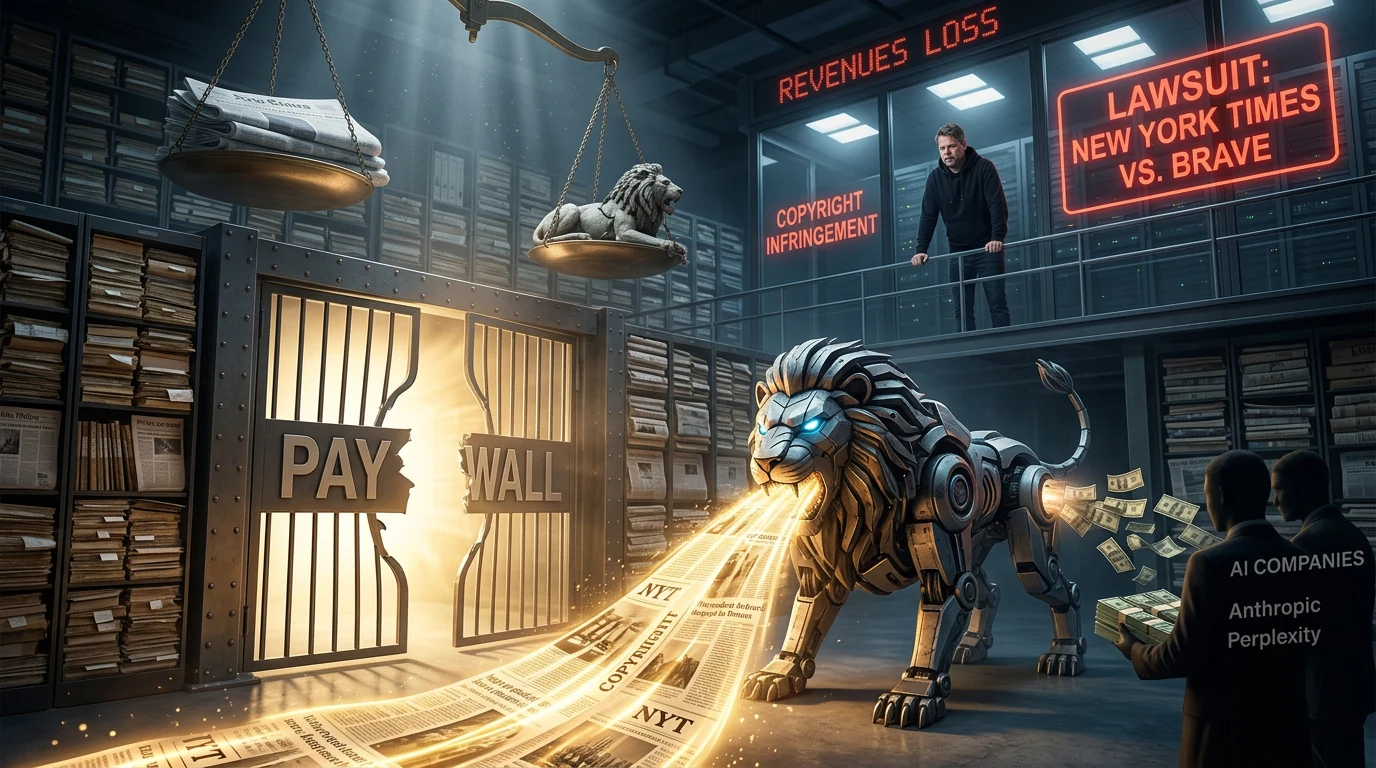
The New York Times and three other US newspapers have sued Brave over alleged AI scraping, distribution of journalism to AI companies, and paywall circumvention. It is a fresh fight over who may collect content from the web, package it into AI services, and make money from it.
The New York Times claims Brave scraped copyrighted content and unlawfully distributed it to customers including Anthropic, Perplexity, Mistral, xAI, and Cohere. The Daily News, Chicago Tribune, and Orlando Sentinel filed a separate lawsuit with similar allegations on the same day. Both cases were filed in federal court in Manhattan, according to TechCrunch’s November 2 report.
These are allegations in civil lawsuits, not established violations of the law. But if the description is accurate, my verdict is simple: Scraping copyrighted journalism, bypassing access restrictions, and reselling that material to commercial AI services is not acceptable. A lion logo and a good reputation for privacy do not make that part any prettier.
Why has the New York Times sued Brave?
The New York Times accuses Brave of building an index of more than 30 billion web pages with a crawler the publishers could neither identify nor block. According to the complaint, content from that index was distributed to several major AI companies. That makes this more than the familiar argument about a search engine displaying a headline, a link, and a short snippet.
The lawsuit also targets a feature in the Brave browser that allegedly circumvents paywalls. Brave is further accused of blocking publishers’ advertising while selling its own ads. If those allegations can be proved, that is a brutal combination: Take the content, remove the revenue surrounding it, and collect payment somewhere else.
The New York Times is seeking damages and a court order stopping the alleged practices. Brave had not responded to TechCrunch’s request for comment when the report was published on November 2. The language matters here: The newspapers allege, Brave has been sued, and the court has not yet decided whether the practices were unlawful.
Why are AI companies part of the story?
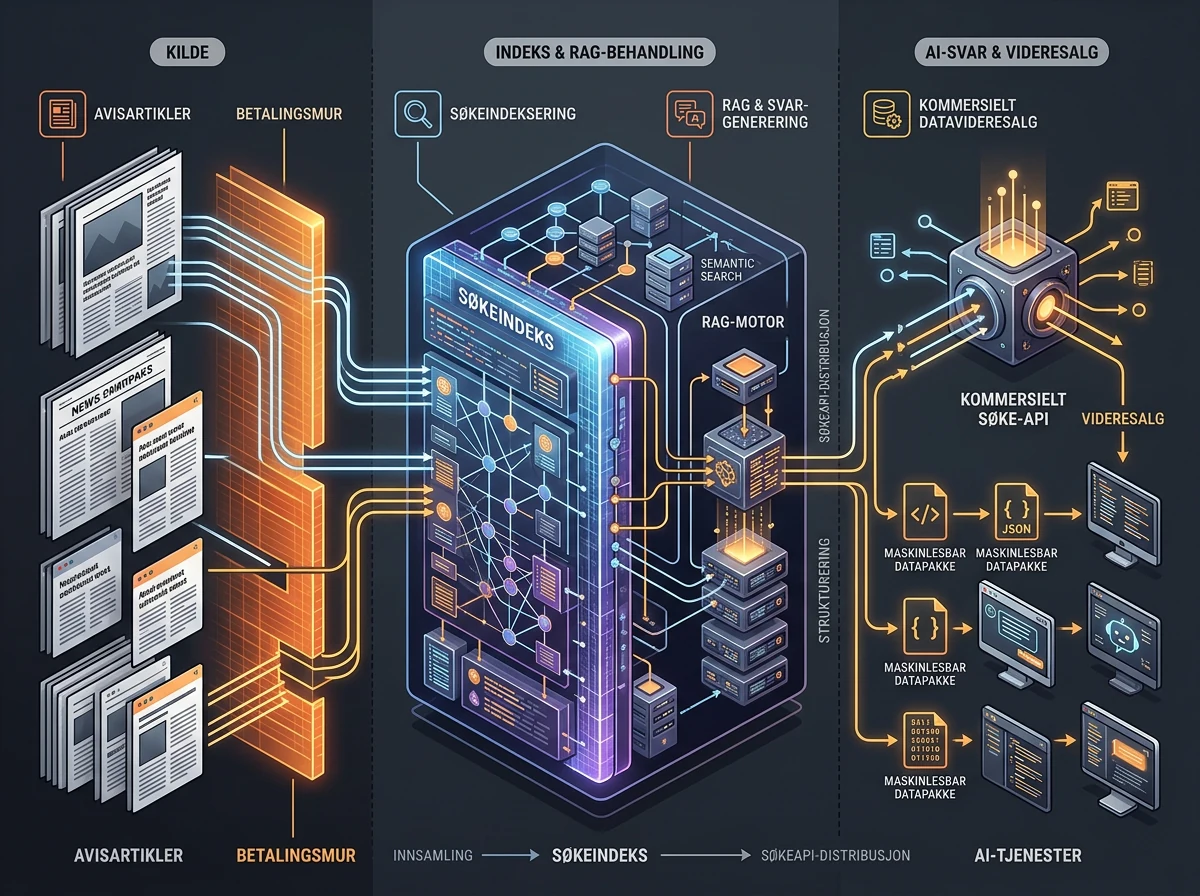
Anthropic, Perplexity, Mistral, xAI, and Cohere are named as customers that allegedly received content from Brave. They are not the plaintiffs in these two cases, but their presence explains why the dispute matters across the AI industry. Many AI products need current information from the web, while few companies want to build and maintain a complete search index themselves.
That creates a data supply chain. One company crawls and indexes the web, another buys access, and an AI service produces the answer seen by the user. The arrangement can be efficient, but responsibility does not vanish simply because the data passes through several companies. An invoice from a supplier is not proof that every upstream right has been cleared.
This is also where the lawsuits depart from the old picture of a search engine showing only a title, a link, and a few words. The newspapers describe Brave as a commercial intermediary distributing content to AI companies. Brave will have the opportunity to challenge both the factual account and the legal conclusions, but the practical question is wonderfully blunt: Where did the material come from, and what is the supplier actually allowed to do with it?
AI customers may be tempted to assume that the supplier will absorb any legal impact. In practice, it is rarely that simple. Even when a customer did not control the crawler, its product can become dependent on data that later has to be removed, restricted, or licensed on different terms. This is therefore also an operational and supplier-risk problem – including how easily the customer can replace the data source – not merely a question of who eventually wins in court.
Two lawsuits arrived on the same day
The New York Times filed one lawsuit. The Daily News, Chicago Tribune, and Orlando Sentinel filed the other. Four newspapers going to court on the same day with similar allegations makes this a new event in the copyright fight surrounding AI, not another retelling of the existing cases against model developers.
The New York Times has already sued OpenAI and Perplexity in other disputes over the use of newspaper content. The Brave cases open a distinct front because they focus on the company allegedly collecting web content and distributing it further down the chain. The crawler and data supplier are no longer invisible plumbing. They are the subject of the dispute.
TechCrunch reports that the New York Times characterizes Brave as a supplier and distributor of stolen copyrighted content to AI companies. That is the newspaper’s allegation, not a judgment. But the language shows how far apart the parties will be when the court has to distinguish lawful indexing from unlawful copying and distribution.
This is not the same as private, local AI use
Copyright debates turn into soup when completely different kinds of use are thrown into the same bowl. I see a clear difference between using a book or article you legally bought as private reference material in a local AI system and scraping enormous quantities of protected content to build a commercial cloud service.
With private local use, the material remains on your own machine. You use it to learn, search, or retrieve something you have already paid for. You do not publish the copy, upload it to someone else’s cloud, or resell access. That resembles searching your own notes far more than establishing a competing content supplier.
That line should not be erased by a slogan claiming that all AI use is the same. Who copies the material, how much is copied, whether it remains private, how the result is used, and whether someone makes money from distributing it are substantial differences. The Brave lawsuits concern alleged commercial collection and onward distribution, not what an individual does locally with material they acquired legally.
Nor does the word “local” automatically make every use lawful. The point is that scale, distribution, and commercial purpose matter, and should not be flattened into one simplistic AI argument. The alleged route from newspaper content to paying AI customers is the core of these cases.
What should developers and small businesses check?
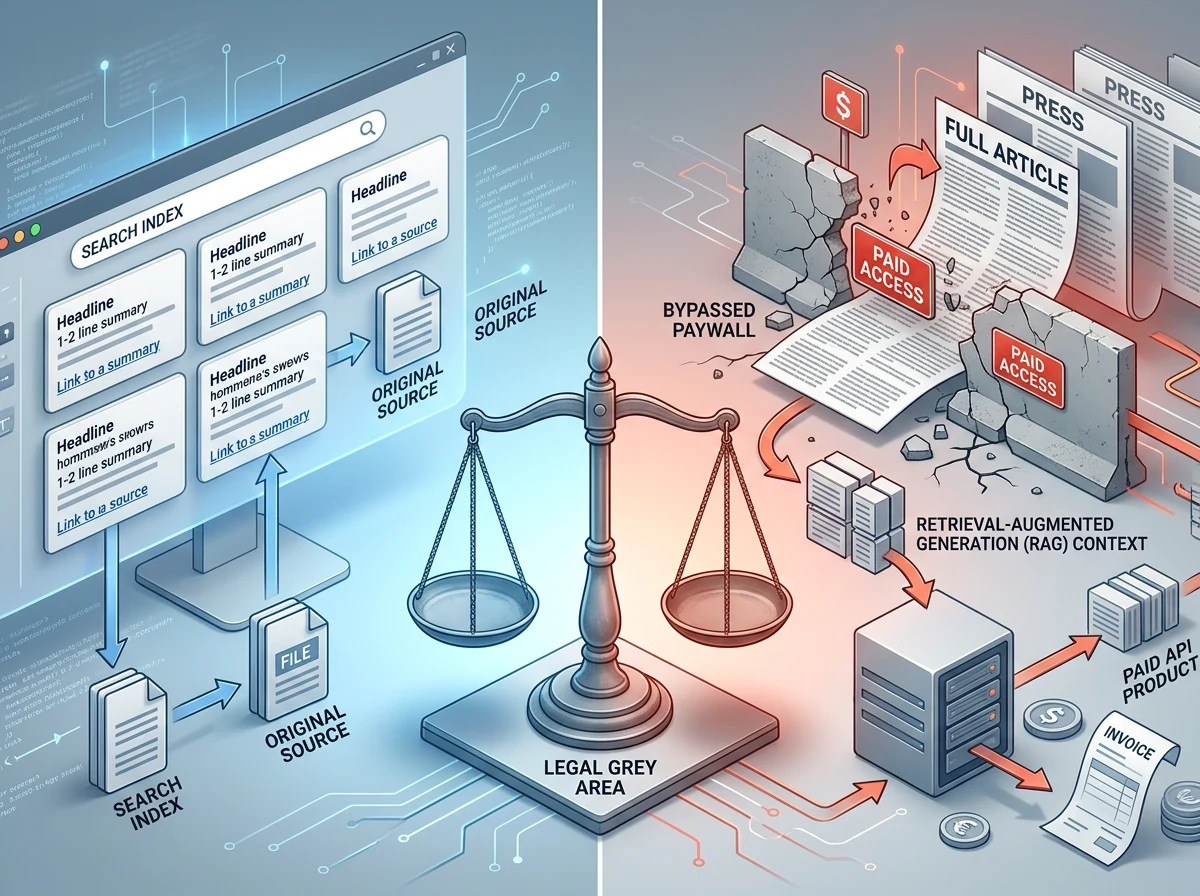
Do not buy access to web data and simply assume the supplier has cleared every right. Ask where the content comes from, which crawler collected it, how publisher restrictions are handled, and whether the service retrieves material behind a login or paywall. You also need a clear answer about what you may store, display, and use for model training.
Separate three different products: a search result containing a title and link, a longer body of source text used to generate an AI answer, and a dataset stored or used for training. They serve different purposes and create different risks. A contract promising only “web data” is not reassuring when nobody can explain how that data was obtained.
This is not advice to stop using search APIs or current web data. It is advice to perform the same supplier due diligence you would apply to payment data, customer information, or any other critical input. Document the source and the rights before building your product around them. That is much cheaper than discovering the problem after the lawyers arrive.
Design the service so that it can switch data suppliers without being rebuilt from scratch. That is ordinary, sensible risk management. It also prevents one disputed crawler or contract from becoming a single point of failure for the entire product.
Privacy is not a copyright exemption
Brave is known as a privacy-focused browser, and that is an important part of the company’s identity. But protecting the user’s privacy and respecting the rights of people who create content are two different tests. A company can pass one and fail the other.
If the allegations are proved, Brave crossed a clear line. Journalism costs money to produce. Copying it, circumventing paywalls, and distributing the material to commercial AI companies does not become acceptable because the end product is convenient or the market wants fresh data.
The verdict on the alleged conduct must still come from the court, not the headline. Brave gets to respond, and neither lawsuit had been decided as of November 3, 2026. The practical lesson for anyone building an AI product is already clear, though: Know your sources, access boundaries, and rights before making an outside data supplier a critical part of your service.
Frequently asked questions
Has the New York Times won its case against Brave?
No. The lawsuit was filed on November 2, 2026, and the allegations had not been decided as of November 3. The New York Times is seeking damages and an injunction, while Brave will have the opportunity to challenge both the factual account and the legal interpretation.
Which newspapers have sued Brave?
The New York Times filed one lawsuit. The Daily News, Chicago Tribune, and Orlando Sentinel filed a separate lawsuit containing similar allegations. Both cases were filed in federal court in Manhattan on November 2, 2026.
Which AI companies are named in the Brave lawsuit?
Anthropic, Perplexity, Mistral, xAI, and Cohere are named as customers that allegedly received content from Brave. That is an allegation in the New York Times complaint, not a court ruling on the responsibility of those companies.
What should I check before buying web data for an AI service?
Check where the data comes from, which crawler collects it, whether publisher restrictions and paywalls are respected, and what rights you receive for storage, display, and training. Ask for clear contractual terms instead of assuming the supplier has resolved every upstream issue.