Innhold Show
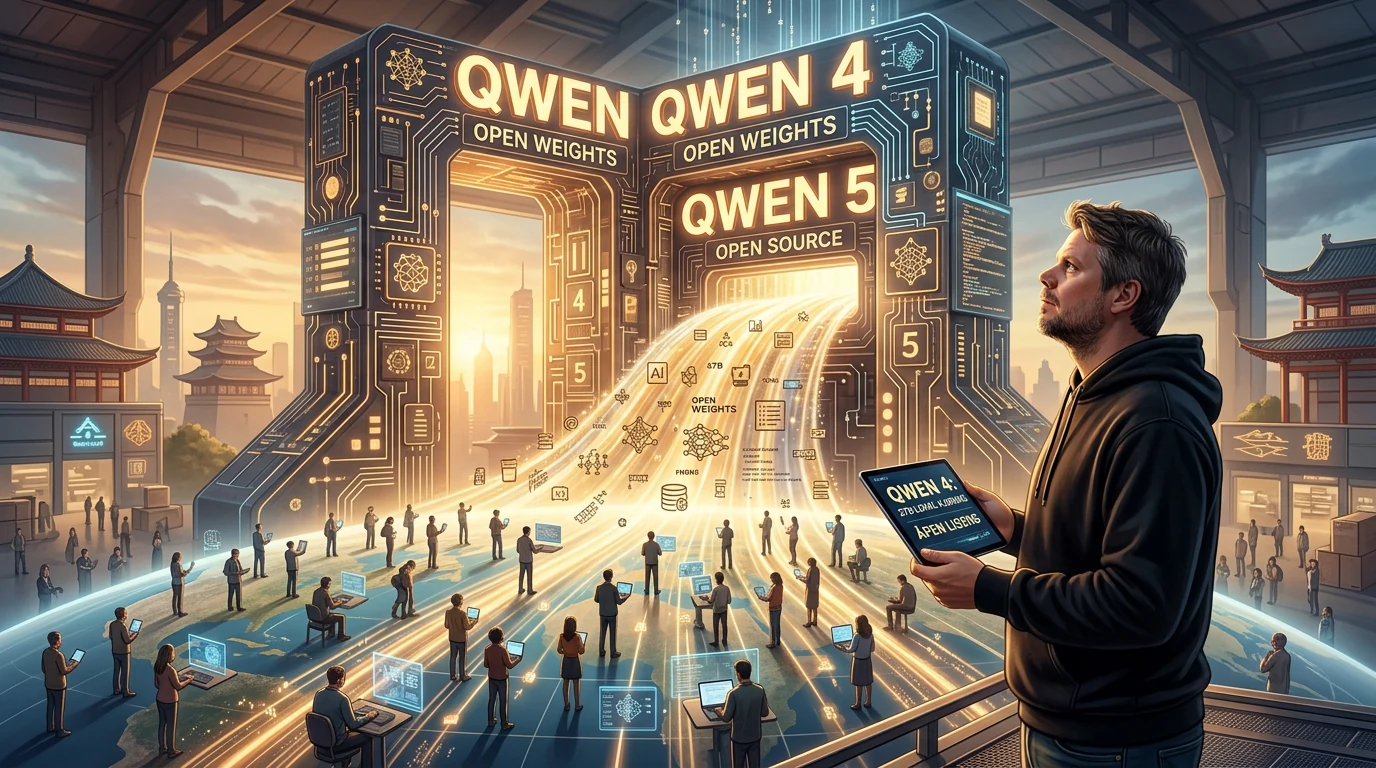
The rumor that Qwen 4 will be the last open model family from Qwen before Alibaba switches to an API-only future is making the rounds again. But Qwen head Dayiheng Liu said at the Apsara conference on September 22 that the company will continue to embrace open source and openness.
That is good news. Really good news, if Alibaba follows it with actual weights, sensible licenses and model sizes people can use. Qwen has become an important part of the local AI ecosystem, and an API-only future would leave developers and small businesses more dependent on a single provider.
At the same time, a speech is not a model file. The right response is relief with a healthy dose of skepticism: take Qwen’s leadership at its word, then check what is actually released when Qwen 4, Qwen 4.5 and Qwen 5 arrive.
Will Qwen 4 be an open model?
Dayiheng Liu said Qwen will continue to stand by open source and openness. He argued that the value of AI should not belong to a small number of companies, but should become a foundational capability that people around the world can access, use and help create.
The statement was highlighted in the LocalLLaMA thread that sparked this story, where the message was presented as a commitment that both Qwen 4.0 and Qwen 5.0 will remain open. That is a much clearer signal than a vague promise to “support the ecosystem” at some unspecified point in the future.
The wider roadmap presentation points in the same direction. 36Kr reports that Qwen4-27B is being prioritized for an open release, followed by Liu’s statement that Qwen will continue with open source. That makes it difficult to dismiss the message as a polite thank-you to the local-model community.
Why this matters beyond another model rumor
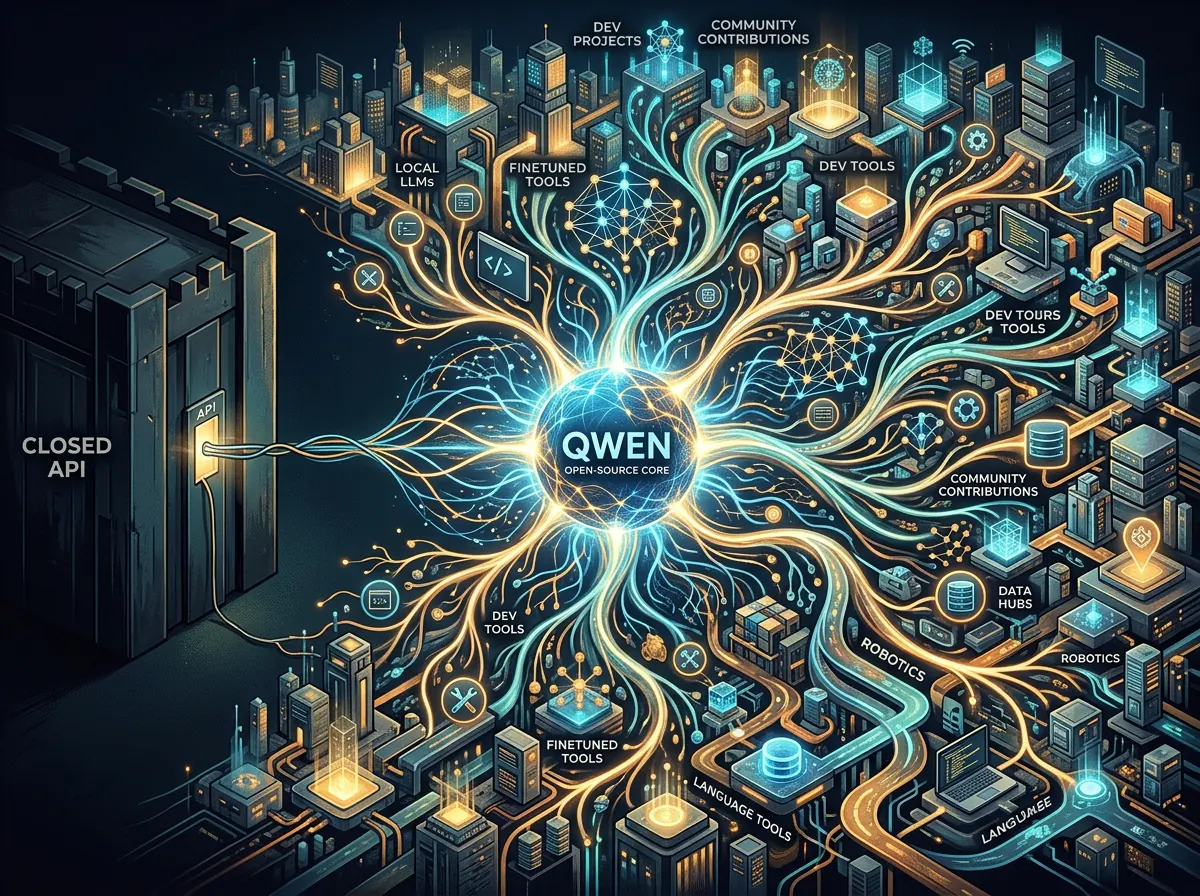
Qwen is no longer a small model family that matters only to a handful of enthusiasts. According to figures presented by Liu, the Qwen family has passed 3 billion downloads worldwide. Alibaba has reportedly released more than 460 open models, while other developers have created over 300,000 derivative models.
Those are the company’s own ecosystem figures, not an independent audit. Even so, the scale explains why the rumor of an API-only future attracted attention. When that many tools, fine-tunes and local deployments build on one model family, its release strategy matters far beyond Alibaba.
The whole point of this ecosystem is that AI development does not have to stop at the door of three or four American cloud platforms. Competition gets better when more people can download, inspect, adapt and run models on their own terms. Qwen continuing in that direction would be genuinely important.
Open source and open weights are not quite the same
The terms are often used interchangeably in the AI industry, but they do not necessarily describe the same degree of openness. A model with downloadable weights can run locally even when its training data, complete training code or full recipe has not been published. Full open source requires more than a very large file on Hugging Face.
That is why it is too early to say exactly how open Qwen 4 and Qwen 5 will be. The statement tells us something important about the direction, but it does not tell us which license each model will receive, whether every size will be released, how long open versions might trail the API models, or how much of the training process Alibaba will document.
This is not nitpicking. The license determines what a business can build and sell. The available sizes determine whether a model can run on ordinary hardware or requires a data center. The timing determines whether the open release is a real alternative or a delayed sample that arrives after customers have already been pulled into the API.
What does the promise mean for local AI?
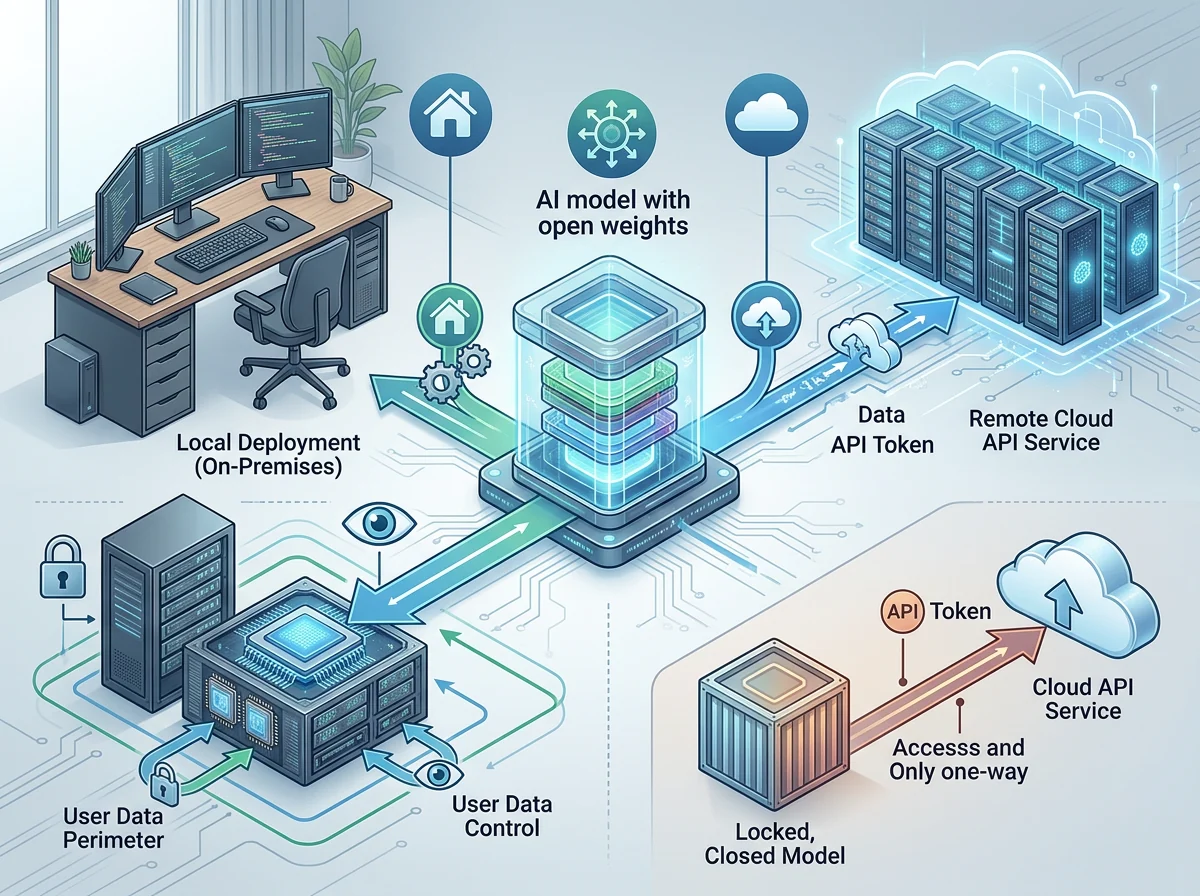
For local AI, it means Qwen could remain a foundation you can operate rather than merely a service you rent. Downloadable weights make it possible to run a model on your own machine or server, control where data is processed and adapt the setup without sending every request through the provider’s platform.
That matters particularly to developers and small businesses that need predictable costs, private data processing or a system that can work without continuous internet access. An API can be both easier and better for many jobs. But choosing an API because it fits the job is very different from being forced into one because the weights were never released.
That freedom also has value over time. A local deployment requires hardware, updates and expertise, while an API moves much of the operational burden to the provider. Access to the weights lets a business compare both routes, change its setup as requirements evolve and keep a working version if the cloud service changes its pricing, terms or model lineup.
Open models also give the rest of the market something concrete to build on. Tools for quantization, local inference, fine-tuning and agent workflows develop faster when people can actually get their hands on the models. The early Llama releases followed the same pattern and became far more important than many people understood at the time.
Qwen 4 is training, but the details are not final
Alibaba’s official Apsara 2026 summary confirms that Qwen 4 is in training. The company also presented a roadmap in which Qwen 4.5 and Qwen 5 could grow to between 5 trillion and 10 trillion parameters.
That figure mainly tells us how ambitious Alibaba is about its largest models. It says little about what an ordinary developer will be able to download and run. The Qwen4-27B track is much more practical in that respect, because a 27-billion-parameter model with the right quantization could be within reach of local setups in a way that a multi-trillion-parameter giant simply is not.
I have not tested any of these models, and there is no finished Qwen 4 release to evaluate yet. This is a source-based report about release strategy, not a performance test. Claims about quality, hardware requirements and real-world usefulness have to wait until the models and documentation exist.
The releases are what count
Qwen’s leadership deserves credit for saying this so clearly. The market needs more strong model families with downloadable weights, not another polished website where all control remains with the provider. A commitment to openness from one of the world’s most widely used model families matters.
But trust is built one release at a time. A model you have downloaded does not vanish because its provider cleans up a product menu, changes a subscription or decides that last year’s favorite no longer belongs in the lineup. That is a very practical difference, not an ideological ornament.
This is why Qwen’s promise has to be measured in files and licenses. Do the weights arrive? Do they arrive while the models are still relevant? Can developers build commercial products without vague restrictions? Are there sizes people can use without owning a data center? Words set the direction. The releases decide whether that direction is real.
What should developers and businesses watch?
The first checkpoint is the model card and license for every release. Do not assume the entire Qwen 4 family will have identical terms because one variant is open. Check commercial-use rights, attribution requirements, any size-based restrictions and whether fine-tuned or derivative models can be distributed.
The second is the gap between the API launch and the publication of the weights. A short delay may be operationally reasonable. A delay of many months would make the open version far less valuable to teams that must choose a technical foundation while they are building the product.
The third is the full model range. A huge flagship is excellent for research groups and major companies, but smaller models may matter more in practice to schools, developers, students and small businesses. Competition from other open model families also makes it harder to promise openness without delivering it.
A promise worth holding Alibaba to
The rumor that Qwen is heading toward an API-only future has not been confirmed. The public statement from Qwen’s leadership points the other way: the company intends to continue releasing open models, and Qwen4-27B has been described as a priority for an open release.
That is the right direction. AI becomes poorer if the strongest models can only be rented through closed endpoints. Open weights give more people a chance to learn, build, control their own data and compete with companies that have vastly larger budgets.
Now comes the easy part to describe and the hard part to do: Alibaba has to deliver. If Qwen 4 and Qwen 5 arrive with genuinely available weights, clear licenses and useful sizes, this could become one of the most important commitments to local AI in 2026. Until then, my verdict is positive but provisional. I hope they keep their word.
Frequently asked questions
Will Qwen 4 be available for local use?
Qwen’s leadership says open releases will continue, and Qwen4-27B has been described as a priority for open source. The final license, file size, hardware requirements and release date still need to be checked when the model is actually published.
Does the statement mean every Qwen 5 model will be open?
No, not necessarily. The statement commits Qwen to continued openness and includes Qwen 5 in that direction, but it does not establish that every variant, size and multimodal model will be released under the same license. Each release must be assessed separately.
Are Qwen models open source or only open weight?
It depends on the release and on how the term is being used. Downloadable weights do not automatically make a model fully open source if its training data, complete training code and methodology remain unavailable. For practical use, the weights, license and derivative-distribution rights are the essential checks.
Why do open Qwen models matter to small businesses?
They can let a small business run AI on infrastructure it controls, manage where data goes and avoid complete dependence on one API. Whether that makes economic sense still depends on model quality, hardware requirements, licensing and the cost of operating the system.