Innhold Show
The Anthropic IPO filing finally shows what the Claude adventure actually costs. The company generated $16.3 billion in revenue during the first half of 2026, while signing compute agreements worth hundreds of billions of dollars. The growth is wild. The bill is even wilder.
The company behind Claude plans to list on the Nasdaq Global Select Market under the ticker ANT. Anthropic has not yet disclosed the number of shares, the price range, or the final valuation, so this is the beginning of the public IPO process – not an announcement that you can buy Anthropic shares tomorrow.
The ticker is only the label on the box. Anthropic’s public S-1 filing with the SEC opens up the accounts, contracts, governance structure, and risk catalog of a company that wants to transform science, healthcare, and knowledge work. It also reveals just how dependent Anthropic is on capital, cloud providers, and a growth curve that almost looks like a typo.
What has Anthropic actually filed with the SEC?
Anthropic filed a public registration statement on Form S-1 with the US Securities and Exchange Commission on October 26, 2026. According to Anthropic’s own announcement, it intends to list its Class A common stock on Nasdaq as ANT. The registration is not yet effective, and the shares cannot be sold until it is.
That distinction matters. Anthropic submitted a confidential draft on June 1, but the public version gives prospective investors – and the rest of us – far more than a press release. It includes income statements, balance sheets, major contracts, customer concentration, executive compensation, and dozens of pages describing what could go wrong.
Anthropic calls AI one of the most significant technologies in human history. Its stated ambition is to accelerate science, economic growth, and disease treatment while managing the dangers of increasingly capable models. Those are enormous claims. The S-1 gives us something much more useful: numbers to place next to them.
How fast is Anthropic growing?
Anthropic’s revenue climbed from $41 million in 2023 to $386 million in 2024 and $4.6 billion in 2025. During the first six months of 2026, it generated $16.3 billion in revenue – a 1,300 percent increase from the same period a year earlier, according to the financial statements in its S-1.
Growth rates like that do not last forever, and Anthropic says as much in the filing. Even with that warning, the trajectory is extraordinary. This may still be a research lab at heart, but it is not a research lab searching for a business model. Claude brings in money through subscriptions, API usage, and cloud marketplaces, with business customers clearly driving the machine.
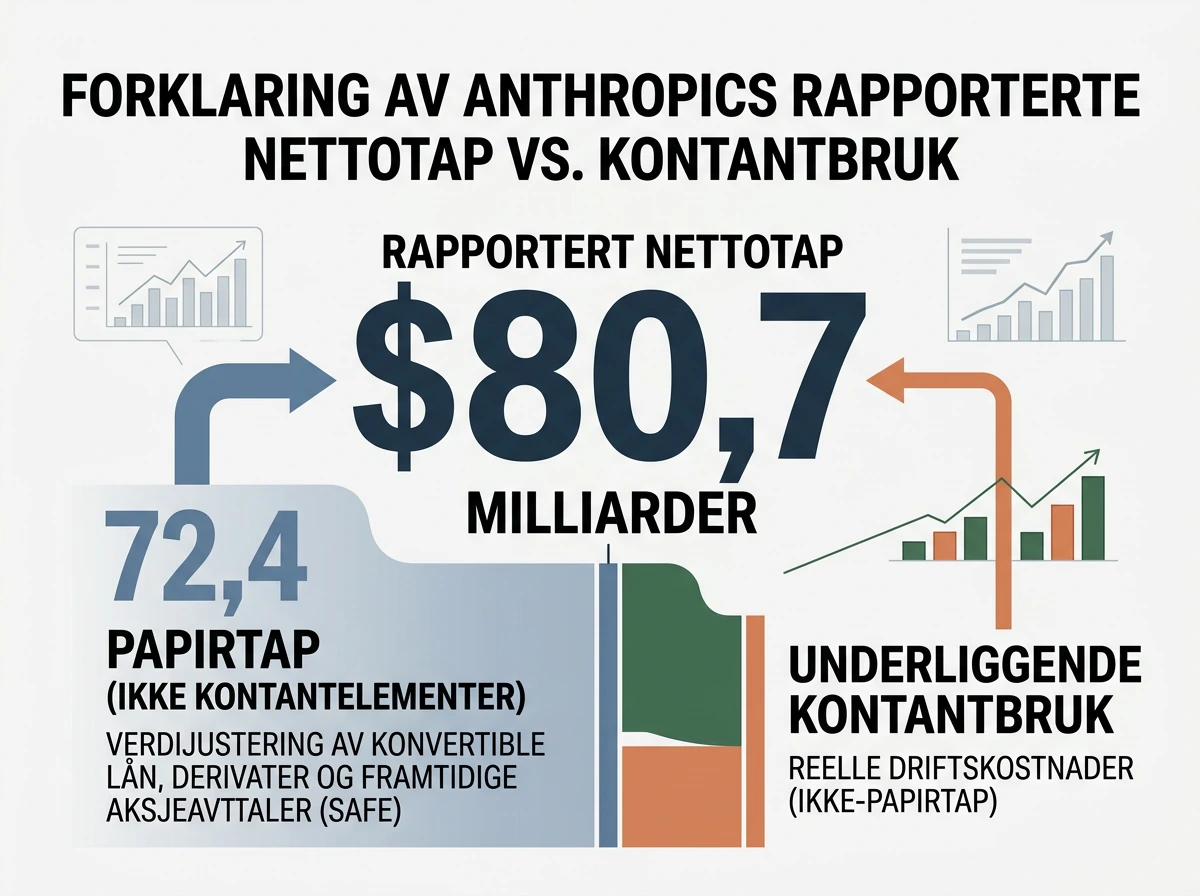
Then there is the loss: $80.7 billion for the first half of 2026. That figure looks like a data center on fire, but $72.4 billion came from increases in the fair value of convertible notes, derivative liabilities, and future equity agreements. As Anthropic’s valuation rises, the right to convert those instruments into shares becomes more valuable, which increases the accounting expense.
The loss is not fictional, but it does not mean $80.7 billion in cash disappeared from Anthropic’s bank account in six months. Both things can be true at once: the headline loss is dominated by financing adjustments on paper, and the underlying business is still frighteningly expensive to build and operate.
How large is Anthropic’s compute bill?
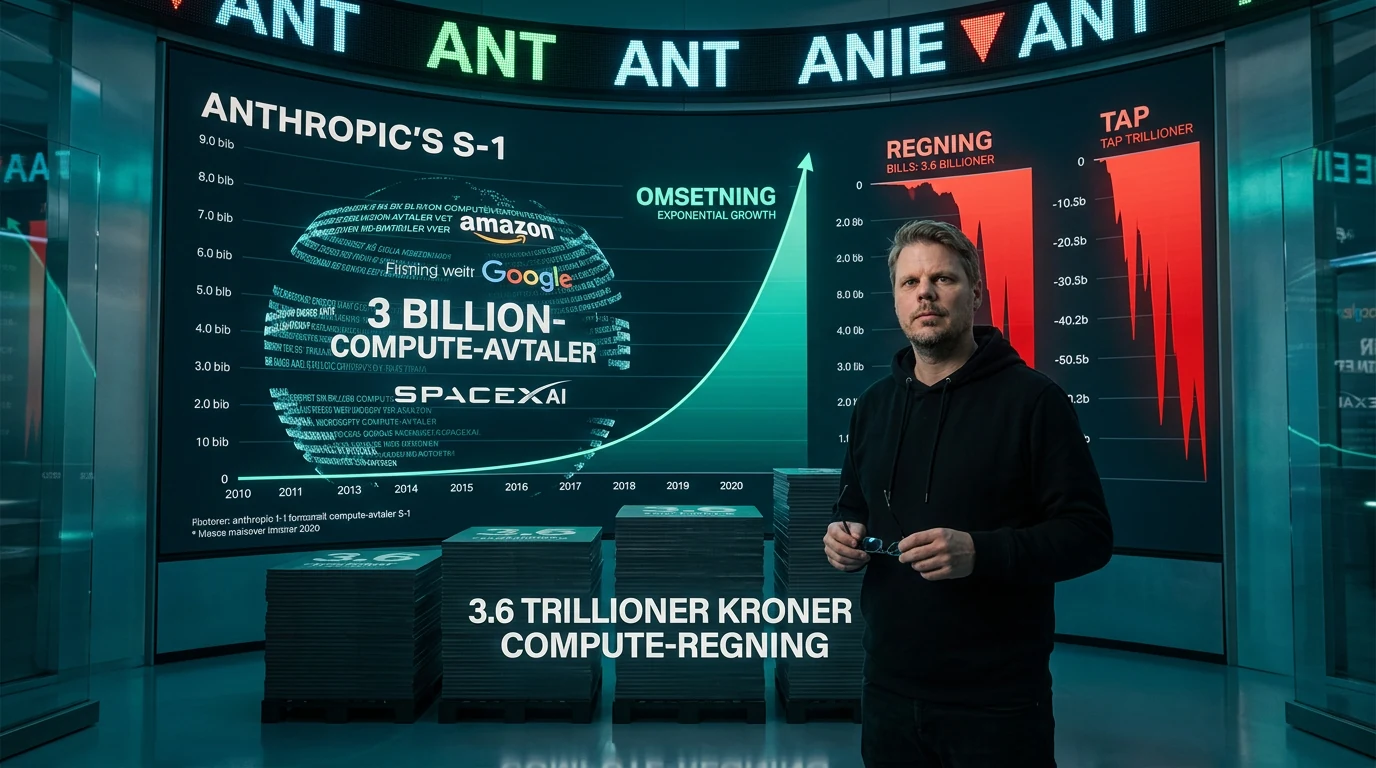
Four named agreements show the sheer size of the bet. Anthropic has committed to spend at least $44.9 billion with Microsoft through 2033, at least $114.5 billion with Google through 2033, and at least $110 billion with Amazon through 2036. Agreements with SpaceXAI could add as much as $120.5 billion through 2029.
Together, those commitments add up to as much as $389.9 billion. They are not one invoice due tomorrow, and the contracts have different terms and time frames. Several minimum commitments must nevertheless be paid regardless of actual usage. This is about as far as you can get from a conventional software company renting a few servers in the cloud.
The SpaceXAI agreement is particularly juicy. Once all planned capacity has been delivered, Anthropic estimates a monthly cost of roughly $3.1 billion for access to Nvidia GPUs. It expected full capacity in December 2026, although parts of the agreements can be terminated after specified initial periods and notice requirements.
Anthropic has enough money to meet its short-term obligations. At the end of June, it held $112.4 billion in cash and cash equivalents, plus $19.3 billion in short-term investments. Capital is not the immediate catch. The long-term test is whether revenue can keep growing fast enough to carry these compute commitments without crushing prices, margins, or product freedom.
How dependent is Anthropic on the biggest technology companies?
Anthropic presents the breadth of its compute supply as a strength. The company uses Amazon Trainium, Google TPUs, Nvidia GPUs, and AMD GPUs, allowing it to distribute workloads across several platforms. That reduces the risk of betting everything on one chip architecture or one supplier.
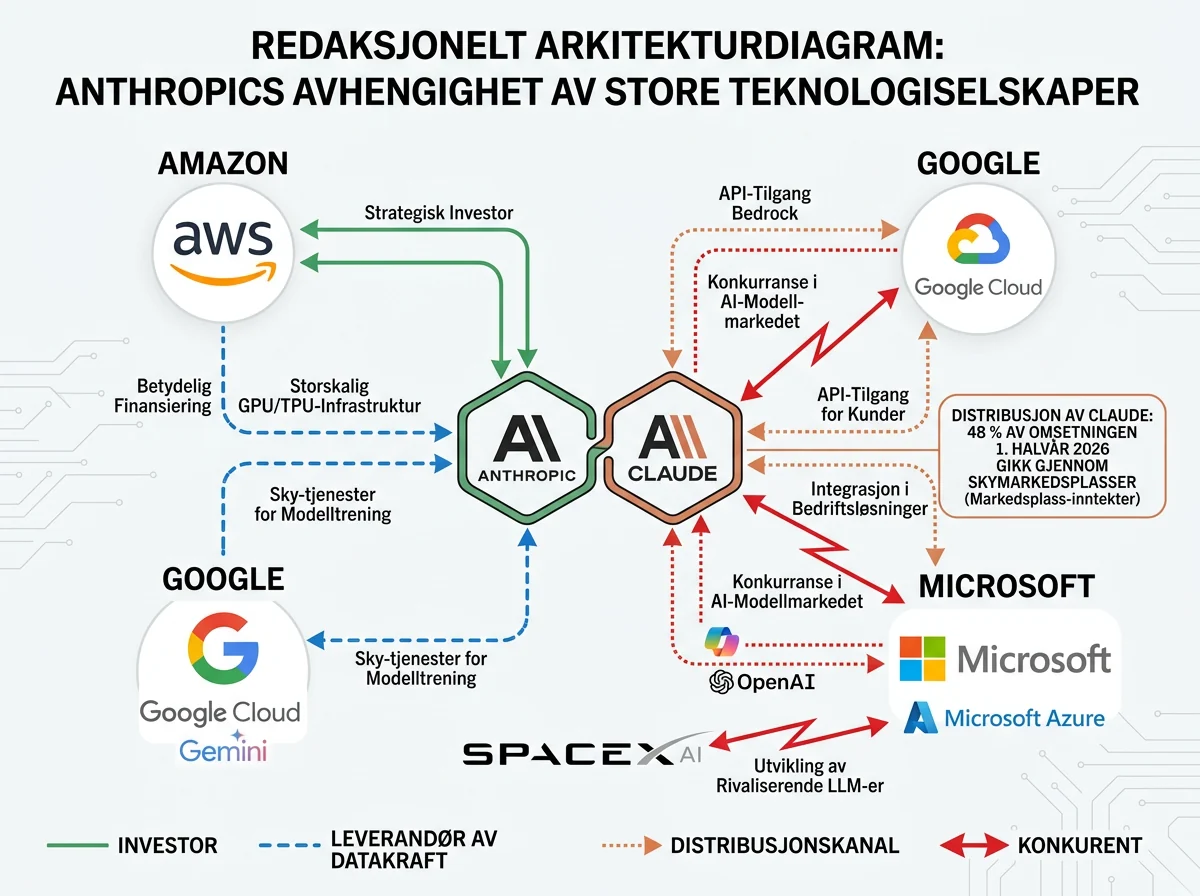
But its relationships with the largest cloud companies are tangled from almost every direction. Amazon and Google are investors, suppliers, distribution channels, and competitors at the same time. Cloud marketplaces run by these partners accounted for 47 percent of Anthropic’s revenue in 2025 and 48 percent in the first half of 2026.
Those marketplaces give Anthropic access to enterprise customers that already buy cloud services, but they also give the partners insight into pricing and commercial terms. If a major cloud provider favors its own models, changes the deal, or fails to deliver enough capacity, Anthropic can be hit on both the sales side and the production side.
Customer concentration deserves a raised eyebrow too. Two customers each accounted for 12 percent of revenue in 2025. During the first half of 2026, a different customer accounted for 11 percent. Anthropic is growing rapidly and serves thousands of large customers, but a handful of contracts can still move the numbers significantly when so much revenue is usage-based rather than locked into long-term purchase obligations.
The S-1 makes the structure unusually clear: suppliers, investors, distributors, and competitors are sitting around the same table. Everyone can profit from AI growth, but they do not necessarily profit in the same way. Anthropic’s multi-provider strategy buys flexibility, yet it does not make the company independent of the giants supplying its capital, chips, clouds, and routes to market.
What risks does Anthropic warn about?
Every S-1 contains a long list of things that might go wrong. The lawyers appear to be paid by the nightmare. Anthropic’s list runs from electricity constraints, supplier failures, and copyright litigation to cyberattacks, unexpected model behavior, and the possibility of a catastrophic AI event.
The company says a single insurer – and perhaps even the insurance industry as a whole – may lack the capacity or expertise to cover a major AI-related catastrophe. Anthropic also discusses the debate over whether future AI systems could develop some form of consciousness or moral status. That is not a claim that Claude is conscious. It is a warning that the debate itself could create new legal demands, costs, and reputational risks.
The more ordinary risks may matter just as much to the business. Compute requires power, data centers, advanced chips, and reliable delivery over many years. Anthropic has signed agreements that could become painfully expensive if demand comes in below expectations, while insufficient capacity could push customers toward competitors. In other words, it must forecast both AI progress and customer demand years in advance. Good luck with that spreadsheet.
The governance structure is not a standard one-share, one-vote arrangement either. A Long-Term Benefit Trust will have significant influence over the board, while an entity controlled by the seven co-founders is set to hold 50.1 percent of the voting power through Class F shares. New Class A shareholders may therefore have little influence over major decisions. That may fit Anthropic’s stated mission, but investors should understand the deal: they are buying economic exposure to a structure designed to keep control away from them.
What does the Anthropic IPO mean for Claude users?
For people using Claude today, the S-1 changes nothing overnight. Claude keeps working, existing subscriptions remain in place, and Anthropic has not announced a new price or a trading date in the filing. The immediate change is transparency: customers can now see far more of the machinery and the financial pressure behind the product.
Over time, Anthropic will gain a new audience that expects growth, margins, and predictability every quarter. Public capital could help fund better models and more capacity. It could also increase the pressure to prioritize enterprise contracts, high utilization, and products that generate revenue quickly. Public markets are not famous for applauding “we will keep researching and see what happens” for four quarters in a row.
If your company builds critical workflows on Claude, watch API prices, contract terms, and capacity changes. Keep control of your own data, and maintain a credible path to another model if the economics or the product changes. That is sensible advice for any cloud service, but an S-1 containing nearly $390 billion in named compute commitments gives it considerably more weight.
Potential investors still lack the most important number: the price. Anthropic has not disclosed how many shares it plans to sell or the price range it will seek. Until those numbers arrive, nobody can know whether ANT will be a good or bad investment. Fantastic technology and a fantastic investment are not automatically the same thing.
My verdict is simple: this is one of the most important AI filings we have seen because it exposes both the machine and the bill behind Claude. Anthropic has proved that demand can grow at a pace that is almost hard to process. Now it has to prove that the same growth can carry an infrastructure bet approaching $390 billion without requiring perfect conditions every single year.
Frequently asked questions
When can I buy Anthropic stock?
You cannot buy ANT on a public exchange yet. Anthropic has filed its S-1 and applied to list on Nasdaq, but the registration is not yet effective. As of October 26, 2026, the company had not disclosed the number of shares, the price range, or the first trading date.
What will Anthropic’s stock ticker be?
Anthropic plans to use the ticker ANT on the Nasdaq Global Select Market. The symbol appears in its S-1 filing, but trading still depends on the registration becoming effective and the IPO process being completed.
Did Anthropic really lose $80.7 billion in six months?
Yes, $80.7 billion is the reported net loss. However, $72.4 billion came from valuation changes involving convertible notes, derivatives, and future equity agreements. The headline loss is therefore not the same as cash consumed by operations.
How much has Anthropic committed to spend on compute?
Four named agreements with Microsoft, Google, Amazon, and SpaceXAI add up to as much as $389.9 billion. The contracts have different terms and run through dates including 2029, 2033, and 2036, so the total is not one bill due at once.